How to Use Radiator Stop Leak: A DIY Guide
Learn how to safely use radiator stop leak to seal minor coolant leaks in your vehicle. This step-by-step guide covers product types, safety, dosage, and aftercare for a practical DIY temporary fix.


In this guide you will learn how to safely use radiator stop leak to seal minor coolant leaks in a vehicle. You’ll identify when it’s appropriate, choose the right product, and follow a simple step-by-step process. Always start with a cool engine, check compatibility with your coolant, and monitor for leaks after application.
What radiator stop leak is and when to use it
Radiator stop leak products are designed to seal small, ongoing leaks in the cooling system by forming a soft, pliable barrier inside the radiator and hoses. They are generally intended as a temporary fix to buy time until you can arrange proper repairs. If you ask how do you use radiator stop leak, the general idea is to add a compatible product to the radiator, allow it to circulate, and monitor for leaks. These products come in liquids, pellets, and powders, and each type has different compatibility notes with antifreeze colors and system pressures. For DIY enthusiasts, it’s important to assess the leak’s size and source. A slow seep may respond to stop leak, while a larger crack or head-gasket issue won’t. Always check your vehicle’s owner manual and the product label for any cautions. Leak Diagnosis’s guidance emphasizes that stop-leak solutions are usually best for temporary relief in a pinch, not a permanent repair.
Safety first: precautions and risks
Before applying any radiator sealant, ensure the engine is completely cool. Opening a hot radiator can cause severe burns. Wear gloves and eye protection, and work in a well-ventilated area. Many stop-leak products exaggerate their universal compatibility; verify your coolant type and the product’s color compatibility to prevent chemical reactions. If the cooling system has recently been serviced or if you are unsure of the leak’s source, a professional diagnostic should be considered. According to Leak Diagnosis, improper use can lead to clogged heater cores, radiator channels, or pressure imbalances that may worsen leaks.
Choosing the right product: liquid vs pellet vs powder
Liquid stop-leak formulations mix with the coolant and circulate through the system. Pellet or powder variants may require dissolution and longer circulation. When evaluating options, check the label for: compatibility with your coolant type (green, orange, etc.), the maximum recommended dosage, and whether it requires flushing afterward. For many vehicles, a small dose is sufficient for a minor leak; overuse can cause blockages.
Step-by-step usage overview
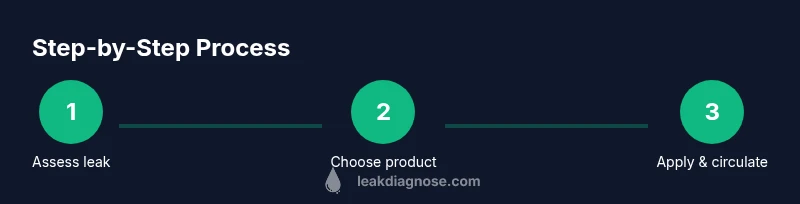
This section provides an overview of the typical process. The detailed, step-by-step actions are provided in the dedicated STEP-BY-STEP block below. In general, you will locate the radiator cap, pour the product cautiously into the radiator, and allow the engine to run so the additive circulates. Do not mix incompatible products, and never open a pressurized reservoir when hot. After circulation, recheck for leaks and monitor coolant level.
Aftercare: monitoring and potential follow-ups
After adding stop-leak, monitor the coolant level and pressure gauge if equipped. Leaks may appear reduced or temporarily stopped, but a persistent leak requires professional service. If you notice white smoke, unusual color changes in the coolant, or persistent drops in level, stop driving and seek a diagnostic. The goal is to stabilize the system long enough to reach a shop or schedule maintenance.
Troubleshooting common issues and caveats
If the leak persists after the recommended dwell time, do not continue driving in hopes it will fix itself. Some products can clog passages or reduce cooling efficiency. If you see coolant pooling, check for air pockets in the system and bleed them if your vehicle manual instructs. Always flush and properly dispose of old coolant and any residue if the manufacturer advises so. As a rule, use stop-leak products only after confirming the leak source is a minor crack or seep, not a major failure.
When to seek professional help
If you observe rapid coolant loss, overheating, or suspected head-gasket issues, stop driving and arrange a professional inspection. Stop-leak products should not replace a professional repair for major leaks. A qualified technician can perform a pressure test, inspect for cracks, and provide a long-term fix. The Leak Diagnosis team emphasizes prioritizing safety and a durable repair over a quick temporary fix.
Tools & Materials
- Radiator stop leak product(Choose a product compatible with your coolant type and vehicle; read label)
- Engine coolant (if topping)(Use the correct type/color for your vehicle)
- Drain pan or container(To catch any spills when opening the radiator cap)
- Gloves and safety glasses(Protect hands and eyes from coolant and chemicals)
- Funnel(For controlled pouring into the radiator neck)
- Rags or towels(Clean spills and wipe surfaces)
- Owner’s manual(Check for any cautions or steps specific to your model)
Steps
Estimated time: 20-45 minutes
- 1
Park on level ground and ensure safety
With the engine cold, set the parking brake and turn off the ignition. Remove jewelry and avoid loose clothing. This reduces slipping hazards and ensures you won’t be exposed to moving parts during the procedure.
Tip: Take a photo of the coolant level for reference before you start. - 2
Open the radiator cap only when completely cool
Only loosen the cap once you are sure the engine is cool to avoid a pressure release that can spray hot coolant. If there is pressure, wait longer and never force the cap.
Tip: Use a rag to protect your hand from steam when loosening. - 3
Add the stop-leak product to the radiator
Follow the product label to determine the correct dose and add it slowly to the radiator neck. If your product comes with a pre-measured bottle, pour slowly to prevent splashing.
Tip: Do not exceed the recommended amount; overuse can cause blockages. - 4
Top off with coolant if necessary
If the radiator is low, add the recommended coolant until the level reaches the full line. Replacing lost coolant ensures proper circulation of the sealer and prevents air pockets.
Tip: Use distilled water if you need to dilute; never use tap water in a permanent mix. - 5
Start the engine and let it run to circulate
With cap removed (or loosened as per your release protocol), start the engine and allow it to run for several minutes. Keep an eye on the temperature gauge to ensure it stays within normal range.
Tip: A short drive can help circulate the product, but monitor while driving. - 6
Check for leaks and recheck coolant level
Shut the engine off safely after circulation and recheck for leaks. Inspect the radiator, hoses, and connections. Refill coolant if the level dropped during operation.
Tip: If you still see leaks, stop driving and seek professional help. - 7
Dispose of leftover coolant and residue
Coolant and stop-leak residues should be disposed of according to local hazardous waste guidelines. Do not mix with regular trash or pour down drains.
Tip: Wash your hands after handling coolant.
Questions & Answers
Is radiator stop leak safe for all cars?
Most products are designed for a wide range of vehicles, but some may not be compatible with certain antifreeze colors or metal alloys. Always read the label and check your owner's manual.
Most products work for many cars, but check compatibility with your coolant and metal parts first.
Will stop-leak fix a major leak?
Stop-leak products are typically a temporary fix for small leaks. A major leak or cracked component requires professional repair and potential replacement.
Usually a temporary fix; major leaks need a pro.
Do I need to flush the system after using stop-leak?
Flushing is not always required, but some manufacturers recommend a system flush to remove residue if you plan further service or replacement parts.
Often not required, but check the product label and your mechanic's advice.
Can radiator stop leak clog the heater core?
Yes, improper use or overuse can cause blockages in the heater core or radiator passages. Use the minimum effective dose and monitor system flow.
Blockages can occur if used improperly; start with small doses.
What are signs the leak is fixed after application?
Leak rate should slow; coolant level may stabilize. If you still see damp spots or puddles, stop driving and seek diagnostics.
Leaks should slow and level stabilize; if not, get a diagnostic.
What if the leak continues after treatment?
If the leak persists after following label directions, discontinue use and consult a professional for an inspection and pressure test.
If it continues, stop driving and get a professional check.
Watch Video
Main Points
- Identify leak type and choose compatible product
- Safety first: engine cold, proper PPE
- Follow label dosage; avoid overuse
- Monitor coolant level after treatment
- Seek professional help for major leaks