Car Leak Troubleshooting: Quick, Safe Fixes for 2026
Urgent guide for homeowners diagnosing car leaks. Learn how to spot fluid leaks, identify sources, and follow a proven troubleshooting flow. Know when to call a pro and how to prevent leaks in the future.


Most car leaks originate from the engine oil system, coolant lines, or fuel delivery. Park on a flat surface, shut off the engine, and inspect under the vehicle for fresh fluid. Clean the area, note color and smell, and tighten clamps or replace gaskets if you spot a loose connection. If fuel or coolant leaks persist, stop driving and contact a professional.
get in the car leak: quick start
Dealing with a car leak can feel urgent, and your first moves set the tone for safety and cost. The get in the car leak you observe most often involves three systems: engine oil, coolant, and the fuel/evaporation network. From the moment you notice a puddle, you should first park on a flat, stable surface away from traffic. Turn off the engine and wait for fluids to cool if they’re hot. With gloves and steady hands, inspect the area from the outside for obvious signs—fresh liquid under the engine, damp hoses, or a wet oil pan. If you see a bright puddle that smells strongly of gasoline, or if you notice smoke, treat this as an emergency and avoid starting the engine again. Rather than guessing, document color, texture, and location to help identify the source later. Some leaks leave colorful hints: amber for transmission fluid, greenish for coolant, dark brown or black for engine oil. The goal of this quick start is to reduce risk and prepare you for the next diagnostic steps with minimal exposure to heat, flame, or moving parts.
Common sources of car leaks
Oil leaks are the most common, often coming from valve covers, oil pan seals, or the oil filter housing. Coolant leaks frequently originate from radiator hoses, clamps, the water pump, or reservoir fittings. Transmission fluid leaks appear near the transmission pan or cooler lines and are typically red or brown. Fuel leaks are the most dangerous; look for damp lines around the fuel rails or the fuel pressure regulator, and be alert for fuel odors. Power steering fluid or brake fluid leaks can also occur near the engine bay or under the wheels. To differentiate, compare the fluid color and odor: engine oil is dark and has a distinct smell; coolant is bright green, orange, or pink and often sweet smelling; transmission fluid is red; fuel is generally clear to pale brown with a gasoline aroma. Even slow leaks deserve attention because they can worsen and indicate a failing component.
Safety first: assess risk before touching
Never approach a suspected leak while the engine is hot or running. If you smell fuel, hear a hiss, or see flames, move away and call for help. Wear gloves and eye protection, and avoid skin contact with any unknown liquid. Do not attempt to seal a leak with tape or commercial stop-leak products; they can mask the problem and create more damage. When inspecting, work in a well-ventilated area and keep a safe distance from hot surfaces, belts, and moving parts. If you must lie under the car, ensure it is properly supported with stands on a flat surface. After your initial safety check, record fluid type and location to guide a professional diagnosis if needed.
Diagnostic flow you can follow at home
Start with a clean slate: wipe the suspected area, then observe after a short drive and park again to see if new fluid appears. Check fluid levels in the respective reservoirs (oil, coolant, transmission, brake/power steering) and compare to the manufacturer’s specs. Trace the leak path by following the trail up to the highest point where it originates, and inspect common failure points: hoses, clamps, gaskets, and seals. If you identify a loose clamp, replace it or tighten with the correct tool. For suspected coolant leaks, inspect the radiator, hoses, and water pump for cracks or worn hose ends. If fuel lines are involved, do not attempt repairs beyond basic tightening, and avoid ignition sources. When in doubt, seek a professional diagnostic to avoid unnecessary risk or damage.
Step-by-step: fix basics and know when to call a pro
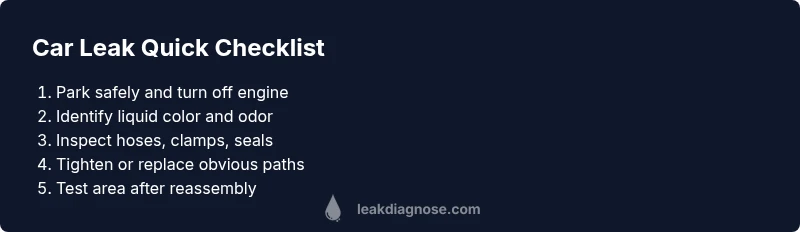
- Park safely and power down, ensuring the area around the engine is cool. 2. Identify the fluid by color, odor, and location. 3. Inspect hoses, clamps, and seals for obvious damage or looseness. 4. Tighten or replace a loose clamp or cracked hose if it is accessible from the top of the engine. 5. Replace damaged gaskets or components only if you have the proper tools and follow the manufacturer’s torque specs. 6. After reassembly, run the engine briefly and re-check for leaks; if the leak persists, stop driving and consult a mechanic.
Estimated time: 60-90 minutes.
Prevention: keep leaks from returning
Adopt a routine of monthly visual inspections, especially after trips with heavy loads or extreme temperatures. Replace worn hoses and cracked gaskets before they fail, and use the correct fluids in each system. Keep the engine bay clean so leaks are easier to spot, and address overheating promptly to prevent cooler-related leaks. Maintain proper fluid levels and follow service intervals for belts, hoses, and seals. Finally, always address even minor leaks promptly to avoid escalating damage and costly repairs.
Steps
Estimated time: 60-90 minutes
- 1
Park safely and power down
Find a flat spot, engage the parking brake, and turn off the engine. Allow hot components to cool before touching. If you suspect a fuel leak, avoid running the engine or sparks.
Tip: Use wheel chocks and gloves for safety. - 2
Identify the fluid by color and odor
Carefully inspect the suspected area. Oil is dark with a sharp odor; coolant is bright and sweet-smelling; transmission fluid is red; fuel has a gasoline scent. Color and location help narrow the source.
Tip: Note color, consistency, and scent for later reference. - 3
Inspect common leak paths
Check valve covers, oil pan, radiator hoses, clamps, and the cooling system components. Trace the liquid trail to its highest point, which usually points to the leak origin.
Tip: Use a flashlight and a mirror for hard-to-see spots. - 4
Tighten or replace obvious components
If you find a loose clamp or cracked hose within reach, tighten or replace it. Do not over-tighten and avoid forcing parts that are damaged.
Tip: Only perform this if you can access the part safely. - 5
Test after reassembly
Start the engine briefly and watch the area for new leaks. If fresh fluid appears, stop and arrange professional service. Do not drive long distances with a leak.
Tip: Take photos of the area for your mechanic.
Diagnosis: Visible wet spot or odor of fluid under parked car
Possible Causes
- highEngine oil system leak
- mediumCoolant hose or radiator leak
- lowFuel line or injector leak
- lowTransmission fluid leak
Fixes
- easyTighten clamps and replace obvious gaskets or seals
- mediumReplace damaged hoses or cracked lines
- hardPerform a cooling system pressure test and repair the affected area
Questions & Answers
What is the first sign of a car leak?
Look for a wet spot under the engine or a distinct fluid trail after driving. Note color and smell to help identify the source.
Look for a wet spot under your car and note the color and smell to identify the source.
Can I fix a car leak myself?
Some leaks can be managed with basic hose or clamp replacements if you have the right tools and safety precautions. Complex leaks or fuel coolant issues are best left to a mechanic.
Some leaks can be fixed yourself if you have the right tools, but complex leaks should be handled by a pro.
How can I tell the difference between oil and coolant leaks?
Oil leaks are typically dark and have an engine smell, while coolant leaks are bright colors and sweet-smelling. Transmission fluid is red; fuel smells like gasoline.
Oil is dark with a sharp smell, coolant is colored and sweet-smelling.
When should I tow the car?
If you suspect a major fuel leak, cracked fuel lines, or it's unsafe to drive, call a tow truck. Do not drive it to a shop.
If there’s a major fuel leak or risk, don’t drive—call a tow.
Are stop-leak products safe or effective?
Stop-leak products can mask symptoms but rarely solve root causes and may thicken fluids or clog systems. They are not a substitute for professional diagnosis.
Stop-leak products can hide the problem and are not a replacement for proper repair.
Watch Video
Main Points
- Inspect the undercarriage promptly for leaks
- Differentiate fluids by color and odor
- Do not drive with suspected fuel or coolant leaks
- Progress from easy fixes to professional help as needed