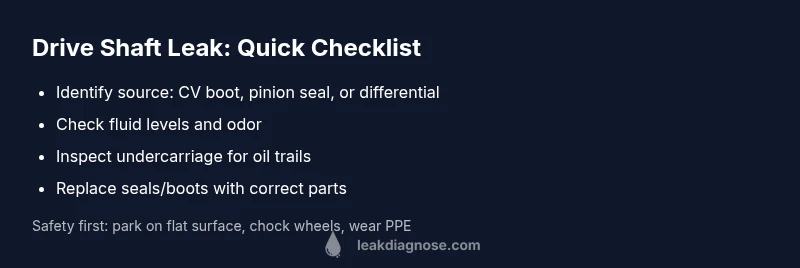
Drive Shaft Leak Troubleshooting: Quick Fixes and Safety
Comprehensive diagnostic and repair guide for a drive shaft leak, covering symptoms, sources, safety steps, a diagnostic flow, a step-by-step repair plan, tips, and prevention to protect your vehicle and avoid costly damage.


Most drive shaft leaks come from worn seals (pinion or differential input) or a torn CV boot that allows gear oil to escape. Safely pull over, inspect the driveline area, and check fluid levels. If you see fresh oil under the vehicle or a strong gear-oil smell, stop driving and arrange professional repair.
What is a drive shaft leak and why it matters
A drive shaft leak refers to the unwanted escape of lubricants from the driveline components that help transfer power from the engine to the wheels. In many passenger cars, the most common culprits are the rear differential seals or the CV joint boot. When oil or grease escapes, you lose lubrication for critical bearings, which can lead to accelerated wear, noisy operation, vibration, and eventually drivetrain damage if left untreated. According to Leak Diagnosis, spotting leaks early saves money and prevents cascading failures. Regular inspections during oil changes or after rough driving can help you catch issues before they become costly repairs. A drive shaft leak can manifest as puddles under the vehicle, a burning odor, or a whine that changes with speed. The key is to identify the source quickly and prioritize a safety-first repair plan.
Common symptoms and early warning signs
Leaks around the driveline often present with a combination of visible fluid, odor, and mechanical feeling. Common symptoms include oil or grease trails on the undercarriage, a wet spot near the differential or CV joints, a distinct gear-oil smell, and sometimes grinding or vibration during acceleration. You may notice the transmission or rear-end fluid level dropping without an obvious source. If the CV boot is torn, you might see grease around the wheel well or along the axle. Break-even check: if you observe fresh fluid and a strong smell, treat this as a potential safety hazard and plan a professional inspection promptly. Leak Diagnosis emphasizes documenting fluid color and location to aid the shop in pinpointing the leak.
Safety first: what to do now
If you notice a leak while driving, safely reduce speed and pull over to a flat, stable surface. Do not drive long distances with a suspected driveline leak, as low lubrication can overheat bearings and cause catastrophic failure. Turn off the engine and, if possible, inspect visible components from the ground for obvious leaks along the CV joints, differential, or driveshaft connection. If you must move the vehicle, limit the drive to a short distance and avoid high speeds or heavy loads. Always wear eye protection and gloves when inspecting, and use wheel chocks when parked. After identifying a potential leak, arrange professional service soon to prevent further damage.
Diagnostic flow: source vs symptoms
Diagnosing a drive shaft leak requires correlating symptoms with likely sources. Start with surface observations (puddles, color, smell) and then test the fluid level and access points. Common sources include CV joint boots, pinion seals, and differential or transfer-case seals. A clean work area helps you trace a leak path back to its origin. If multiple seals are involved or the leak is severe, a professional assessment is strongly advised because driveline systems involve high torque and and complex assemblies.
Most common causes and practical fixes
The drive shaft ecosystem contains several wear-prone points. The top culprits are torn CV boots that leak grease, damaged CV joint seals, and failing pinion or differential seals that allow gear oil to escape. A damaged boot can be repaired by boot replacement and resealing the joint, while a faulty seal typically requires removal of components and precise resealing with new gaskets or fluids. Transfer-case leaks may occur in AWD systems where the transfer case output shaft seal fails. For many vehicles, these tasks require specialized tools, lubrication, and torque specs. The most practical fix is to replace worn seals and boots with OEM-grade parts and to verify correct fluid type and fill level after reassembly. If the leak is extensive, replacing the entire driveline or consulting a professional shop is often the most durable solution.
Prevention and maintenance: keeping it leak-free
Preventive measures include inspecting CV boots for cracks or tears during seasonal maintenance, checking differential fluid level and color, and performing regular driveline inspections after severe road conditions. Keeping your vehicle on a schedule of proper lubrication, using the correct gear oil or ATF as specified by the maker, and ensuring correct torque on fasteners can dramatically extend driveline life. Early detection and prompt seal or boot replacements protect bearings, reduce repair costs, and keep your vehicle safer on the road. Leak Diagnosis recommends documenting any changes in driveline noise, vibration, or leaks as part of routine maintenance.
When to call a professional: knowing your limits
If you see a significant oil trail, a strong gear oil odor, or large fluid loss, do not attempt risky DIY fixes beyond basic checks. Driveline work involves heavy components, pressurized seals, and precise alignment. A professional mechanic can safely lift the vehicle, isolate the leak source, perform the correct seal or boot replacement, and correctly refill fluids. If you’re not confident about the repair steps or lack the required tools and experience, seek professional help to prevent further damage and ensure proper warranty coverage.
Steps
Estimated time: 2-4 hours
- 1
Prepare and safety-check
Park on a level surface, engage parking brake, and disconnect the battery. Gather tools, a drain pan, and replacement seals/boots. Ensure you have wheel chocks and appropriate PPE. Double-check your vehicle’s service manual for torque specs and seal sizes.
Tip: Pro tip: take photos of the old components from multiple angles before disassembly to aid reassembly. - 2
Lift and support the vehicle
Use a floor jack to lift the side of the car and secure it with jack stands on a solid surface. Verify stability before crawling underneath. If the leak is suspected in the rear axle, support the rear properly and ensure the driveshaft is accessible without strain.
Tip: Wear a headlamp and lay a drain pan beneath the area to catch any escaping fluid as you inspect. - 3
Access the leak source
Trace the fluid path to identify whether the leak originates at the CV boot, CV joint, pinion seal, or differential cover. Clean the suspected area with a degreaser and allow it to dry so you can observe fresh leaks after a short test run.
Tip: Use rags to blot the area gently; never smudge the oil path as that can obscure the source. - 4
Remove and replace the faulty component
If replacing a seal, remove the driveshaft or differential cover as required to access the seal. Clean the mounting surfaces, install the new seal or boot, and ensure all fasteners are torqued to the service spec. Reinstall the driveshaft and any components removed for access.
Tip: Keep track of small parts like o-rings and snap rings; a missing part often causes re-leaks. - 5
Refill and test
Refill with the manufacturer-specified lubricant. Start the vehicle and run through a gentle test drive, gradually increasing speed while watching for leaks. Recheck fluid levels and confirm there are no new leaks after the test drive.
Tip: Recheck after a few hours of cooling; leak paths can reappear as seals seat and settle. - 6
Final inspection and maintenance
After a successful fix, inspect the area again for fresh leaks, clean up any spilled oil, and dispose of waste properly. Schedule follow-up inspections during your next maintenance interval to ensure the repair remains sound.
Tip: Document the repair in your vehicle log and set a reminder for the next differential fluid change.
Diagnosis: Oil or gear lubricant visibly leaking around the driveline or under the vehicle; vibrations or warning lights in some cases
Possible Causes
- highPinion seal or differential input seal failure
- mediumDamaged CV joint boot leaking grease
- lowTransfer case output seal leak (in AWD/4WD)
Fixes
- hardReplace the failing pinion/differential seal with proper tooling and torque specs
- mediumReplace torn CV boot and reseal CV joints
- hardRepair/replace transfer case output seal if applicable
Questions & Answers
What is a drive shaft leak and how do I know it’s the source?
A drive shaft leak is a fluid leak from the driveline area, typically the differential seals or CV boot. Signs include oil or grease trails under the car, gear oil smell, and vibration. A thorough inspection helps identify the exact source.
A drive shaft leak comes from the driveline area, usually the differential seals or CV boot. Look for oil trails, smell gear oil, and feel for vibrations to pinpoint the source.
Can I drive my car if I suspect a drive shaft leak?
If you suspect a drive shaft leak, limit driving and seek professional service as soon as possible. Driving with low lubrication can cause serious drivetrain damage.
Limit driving and get it checked soon; driving with a leak can cause serious damage.
What are the most common causes of a drive shaft leak?
The most common causes are seal failure at the pinion or differential input and a torn CV boot that leaks grease. Less common are transfer case leaks in AWD/4WD systems.
Typically caused by pinion or differential seals and worn CV boots; transfer-case leaks can appear in AWD cars.
Is this repair DIY-friendly or should I hire a pro?
Some vehicles allow DIY seal or boot replacement, but many driveline repairs require specialized tools and torque specs. If you lack tools or experience, hire a professional to avoid further damage.
DIY is possible for some boots or seals, but many driveline repairs are best left to pros.
How long should a repair last after replacing the seal or boot?
A properly replaced seal or boot should last many years if installed correctly and with regular maintenance. Environmental conditions and driving style can affect longevity.
If installed correctly and maintained, a seal or boot replacement should last for years.
Will a drive shaft leak void my warranty?
Warranty outcomes vary by manufacturer and coverage. If the issue arises from normal wear and tear, it may be covered; always check your warranty terms and consult the dealer.
Warranty depends on your policy; check terms or talk to your dealer for specifics.
What are quick signs this requires professional repair?
Significant oil loss, strong gear oil odor, loud driveline noises, or shaking under acceleration are indicators you should seek professional repair promptly.
If you notice heavy leaks, smells, or unusual driveline noises, contact a pro right away.
Are there immediate safety steps I should take if the leak is severe?
Yes. Stop driving immediately, move to a safe location, and call for roadside assistance. Do not attempt to drive while fluid level is critically low.
Stop the car safely and seek help if the leak is severe.
Watch Video
Main Points
- Identify the leak source early to prevent damage.
- Pinion/differential seals and CV boots are the common failure points.
- Safer to fix with professional help if you lack tools or experience.
- Prevent future leaks with regular driveline maintenance.