Axle Leak: Quick Diagnosis and Safe Fixes
Urgent guide to diagnosing and fixing axle leaks. Learn common causes, step-by-step DIY fixes, safety tips, and prevention strategies to protect your drivetrain.


An axle leak is usually caused by a worn axle shaft seal or CV joint seal. For a quick check, look for oil spots under the drive axle, inspect the CV boot for tears, and confirm the drip’s origin at the axle housing. Quick fix: clean the area, replace the leaking seal or boot, and refill with the proper oil; seek a mechanic if the leak persists.
What is an axle leak and why it matters
According to Leak Diagnosis, an axle leak is more than a nuisance—it signals compromised lubrication in the drivetrain, risking gear wear and reduced performance. On most vehicles, leaks originate where the axle shaft meets the transmission or differential, often at the axle shaft seal or pinion seal. Oil leaks can contaminate brakes and create slippery surfaces, while gear oil leaks in the differential can lead to accelerated wear if left unaddressed. Early detection matters because a small leak can blossom into a large, costly repair if the lubricant level drops or contaminants enter critical surfaces. This section helps homeowners and DIY enthusiasts identify the source, assess safety, and decide between DIY fixes and professional service.
For context, many leaks begin as a slow seep that worsens with heat or activity. A proactive approach keeps driveline components properly lubricated and reduces the risk of catastrophic failure on the road.
Typical sources of axle leaks
Axle leaks can originate from multiple points around the drive axle and differential assemblies. Common sources include:
- Worn axle shaft seals (the most frequent culprit) allowing gear oil or transmission fluid to escape as the shaft rotates.
- Damaged CV joint boots that tear and leak grease, which can look like an oil leak under the car but typically presents as a greasy path near the wheel.
- Pinion or differential seals that fail with age, heat, or improper torque during maintenance.
- Loose or damaged drain plugs and gaskets on the differential housing that drip oil when the vehicle is in use.
- Cracked or corroded axle housings or mounting points that create small leaks around seals.
If you notice fluid around the front/rear axles, start with seal inspection and boot condition as your first assessment.
How to tell where the leak is coming from
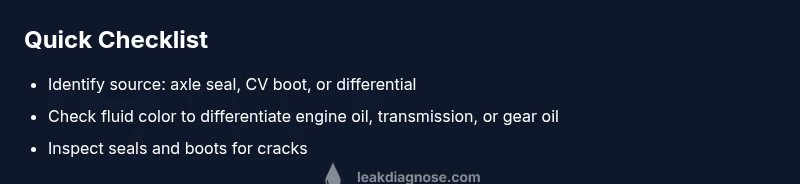
Differentiating oil types and leak origin helps narrow the repair. Look at the fluid color:
- Engine oil is amber-brown and slick; leaks close to the engine area may indicate engine oil rather than axle oil.
- Transmission fluid tends to be red and may pool near the transmission housing.
- Gear oil is dark brown to black and is often associated with the differential.
Observe the drip pattern on the ground and on components beneath the car. If the fluid is pooling near the axle housing or dripping from the axle shaft seal area, the leak likely involves the axle seal or differential seal. A careful inspection while the car is safely supported will reveal the likely source. According to Leak Diagnosis analysis, a systematic check of seals, boots, and drain plugs yields reliable localization without unnecessary part replacement.
Safety first: handling a leak situation
Before touching anything, ensure the vehicle is on level ground and that you have the right safety gear. Use wheel chocks, a sturdy jack, and jack stands; never rely on a jack alone. Oil and gear oil can be slippery and hot. Disconnect the battery if you’ll be working near electrical components, and wear eye protection. If you smell burning oil, notice a strong hissing sound from the axle area, or if the vehicle feels unstable, stop and seek professional help immediately. Safety comes first, because working under a car with compromised supports can lead to serious injury.
Diagnostic sequence you can try at home
This home-friendly diagnostic flow guides you through a safe, systematic check. Start on level ground, with the engine off and cooled:
- Secure the vehicle with wheel chocks and jack stands.
- Clean the suspected area to reveal the exact source of the leak.
- Check fluid levels: engine oil, transmission fluid, and gear oil in the differential.
- Inspect the CV boot for tears and the axle seals for visible seepage.
- Start the engine (if safe) and observe the underside for fresh drips; turn the wheels slightly to expose different seals.
- Compare the pattern against your observations and color cues to determine the most likely leak point.
If the leak worsens during operation, or if you’re unsure about the source, stop and consult a professional. This approach minimizes the risk of losing critical lubrication during a DIY repair.
Step-by-step repair: most common cause
The most common axle-leak scenario involves a worn axle shaft seal or differential seal. A safe, methodical repair typically includes seal replacement and refilling lubricants to spec. This section provides a high-level road map for a DIY repair when you have adequate tools and a basic mechanical background. Keep in mind that some steps require specialized tools, and improper resealing can cause continued leaks or safety hazards. Always verify fluid compatibility and torque specs from your vehicle’s service manual.
- Plan and prep: Gather the seal kit, sealant (if required), fresh lubricant, catch pans, and the necessary hand tools.
- Lift and secure: Raise the vehicle on a stable jack stand and remove the affected wheel.
- Access the seal: Remove components obstructing access to the axle shaft seal or differential seal; drain the diff or trans fluid as needed.
- Remove the old seal: Carefully extract the damaged seal while avoiding damage to the housing.
- Install the new seal: Clean the bore, install the seal squarely, and reassemble the components in the reverse order.
- Refill and test: Refill with the manufacturer’s specified lubricant, torque fasteners to spec, and perform a road test.
Note: This provides a structured DIY workflow, but many models require specialized tools and exact torque values. If you’re not confident, seek professional service to avoid misalignment or damage.
Preventing future axle leaks
Prevention reduces repeat leaks and helps your drivetrain last longer. Implement a simple schedule:
- Regularly inspect seals and boots for cracks or signs of wear, especially after rough roads or heavy loads.
- Check fluid levels at least every 3,000–5,000 miles, or per your vehicle’s manual, and top off with the correct grade.
- Use OEM or manufacturer-recommended lubricants; mixing fluids can compromise seal performance.
- Keep the undercarriage clean to improve leak detection and prevent buildup around seals.
- If you notice a recurring leak after a repair, re-check seal seating and possible contamination that degraded the seal material.
A proactive maintenance mindset saves money and preserves driveline health in the long term.
When to replace vs repair and cost expectations
If the axle housing or seal surfaces are severely damaged, replacement is often more reliable than a repeated seal job. DIY parts may cost a few dozen to a couple of hundred dollars for seals and gaskets, while complete axle or differential work can run higher. Professional service often bundles parts and labor, with total costs ranging widely by model, labor rates, and whether additional components (like CV joints) are affected. For many homeowners, a one-time professional repair may still be cost-effective to prevent recurring leaks and further damage.
Common mistakes to avoid
- Delaying diagnosis when you notice a fluid leak; small leaks quickly become large problems.
- Assuming all leaks are engine oil; use color cues and location to narrow the source.
- Skipping a proper lift and support; working without jack stands risks severe injury.
- Mixing lubricants or using incorrect seals; this can cause premature seal failure.
- Rushing the reassembly; take your time to verify seating and torque.
The Leak Diagnosis team recommends documenting leak patterns and test-driving the vehicle after repairs to confirm the fix before returning to regular use.
Steps
Estimated time: 2-4 hours
- 1
Prepare the workspace and safety gear
Park on level ground, chock wheels, and set up jack stands. Wear eye protection and gloves; have a catch pan ready for fluids.
Tip: Label each removed part to ease reassembly. - 2
Lift and secure the vehicle
Use a floor jack to raise the vehicle and position jack stands under the frame. Remove the wheel on the affected side.
Tip: Never rely on a jack alone for support. - 3
Drain and inspect fluids
Place a drain pan under the differential or axle housing and drain the appropriate lubricant if required by the seal replacement. Inspect drained fluid color for clues.
Tip: Note color to verify the source later. - 4
Remove the faulty seal
Carefully detach surrounding components, then extract the worn seal from the bore without damaging the housing. Clean the bore thoroughly.
Tip: Avoid gouging the bore; use the proper seal puller. - 5
Install the new seal and reseal
Lubricate the new seal lip, press it evenly into the bore, and reinstall any gaskets or retainers. Reassemble components in reverse order and torque to spec.
Tip: Use a seal driver to seat evenly. - 6
Refill and test
Refill with the correct oil grade, monitor for leaks, and take a cautious test drive. Recheck the area after cooling to confirm a leak-free seal.
Tip: Test-drive under load to reveal leaks.
Diagnosis: Visible oil or gear fluid dripping from the axle area or beneath the vehicle near the drivetrain
Possible Causes
- highWorn axle shaft seal
- mediumDamaged CV joint boot or grease leakage
- lowLeaking pinion/differential seal
Fixes
- easyReplace axle shaft seal and inspect nearby seals; refill lubricant to spec
- easyReplace damaged CV boot and repack or replace CV joint if needed
- hardReseal differential/pinion housing or leak-prone gasket; verify torque and alignment
Questions & Answers
What is the most common cause of an axle leak?
The most common cause is a worn axle shaft seal or differential pinion seal. Visual signs and leak location help confirm the culprit. If unsure, consult a professional to prevent further damage.
The most common cause is a worn axle shaft seal or differential pinion seal. Check the leak location to confirm, and consider professional help if uncertain.
Can I fix an axle leak myself?
DIY fixes are possible for simple seal replacements if you have the right tools and mechanical confidence. Complex leaks or high-torque components often require professional service.
You can fix simple seal leaks yourself if you have the right tools, but complex leaks may need a pro.
Is it safe to drive with an axle leak?
Driving with an axle leak can risk loss of lubrication and drivetrain damage. Limit driving distance and seek prompt diagnosis and repair.
Driving with a leak is risky; limit driving and get it fixed as soon as possible.
How long does a seal replacement typically take?
A seal replacement can take from 1 to 4 hours depending on the vehicle, tools, and whether other components need replacement.
Seal replacement often takes between one and four hours, depending on the car and tools.
What oils should I use after repair?
Use the manufacturer-recommended lubricant for your axle/differential. Mixing oils or incorrect viscosity can cause seal failure.
Use the recommended oil for your vehicle and avoid mixing different types.
Watch Video
Main Points
- Identify the leak source early to prevent drivetrain damage
- Seal and boot issues are the most common axle leak culprits
- Follow a safe diagnostic flow before attempting repairs
- DIY fixes require the right tools and exact torque values
- Know when to call a pro to avoid costly mistakes