Ball Joint Leak: Diagnosis and DIY Fix Guide
Learn how to spot, diagnose, and safely fix a ball joint leak. This guide covers symptoms, causes, a step-by-step repair plan, safety tips, and when to seek professional help.


Ball joint leak is most often caused by a torn boot or worn joint that allows grease to escape. Quick checks include inspecting the wheel well for fresh grease, listening for clunking, and feeling for looseness in steering. If you notice anything abnormal, stop driving and assess the fault to prevent dangerous failure.
What is a ball joint leak?
A ball joint leak refers to grease escaping from the ball joint boot due to boot damage or seal wear. The ball joint connects the steering knuckle to the control arm; inside it's a grease-filled bearing that allows smooth movement. When the boot is compromised, grease escapes, dirt enters, and the joint can wear quickly. Symptoms include visible grease in the wheel area, abnormal tire wear, or steering play. According to Leak Diagnosis, staying proactive about leaks protects your safety and vehicle longevity. A leak here can compromise steering feel and control, so early identification matters for both safety and budgeting.
Common symptoms you should not ignore
Watch for visible grease around the wheel well, especially after a drive, along with a sticky or oily feel on the control arm or wheel hub. Listen for clunking or grinding noises when turning, and note any looseness or wandering in the steering. Uneven tire wear or rapid tire wear on one side is a red flag. If you notice any of these symptoms, treat it as urgent and begin a careful inspection. Regular visual checks during your routine car care can catch issues before they escalate.
Why this leak happens: root causes and risk factors
A ball joint leak usually starts with a damaged or torn boot, which allows the internal grease to escape and contaminant entry. Worn ball joints or failed seals inside the joint can leak grease as well. Corrosion, exposure to road salt, or impact damage from potholes can accelerate boot failure or joint wear. High-mileage vehicles or models with chassis designs that place the joint under heavy steering loads are at greater risk. Understanding these causes helps prioritize maintenance and planning for replacements.
Immediate safety steps if you suspect a leak
If you notice grease in the wheel well, steering feel changes, or a grinding noise, pull over safely and inspect the front suspension area. Do not continue driving long distances with a suspected joint issue; a failing joint can lead to sudden loss of steering. Secure the vehicle, chock the wheels, and assess visible damage. If you see a torn boot, leaking grease, or loose steering, arrange for professional assistance. Safety first prevents further damage and expensive repairs.
Diagnostic flow overview: approach before you buy tools
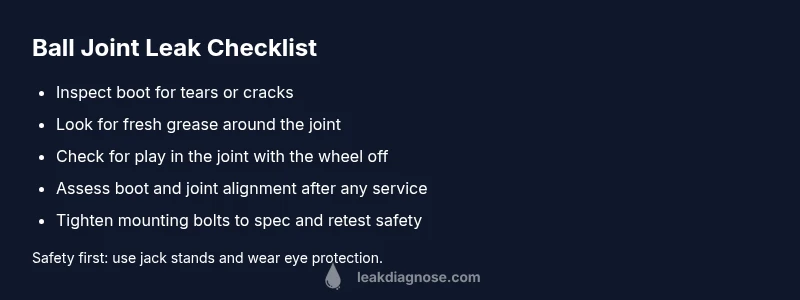
Start with a visual inspection of the front suspension and wheel area. Check the ball joint boot for tears or cracks and inspect for fresh grease or dirt buildup. If the boot looks intact, check for play by lifting the wheel and applying gentle pressure at the 12, 3, 6, and 9 o'clock positions to feel for slop. A professional-grade scan or inspection may be needed if you cannot determine the source visually. This flow helps you decide whether boot replacement is enough or if a full joint replacement is necessary.
Maintenance and prevention strategies
To prevent ball joint leaks, perform regular undercarriage inspections, especially after rough roads or off-road driving. Maintain proper wheel alignment and tire pressures, and replace worn components before they cause boot damage. If you service the boot yourself, use the correct grease type and ensure a clean seal during boot installation. Keep an eye on rust-prone areas and address corrosion promptly. Proactive maintenance helps extend joint life and reduces the risk of leaks.
Boots vs. joints: deciding what to replace
If the boot is torn but the joint itself shows no excessive wear, boot replacement with re-lubrication may suffice. However, if the ball joint is worn, pitted, or has excessive play, the repair typically requires replacement of the joint assembly. In some cases, the mount and control arm may also need attention. Always follow manufacturer specifications and consult a professional if uncertain about the joint's condition.
Tools and safety you should not skip
Before starting any work, gather basic hand tools, a car jack, jack stands, wheel chocks, a torque wrench, and safety glasses. Always protect yourself from grease and sharp edges, and never work under a vehicle supported only by a jack. If you smell fuel, hear grinding, or see exposed metal, stop and call for professional service to avoid injury and damage.
How to tell if professional help is needed
If you discover a torn boot with significant grease loss, unusual steering behavior, or obvious joint wear, professional repair is recommended. A certified technician can correctly inspect, measure play, replace or re-pack the joint, and verify alignment and steering geometry after repair. Quick, decisive action reduces the risk of a failure that could compromise road safety.
Steps
Estimated time: 60-120 minutes
- 1
Prepare safely and lift the vehicle
Park on a flat surface, engage parking brake, and chock wheels. Loosen lug nuts slightly while wheels are on the ground, then lift the car and secure it with jack stands.
Tip: Use a rated jack and stands; never rely on a jack alone. - 2
Inspect the boot and exterior area
Remove one wheel and inspect the ball joint boot for tears, cracks, or grease escape marks. Look for dirt buildup around the joint and boot edges.
Tip: Take photos of the boot before disassembly for reference. - 3
Check for play and noises
With the wheel removed, grasp the wheel at 3 and 9 o'clock and try to move it in and out. Note any clunking, grinding, or looseness which indicates wear.
Tip: A gentle bounce test on the tire can reveal looseness in the suspension. - 4
Assess wear on the joint and surrounding components
Examine the bearing area for rust, pitting, or excessive movement. Check the control arm and mounting bolts for damage.
Tip: If you can't get a clean view, consult a professional for a precise measurement. - 5
Decide on repair vs replacement
If the boot is torn but the joint shows minimal wear, boot replacement may be sufficient. If play is present or metal is damaged, replace the joint assembly.
Tip: Document parts and service manuals before ordering replacements. - 6
Reassemble and test
Reinstall components, torque bolts to spec, and reinstall the wheel. Safely lower the car, perform a careful road test, and watch for abnormal behavior.
Tip: Start with a slow, controlled drive in a safe area to verify stability. - 7
Verify alignment and safety
If alignment was disturbed, have a professional perform a wheel alignment to restore proper geometry and tire wear.
Tip: Check tire pressure again after test drive. - 8
Schedule follow-up maintenance
Schedule a follow-up inspection to ensure the joint remains within spec and there are no leaks.
Tip: Keep receipts and maintenance notes with the vehicle records.
Diagnosis: Ball joint grease leak or suspicious steering symptoms
Possible Causes
- highDamaged or torn ball joint boot/seal
- mediumWorn or fatigued ball joint bearing
- lowLoose mounting bolts or misalignment
Fixes
- easyReplace torn boot or damaged seal and re-lubricate if joint is still within spec
- hardReplace the entire ball joint assembly if wear is detected or steering feels loose
- easyTighten mounting bolts and re-torque to spec; re-check alignment
Questions & Answers
What causes a ball joint leak?
A torn boot or worn ball joint seal is the most common cause. Contamination and metal wear can also initiate leakage. Regular inspection helps catch issues early.
Common causes are a torn boot or worn seals, with contamination and wear contributing over time.
Can I drive with a ball joint leak?
Driving with a suspected ball joint issue is risky. It can lead to steering loss or a sudden failure, so limit driving and seek inspection promptly.
No, driving long distances is unsafe; have it inspected as soon as possible.
How long does repair take?
Repair duration varies with design and damage. Boot-only repairs are quicker, while full joint replacement can require more time and labor.
It depends on the job; boots are usually quicker than replacing the ball joint.
Is professional help always required?
If you lack the tools, space, or experience, hiring a qualified mechanic is safer and more reliable for critical suspension components.
If you’re unsure, it’s safer to call a professional.
What signs indicate an alignment issue after a leak?
Pulling to one side, uneven tire wear, or a wandering steering feel can indicate misalignment following joint work or damage.
Look for pulling and uneven tire wear after repair.
Boot or joint: which to replace first?
If the boot is torn but the joint is within spec, boot replacement may be enough. If the joint shows wear, replace the joint assembly for safety.
Boot replacement is good if the joint is healthy; otherwise replace the joint.
Watch Video
Main Points
- Identify boot damage early to prevent grease loss.
- Distinguish boot tears from full joint wear before replacement.
- Follow torque specs and safety practices to avoid accidents.
- Consider professional help for complex repairs or uncertain joint condition.
- Regular maintenance reduces the risk of future ball joint leaks.