Is It OK to Use Refrigerant with Leak Sealer? A Homeowner's Guide
Urgent guidance for homeowners: why refrigerant leak sealers should not be used, safety risks, and proper repair paths. Learn how to handle refrigerant leaks with a focus on safety and professional repair.


Is it ok to use refrigerant with leak sealer? No. Refrigerant leak sealers are not compatible with closed refrigerant circuits and can cause clogged or blocked pathways, inconsistent pressures, and potential system damage. Using a sealer can also contaminate the refrigerant, violate environmental and safety regulations, and void warranties. The correct approach is to evacuate and recover the refrigerant, locate and repair the leak, replace damaged components, and recharge with the refrigerant under correct procedures, ideally by a licensed technician.
Why refrigerant with leak sealer is a bad idea
Is it ok to use refrigerant with leak sealer? No—this is a common homeowner question, but the safe answer is no. According to Leak Diagnosis, using leak sealers in a closed refrigerant circuit is unsafe and ineffective. Sealants are designed for potable water, not for high-pressure refrigerants such as R-410A or R-22. They can travel through tiny passages, clog compressors, or block the expansion device, leading to reduced cooling capacity, fluctuating pressures, and potential system failure. In addition, sealants can contaminate the refrigerant charge, complicate future service, and may violate environmental and safety regulations. For most systems, the proper way to address a suspected leak is to recover the refrigerant, locate the leak source, repair or replace damaged components, and recharge with the correct refrigerant. The short answer to the question is: do not use a leak sealer in a refrigerant system.
How leak sealers interact with refrigerant and components
Refrigerant sealants can enter the system through leaks or the service ports; once inside, they mix with oil and refrigerant, creating sludge and varnish. The sealant can block filtering screens, clog small passages, and interfere with the metering device or expansion valve. It can also cause inaccurate pressure readings, leading to incorrect charge amounts. Because refrigerants are tightly regulated, introducing any foreign chemical can complicate recovery and reuse. The question of is it ok to use refrigerant with leak sealer becomes a safety and performance concern: you risk unsafe operation, failed diagnostics, and warranty violations. If you are DIY-minded, you might be tempted to seal the leak without evacuating the refrigerant. But this introduces risk to you and your family, as improper handling can release refrigerants with environmental hazards. Seek a professional who can perform leak detection and appropriate repairs.
Safety, codes, and warranty implications
Refrigerant repairs involve handling hazardous materials; technicians must follow EPA regulations and use proper recovery equipment. Introducing sealants can render the refrigerant irrecoverable, making the replacement cost higher and increasing environmental risk. Many manufacturers require all repairs to be performed by licensed technicians; attempting DIY sealing may void warranties and trip safety interlocks. You could face fines if you vent refrigerant improperly. Leak Diagnosis emphasizes that professionals follow established procedures to ensure leak detection is accurate, the system is evacuated safely, and the refrigerant is charged correctly. Understanding the legal and warranty implications helps homeowners avoid costly mistakes and dangerous exposure.
Safer, correct repair approach
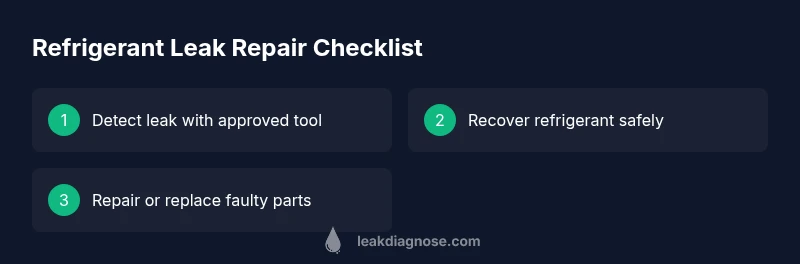
The only safe path is to stop using sealants and pursue proper leak repair. A qualified technician will:
- isolate the area, recover the refrigerant with certified equipment,
- locate the leak using electronic detectors or dye testing,
- repair or replace the damaged component (including lines, fittings, or the compressor if necessary),
- evacuate moisture, and
- recharge with the correct refrigerant and lubricant.
Throughout, the goal is to restore pressure, maintain system cleanliness, and prevent future leaks through proper maintenance. If the system is contaminated or the leak is severe, a refrigerant replacement may be required. The bottom line is: do not attempt to seal a refrigerant leak with a product designed for other fluids; keep the system clean and compliant.
Do's and don'ts during a refrigerant leak repair
- Do shut off the system and ventilate the area; refrigerant can be hazardous.
- Do call a licensed HVAC tech to handle recovery, repair, and recharge.
- Do document the repair for warranty and service records.
- Don't use any leak sealants in a refrigerant system; avoid DIY tricks.
- Don't vent refrigerant to the atmosphere; illegal and dangerous.
- Don't mix refrigerant types or oil; ensure compatibility.
What to do if you suspect a refrigerant leak
- Immediately turn off the system if possible and evacuate the area.
- Do not attempt to patch the leak with home remedies or sealers.
- Contact a licensed technician to perform leak detection, repair, and recharge.
- Keep an eye on AC performance and call if you notice reduced cooling, hissing sounds, or refrigerant odor.
Prevention tips to minimize future leaks
- Schedule regular professional inspections and refrigerant leak tests.
- Replace aging components before failure (O-rings, seals, compressor components).
- Use high-quality materials and compatible lubricants.
- Maintain proper charge and avoid overcharging.
- Consider implementing an annual leak-detection plan.
Steps
Estimated time: 2-6 hours
- 1
Power down and prep safety gear
Power off the system and isolate the area. Put on eye protection, gloves, and appropriate PPE. Verify that you have the correct tool set and recovery equipment if you will be handling refrigerant, and ensure you’re compliant with local regulations.
Tip: Always follow manufacturer guidelines and local environmental rules when handling refrigerants. - 2
Confirm symptoms and locate potential leaks
Use a refrigerant leak detector or UV dye to identify the leak source. Mark the area and note any visible signs of oil residue or frost around fittings, joints, or hoses.
Tip: Document the source location before disassembly to avoid overlooking hidden leaks. - 3
Recover refrigerant safely
Connect approved recovery equipment and evacuate refrigerant from the system following EPA guidelines. Do not vent refrigerant to the atmosphere under any circumstances.
Tip: Only trained technicians should perform recovery to prevent environmental harm. - 4
Repair or replace damaged components
Patch or replace leaking lines, fittings, seals, or the compressor as needed. Inspect related components for wear and replace as necessary to prevent future leaks.
Tip: Inspect nearby joints; sometimes the leak is at an adjacent connection rather than the obvious spot. - 5
Recharge with the correct refrigerant and oil
Charge the system to the manufacturer’s specification using the correct grade of refrigerant and oil. Check pressures and ensure the system is isolated from ambient conditions during charging.
Tip: Double-check refrigerant type and charge amount to avoid overcharging. - 6
Test for leaks and performance
Run the system, monitor for pressure stability, and re-check with a detector to confirm the leak is sealed. Verify cooling performance and listen for abnormal noises.
Tip: Schedule follow-up checks to catch slow leaks early.
Diagnosis: AC not cooling or refrigerant odor detected from unit
Possible Causes
- highLow refrigerant charge due to a leak
- mediumCompressor or condenser obstruction
- lowRefrigerant sealant contamination after improper repairs
Fixes
- hardVent and recover refrigerant using approved equipment; sealant contamination removal may require full system flush
- mediumRepair leak (patch, replace component, or service line)
- easyRecharge with correct refrigerant after verification
Questions & Answers
Is it safe to use refrigerant leak sealers in any HVAC system?
No. Sealants can contaminate refrigerant, clog components, and violate safety regulations. Always avoid using sealants in refrigerant systems.
No. Refrigerant leak sealers should not be used in HVAC systems; they can contaminate the refrigerant and clog critical parts.
What is the recommended process for addressing a refrigerant leak?
Recover the refrigerant safely, locate and repair the leak, replace damaged components if needed, and recharge with the correct refrigerant under proper procedures.
Recover the refrigerant, fix the leak, and recharge with the right refrigerant under proper procedures.
Can sealants affect refrigerant recovery?
Yes. Sealants can complicate recovery and cleanup, potentially rendering the refrigerant non-recoverable and increasing environmental risk.
Sealants can complicate recovery and may make refrigerant non-recoverable.
Are there any safe exceptions to avoid sealants entirely?
The general rule is to avoid sealants in refrigerant systems. Only follow manufacturer guidance and EPA regulations when considering any repair.
In general, avoid sealants in refrigerant systems and follow guidelines from manufacturers and regulators.
Who is qualified to repair refrigerant leaks?
Licensed HVAC technicians with proper recovery equipment and refrigerant handling certifications should perform leaks repairs and recharges.
Licensed HVAC technicians with proper equipment should handle leaks and recharge.
Watch Video
Main Points
- Never use leak sealer with refrigerant systems.
- Recover, repair, and recharge with proper refrigerant only.
- Hire licensed technicians for refrigerant work.
- Document repairs for warranty and safety compliance.
- Prevent leaks through proactive maintenance.