Can a Refrigerant Leak Be Repaired? A Practical Home Guide
Discover whether a refrigerant leak can be repaired, what repairability means, typical methods used by licensed technicians, safety and environmental considerations, and how to plan a professional repair for your home.


Can a refrigerant leak be repaired? In many cases, yes—if the leak is localized, accessible, and the system is otherwise healthy. This guide outlines how to assess repair eligibility, typical repair methods, safety considerations, and what to expect from a pro service. By the end you’ll know whether your unit can be repaired and the steps involved.
Understanding the question: can a refrigerant leak be repaired?
According to Leak Diagnosis, a refrigerant leak is serious not just for cooling efficiency but for health and the environment. The central question can a refrigerant leak be repaired? The answer depends on location, accessibility, and the overall condition of the system. Simple, localized leaks may be fixable, while widespread corrosion, compressor failure, or a charged system near the end of its life often signals a replacement is more cost-effective. In this section we’ll lay out the framework technicians use to assess repairability and what homeowners should look for when planning a repair.
If you’re dealing with a suspected leak, signs include damp patches near the indoor coil, frost on copper lines, a drop in cooling performance, or hissing sounds. Refrigerant leaks involve hazardous chemicals and can impact indoor air quality. Federal and local regulations require professionals to handle refrigerants, not DIY fixes. The takeaway: not every leak should be patched; some situations warrant coil replacement or system replacement.
Leak Diagnosis recommends starting with a professional assessment to determine if a repair or replacement is the better long-term choice.
Factors that influence repair feasibility
Repair feasibility hinges on several factors: the leak’s location, the system’s age, the refrigerant type, and the overall health of the appliance. Localized leaks on copper lines, connections, or a faulty valve are generally more repair-friendly than widespread corrosion or a failing compressor. Older systems and legacy refrigerants complicate repairs and may tilt the decision toward replacement. The chosen detection method also matters; accurate identification reduces unnecessary part swaps and helps ensure a durable fix. Throughout this assessment, Leak Diagnosis emphasizes safety, regulatory compliance, and a conservative approach to protect your home and pocketbook.
Repair methods used by licensed technicians
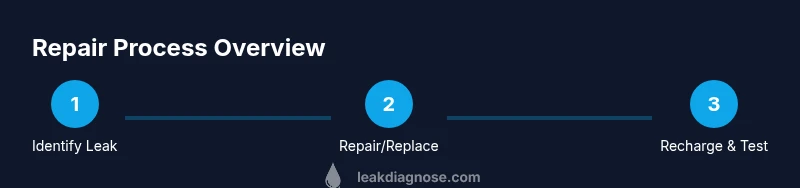
When a repair is deemed feasible, technicians may pursue several approaches depending on the leak’s location and severity. Common methods include repairing a damaged line set or fitting, brazing a patch on a metal surface, replacing a faulty valve, or swapping out a failed coil or component. In many cases the technician will evacuate the system, seal the leak, then recharge the correct refrigerant charge and test for a leak again. The goal is a seal that lasts without introducing new risks; note that temporary sealants or improvised fixes are not reliable long-term solutions and may violate regulations. Always rely on a licensed professional for leak repair and refrigerant handling.
Safety, legality, and environmental considerations
Handling refrigerants is regulated because of their environmental impact and potential health hazards. A leak may involve ozone-depleting substances or potent greenhouse gases, depending on the refrigerant type. Technicians must have EPA certification (such as the 608 credential) and follow proper recovery procedures to avoid venting refrigerant to the atmosphere. Attempting DIY repairs can put you and others at risk, violate local laws, and negate warranties. The environmental stakes are high, so emphasize professional service to protect your home, your wallet, and the planet.
What to expect during a professional repair visit
A typical repair visit begins with a diagnostic check to locate the leak, assess system health, and determine the best repair strategy. The technician will discuss options, obtain permission for any component replacement, and route refrigerant recovery through approved cylinders. After repairing the leak, the system is evacuated and recharged to the manufacturer’s specifications, then tested for proper operation and leaks. Some repairs may require part replacement, which can affect timelines and costs. Be prepared for a follow-up check after a few days to ensure there are no slow leaks.
Planning your repair: questions to ask and steps to take
Before the visit, gather essential information: the make and model, the suspected leak location, and any symptoms you’ve observed. Ask your technician about their certification, the expected steps, the type of refrigerant used, and the warranty on the repair. If an older system uses obsolete refrigerants, discuss the most cost-effective long-term option, which may be replacement rather than repair. Finally, confirm aftercare steps—such as system operation checks and preventative maintenance—to minimize future leaks and maximize efficiency. Can a refrigerant leak be repaired? With the right professional approach, many households find an effective, lasting solution. Ensure you obtain a written estimate and a service plan before authorizing work.
AUTHORITY SOURCES
- EPA. Section 608 refrigerant recycling program: https://www.epa.gov/section-608-refrigerant-recycling-program
- OSHA. Safety guidelines for handling hazardous chemicals and equipment: https://www.osha.gov/
- ASHRAE. Standards and guidance for refrigerant handling: https://www.ashrae.org/standards
Tools & Materials
- refrigerant recovery machine(Must be EPA 608-certified and operate according to local regs.)
- manifold gauge set(For pressure readings and diagnosis.)
- vacuum pump(To evacuate the system after repair.)
- recovery cylinder (empty or containing refrigerant)(Compliant with EPA regulations.)
- digital leak detector or soap bubble kit(Helps locate leaks.)
- PPE (gloves, goggles, respirator)(Protect from refrigerant exposure.)
- EPA 608 certification documentation(Proof of qualification for handling refrigerants.)
- owner's manual and service records(Helpful for diagnostics but not mandatory.)
Steps
Estimated time: 1-5 hours
- 1
Schedule a licensed HVAC technician
Contact a licensed technician to schedule a diagnostic visit. Confirm EPA 608 certification and request a written estimate before work begins.
Tip: Ask for a written warranty on both the repair and the refrigerant recharge. - 2
Prepare for the visit
Gather model/serial numbers, a list of symptoms, and recent service history. Clear access to the outdoor unit and indoor coil for inspection.
Tip: Have photos of frost, leaks, or damp spots ready to show the tech. - 3
Leak location and diagnosis
The technician will locate the leak with appropriate tools and determine whether repair or replacement is warranted.
Tip: Ask for a detailed diagnosis and a written plan showing estimated parts and labor. - 4
Repair or component replacement
If repair is feasible, the technician will perform the repair, evacuate the system, and replace faulty components as needed.
Tip: Get a clear explanation of why replacement might be recommended if repair is short-lived. - 5
System recharge and testing
After repair, the system is evacuated, recharged with the correct refrigerant grade, and tested for leaks and proper cooling performance.
Tip: Request a post-repair pressure test and a follow-up check.
Questions & Answers
Is a refrigerant leak always repairable?
Not always. Repairability depends on leak location and the overall health of the system. Widespread corrosion or a failing compressor may require replacement rather than repair.
Repair depends on the leak location and system health. Severe conditions may require replacing components or the whole unit.
Do I need EPA certification to handle refrigerants?
Yes. Handling refrigerants requires EPA certification (such as the 608 credential) and proper recovery procedures to prevent venting and environmental harm.
Yes. You need EPA certification and proper recovery practices for refrigerants.
What are typical costs and timeframes for repair?
Costs and durations vary by leak location and parts replaced. A licensed tech will provide a written estimate and timeline before starting work.
Costs and timelines vary; get a written estimate before work.
Can I patch a leak myself?
No. DIY repairs are unsafe and may violate laws and warranties. Refrigerant handling requires specialized equipment and training.
DIY refrigerant repairs aren’t safe or legal in most cases; leave it to a licensed pro.
What signs indicate a refrigerant leak?
Look for ice on coils, visible damp spots, hissing sounds, or reduced cooling efficiency. These can indicate a leak but require professional confirmation.
Ice on coils, damp spots, and poor cooling point to a possible leak—get a professional check.
How long does a repair typically take?
Duration ranges from 1 to several hours depending on leak complexity and component replacement. A technician will provide an estimated schedule.
Most repairs take a few hours, depending on the leak and parts.
Watch Video
Main Points
- Repair feasibility depends on leak location and system health.
- Licensed technicians and proper recovery are essential.
- Expect a diagnostic, potential component replacement, and a recharge.
- Document warranties and aftercare for long-term reliability.