Fridge Freon Leak: Troubleshooting Guide for Homeowners
Learn to identify, safely handle, and arrange professional repair for a fridge freon leak with our step-by-step troubleshooting guide from Leak Diagnosis.


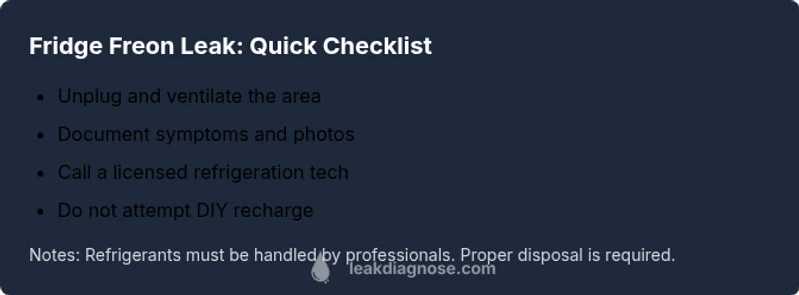
Most fridge freon leaks stem from damaged tubing or loose connections. First, unplug the unit and keep the area ventilated; do not recharge or seal the system yourself. Contact a licensed technician immediately for leak repair and proper refrigerant handling. In the meantime, move perishables to a working cooler.
What a fridge freon leak means for your appliance and home
A fridge freon leak indicates a breach in the sealed refrigerant circuit, which reduces cooling efficiency and can damage the appliance. According to Leak Diagnosis, when refrigerant escapes, the compressor has to work harder, increasing energy use and risking early component wear. In homes, freon leaks also create environmental and safety concerns if vapors accumulate in poorly ventilated spaces. The moment you suspect a leak, you should treat the issue as urgent: a refrigeration system that cannot maintain proper temperatures wastes energy and can spoil food, while exposed refrigerant may irritate eyes and lungs. This guide lays out practical steps homeowners can take to verify symptoms, safeguard themselves, and coordinate professional service. We cover how leaks occur, what to check first, and how a technician will diagnose and fix the problem while minimizing risk. Keep reading for a clear diagnostic flow and a step-by-step repair outline.
Signs you might have a fridge freon leak and what to check for
A fridge freon leak often presents with a combination of cooling failure and visible indicators. If the freezer section won’t chill to the expected temperature, or you notice frost buildup on the evaporator coil, a leak could be the culprit. Oil residue around copper lines, a hissing noise from the back of the unit, or a sudden drop in cooling efficiency are red flags. You may also notice a sweet or solvent-like odor near the appliance in some systems. Document the symptoms and compare them with your fridge model’s typical performance. Remember, even if the unit seems to run, a leak reduces efficiency, requiring professional verification. Throughout this section, keep in mind the exact phrase fridge freon leak as you search for DIY checks and official guidance. This helps maintain consistency with plumbing and appliance repair terminology used by technicians.
Immediate safety actions you should take today
Safety comes first when you suspect a fridge freon leak. First, unplug the refrigerator to cut power and prevent any accidental sparks around electrical components. Improve ventilation in the room by opening doors or windows, especially if the space is small or poorly ventilated. Do not attempt to seals or recharge the system—the refrigerant is a regulated substance that requires licensed handling. Move perishable food to a backup cooler or another functioning fridge if available. Keep pets and children away from the appliance. If you notice a strong chemical odor or symptoms like dizziness or eye irritation, leave the area and seek fresh air before contacting a professional.
These steps help reduce exposure risk while you arrange professional service. Do not rely on consumer sealants or DIY refrigerant fixes. The goal is to minimize heat load on the compressor until a qualified technician can diagnose and repair the leak safely.
Why fridge freon leaks happen: common domestic causes
Freon leaks in residential refrigerators can originate from several common sources. Age and vibration over years of operation often wear copper tubing joints, causing micro-cracks that leak refrigerant. Improper maintenance or accidental damage during cleaning can also compromise connections. A failed compressor shaft seal or a faulty condenser connection may release refrigerant as well. In some cases, a manufacturing defect or poor routing of tubing can create stress points that eventually leak. Understanding these causes helps homeowners communicate clearly with technicians and understand why a leak repair often involves replacing or resealing components rather than simply “topping off” the refrigerant. Throughout these explanations, remember the term fridge freon leak to anchor your diagnosis with professional terms.
How professionals diagnose a fridge freon leak: what to expect
Licensed refrigeration technicians use a combination of methods to confirm a fridge freon leak. They start with a visual inspection of tubings, joints, and the compressor area for signs of oil residue or corrosion. Electronic leak detectors can sense trace refrigerant vapors, while ultraviolet (UV) dye may be injected into the system to trace the leak route under UV light. Some technicians perform a controlled pressure or vacuum test to identify leak points without running the unit. They will also evaluate refrigerant charge, system efficiency, and the overall condition of seals and gaskets. Expect a diagnostic report that lists leak points, recommended repairs, and whether refrigerant recharge is necessary after sealing. For many homeowners, this is the point where the “freon refill” conversation becomes a formal plan rather than a DIY fix.
Steps
Estimated time: 2-5 hours
- 1
Power down and isolate the unit
Unplug the fridge and disconnect it from the power source. Move perishable items to a cooler and avoid using the appliance until a professional confirms it’s safe. This prevents further energy waste and avoids potential refrigerant exposure.
Tip: Label the circuit break so others don’t plug it back in by mistake. - 2
Document symptoms and settings
Note the temperatures in both compartments, any frost patterns, odors, or unusual noises. Take photos of any visible leaks or oil stains on copper lines. This information helps the technician reproduce the issue.
Tip: Keep a simple log of performance for a week if the issue recurs. - 3
Plan a professional service call
Contact a licensed refrigeration technician or appliance repair service. Provide your symptom notes and photos to speed up diagnosis. Ask about refrigerant disposal and local regulations.
Tip: Ask for a written estimate of the service call and potential repair costs. - 4
Prepare for the visit
Clear access to the back and sides of the unit, ensure there’s adequate lighting, and have your model number handy. If needed, arrange a temporary cooling solution for food protection.
Tip: Have a list of questions ready about whether refrigerant recharge is necessary. - 5
During service: diagnosis and repair
The technician will test for leaks, seal or replace faulty components, and ensure the system is properly evacuated and charged. They should document the refrigerant amount recovered and recharged (if applicable).
Tip: Never attempt to recharge refrigerant on-site without proper equipment and training. - 6
Post-service checks and follow-up
Verify that temperatures are stable and that there are no further odors or frost. Schedule follow-up checks if the refrigerant charge is adjusted, and monitor energy use.
Tip: Keep receipts and maintenance records for future warranty or resale.
Diagnosis: Fridge not cooling properly or frost buildup with suspected refrigerant leak
Possible Causes
- highDamaged refrigerant lines or joints leading to Freon escape
- mediumLoose valve fittings or connection leaks
- lowCompressor or condenser failure causing abnormal refrigerant behavior
Fixes
- hardSchedule a licensed refrigeration technician for leak repair and refrigerant recharge if required
- easyTighten or replace loose fittings under professional guidance
- easyDo not attempt DIY fixes or refrigerant recharge
Questions & Answers
What is a fridge freon leak and why is it dangerous?
A fridge freon leak means refrigerant is escaping from the sealed cooling system. While refrigerant is essential for cooling, leaks can reduce performance and pose health and environmental risks if vented in poorly ventilated spaces. A licensed professional should handle any leak.
A fridge freon leak is when refrigerant escapes from the system. It reduces cooling and should be handled by a licensed technician for safety and proper disposal.
Can I fix a fridge freon leak myself?
No. Freon leaks require specialized equipment, leak detectors, and refrigerant handling licenses. DIY attempts can be dangerous and may violate regulations. Contact a licensed refrigeration technician for diagnosis and repair.
No. This should be handled by a licensed pro due to safety and legal concerns.
How long does a typical leak repair take?
Repair time varies based on leak location and part availability. A diagnostic visit is followed by part replacement or joint sealing, and refrigerant recharge if needed. Plan for several hours, depending on scheduling.
It varies, but you’ll typically need a few hours for diagnosis and repair once the technician arrives.
Will my fridge work after the leak is fixed?
Most fridges will function normally after a proper repair and refrigerant recharge, but efficiency depends on the extent of damage and component replacement. The technician will verify cooling performance post-service.
Most should work fine after a proper repair and recharge, but performance depends on the fix.
Is it safe to stay in the room if I smell refrigerant?
If you smell refrigerant or feel dizziness, leave the space immediately and seek fresh air. Refrigerants can irritate eyes, nose, and lungs, especially in poorly ventilated areas.
If you sense a refrigerant odor, exit the area and get fresh air right away.
How should refrigerant be disposed of after a leak is fixed?
Disposal must follow local environmental regulations. Technicians recover and recycle refrigerant where possible and dispose of any residuals in approved facilities.
Refrigerant must be recovered and disposed of following local rules by a licensed technician.
Watch Video
Main Points
- Unplug and ventilate when you suspect a fridge freon leak
- Only a licensed technician should diagnose and repair refrigerant leaks
- Don’t attempt DIY refrigerant recharge or sealing
- Keep records of symptoms and service for future reference