Boiler Water Leak: Quick Diagnostics and Safe Fixes
Urgent guide to diagnosing and fixing a boiler water leak. Learn common causes, a practical diagnostic flow, step-by-step fixes, safety tips, and when to call a licensed technician.


Most boiler water leaks come from worn seals, a failing pressure relief valve, or corroded pipes. Quick fixes: 1) switch off the boiler and power at the wall, 2) close the boiler's isolation valve to stop water flow, 3) place towels to catch drips and protect floors, 4) contact a licensed technician immediately for a safe repair.
What causes a boiler water leak
A boiler water leak can be alarming, and quick action is essential to prevent water damage and a potential boiler breakdown. The most common sources are mechanical seals and gaskets that wear with age, a faulty pressure relief valve (PRV), and corrosion inside the heat exchanger or piping. Over time, mineral buildup from hard water, vibrational stress, and poor maintenance can create tiny pinholes or cracks. A poorly seated drain or service port, loose fittings, or a failed expansion tank can also leak. Not every drip is catastrophic, but a persistent leak warrants immediate attention. According to Leak Diagnosis, aging components and pressure-management issues account for the majority of residential boiler leaks. Different boiler types behave differently: cast iron vs. stainless steel heat exchangers, combi boilers vs. system boilers, each has unique failure modes. In any case, leaks near electrical components or water damage risk should be treated with extra caution and limited handling until a pro can assess the risk. Preparing the area with towels, placing buckets, and keeping occupants away is wise until professional help arrives. Regular maintenance and timely part replacement are the best defenses against leaks.
Immediate safety steps when you notice a boiler water leak
When you see a leak, safety must come first. Do not touch hot surfaces or attempt repairs beyond basic safety checks. Switch off power to the boiler at the breaker or switch, then close the boiler's isolation valve if you have one. If you have a condensate drain, avoid creating splash hazards. Place towels or a bucket to catch drips and protect floors, then turn off the main water supply to the boiler if you can do so safely. Evacuate children and pets from the area and ventilate to reduce humidity and fumes. If the leak is spraying, or you smell gas or burning, evacuate and call emergency services. Do not attempt field repairs beyond loosening fasteners or wiping up water. After you have stabilized the scene, contact a licensed boiler technician for a proper diagnosis and repair.
Symptoms and quick checks to perform safely
A boiler water leak often presents as visible water pooling near the boiler, damp spots on surrounding walls or floors, or steam coming from the unit. You may notice a drop in heating efficiency, running noises, or a sudden spike in the pressure gauge. Quick checks include locating the exact leak source, inspecting the relief valve and pipes for corrosion or loose fittings, and verifying that the expansion tank is intact. Remember that boiler pressure systems operate under pressure and may be hazardous; do not attempt to disassemble the heat exchanger yourself. Document where the water is coming from, take photos, and note the time and conditions. If the leak is minor and localized, you can use towels to control the area, but do not delay professional assessment. Leak Diagnosis analysis indicates aging components and pressure-management issues are common sources of boiler leaks in homes.
Diagnostic approach: from symptom to diagnosis
Effective troubleshooting follows a logical path. Start by describing the symptom: is water dripping, spraying, or pooling? Check the boiler pressure gauge; unusually high or rapidly rising pressure points to valve or expansion tank issues. Inspect the pressure relief valve for signs of leaking around the valve stem. Look for corroded pipes, failed gaskets, or loose fittings along the return line and drain connections. If you have access to the boiler's isolation valves, ensure they shut fully without leaking. As soon as you suspect a failed PRV or compromised heat exchanger, plan for a professional assessment, because many fixes require boiler-specific parts and pressure testing. A home safety-first approach helps prevent scalding, electrical hazards, or gas-related risks.
Step-by-step: fix for the most common cause (PRV or seal failure)
- Power off the boiler and electricity supply. 2) Close the boiler’s water supply valve to stop new water flow. 3) Drain a small amount of water from the system to reduce pressure if needed. 4) Inspect the pressure relief valve and tighten or replace if leaking around the stem. 5) If the leak originates from a gasket or seal, replace the gasket with the boiler manufacturer’s approved part. 6) Refill the system slowly, re-pressurize, and check for additional leaks. 7) If water continues to leak or you cannot isolate water, call a licensed technician immediately.
Tip: Do not attempt to weld or solder active piping; pressure testing should be done by a pro. Estimated time: 45-90 minutes (excluding parts).
Safety, codes, and when to call a pro
Boiler work is regulated for safety reasons, and gas boilers require licensed technicians for any repair that involves gas lines, gas valves, or combustion seals. If you smell gas, hear hissing and cannot locate the source after shutting down, evacuate and call your gas provider or emergency services. For non-gas boilers, ensure you still follow local electrical and water-connections codes; do not bypass safety devices or attempt long-term field repairs. A qualified technician will perform pressure testing, detect hidden leaks, replace worn components, and verify the system after repair. Scheduling a service appointment promptly can prevent further damage, water intrusion, and costly downtime. Keep a record of all findings and repairs for future maintenance and insurance purposes.
Prevention tips to avoid future boiler leaks
Regular maintenance is your best defense against boiler leaks. Schedule annual inspections, replace worn gaskets and PRVs before they fail, and flush the system to reduce mineral buildup. Use a boiler treatment compatible with your unit, monitor pressure and temperature, and check expansion tanks for proper function. Keep an eye on nearby piping for corrosion, rust, or damp spots that could signal hidden leaks. Stability of the boiler mounting and support frames matters because vibrations can loosen fittings over time. Finally, maintain a simple leak-response plan: know where to shut off power and water, have towels ready, and keep emergency contacts handy. The goal is to catch issues early before they escalate into major water damage or system failure.
Documentation and next steps after a boiler water leak
Take clear photos of the leak source, note the date and time, and record the observed pressures and temperatures if available. Save receipts and notes from any temporary measures you take. When you call a technician, provide these details to speed up diagnosis. After the repair, ask your technician to explain what caused the leak, what part was replaced, and how to test the system for leaks under normal operating conditions. Finally, schedule a follow-up check to confirm that there are no lingering leaks and that the system is maintaining safe pressure and temperature levels.
Quick reference recap
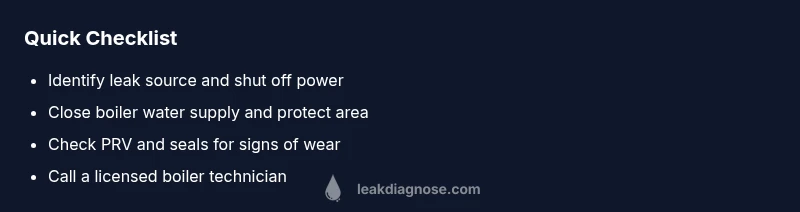
If you notice a boiler water leak, act quickly but stay safe. Turn off power, isolate water, and protect the area before calling a licensed boiler technician. Common causes include worn seals, a faulty PRV, and corrosion. Use a diagnostic flow to identify whether the leak stems from a valve, gasket, or pipe, then implement the most appropriate fix. For ongoing safety, perform regular maintenance and keep emergency contacts handy. According to the Leak Diagnosis team, prevention is the best remedy for boiler leaks, helping homeowners avoid expensive water damage and unexpected downtime. This guide provides a structured path to diagnose, fix, and prevent future leaks, with safety as the top priority.
Steps
Estimated time: 45-90 minutes (excluding parts)
- 1
Power off and isolate
Turn off the boiler and disconnect power at the breaker. If you have a shutoff valve, close the valve to stop water flow toward the boiler. This minimizes risk while you assess the leak.
Tip: Always verify power is off with a tester before touching boiler controls. - 2
Shut water supply
Close the boiler’s main water supply valve to halt additional water from entering the system. If you cannot locate a shutoff, proceed with extreme caution and call for professional help.
Tip: Do not force valves that feel stuck; forcing can cause cracks or bursts. - 3
Relieve pressure
If your boiler has a pressure gauge, allow the system to stabilize by reducing pressure through the appropriate valve per your manual. Do not ignore high pressure—fluids under pressure can spray violently.
Tip: Never vent pressure toward you or others; direct away from people. - 4
Inspect obvious sources
Check the pressure relief valve, gaskets, and visible connections for leaks. Look for corrosion or loose fittings along joints and piping near the boiler.
Tip: Take photos of anything suspicious to show a technician later. - 5
Prepare for repair or replacement
If the leak appears localized to a replaceable gasket or valve, plan to replace with manufacturer-approved parts. Do not attempt major component replacements without the right tools and knowledge.
Tip: Keep a clear workspace to avoid tripping over tools or spilled water. - 6
Refill and test
If advised by a technician, refill the system slowly, restore power, and monitor for any further leaks. Check that pressure and temperature readings stay within safe ranges.
Tip: Document readings for future service visits.
Diagnosis: Visible boiler water leak or pooling near boiler
Possible Causes
- highWorn seals or gaskets
- highFaulty pressure relief valve
- mediumCorroded heat exchanger or piping
Fixes
- easyShut off boiler power and water supply; contact pro
- mediumIsolate leaking component and perform surface sealing or valve replacement by a qualified tech
- hardReplace corroded pipes or heat exchanger; system pressure tested by pro
Questions & Answers
What is the most common cause of a boiler water leak?
Worn seals or gaskets and a failing pressure relief valve are among the most frequent culprits. Corrosion and mineral buildup can also create slow leaks over time.
The most common causes are worn seals or a faulty relief valve. A professional can confirm and fix it.
Should I shut off my boiler immediately if I see a leak?
Yes. Turn off power and water supply to limit damage and reduce risk. Call a licensed technician for a safe diagnosis and repair.
Yes—power and water off, then call a licensed technician.
Can I fix a boiler leak myself?
Minor leaks around fittings may be temporary, but most repairs involve pressurized systems and gas or hot water risks. It’s best to hire a licensed pro.
Most fixes should be done by a pro; don’t risk leaks or burns.
When should I call a professional?
If there is active spraying, gas smell, or you can’t isolate the leak safely, call a professional immediately. For any continued leak after basic steps, book a repair.
Call a pro if the leak continues after basic steps or if you smell gas.
How can I prevent boiler leaks in the future?
Regular maintenance, timely gasket and valve replacement, and water treatment help prevent leaks. Schedule annual inspections and monitor pressure gauge trends.
Regular maintenance and timely part replacement prevent many leaks.
Watch Video
Main Points
- Shut off power and water at the first sign of a leak
- Identify source before attempting fixes
- Most fixes require professional parts and testing
- Regular maintenance helps prevent future leaks