Air Con Leak Water Troubleshooting and Fixes
Learn fast, safe steps to diagnose and fix air con leak water at home. This guide covers common causes, a clear diagnostic flow, practical fixes, and prevention tips to protect your living space.


For air con leak water, the most likely cause is a blocked condensate drain line or a misrouted/overflowing drip pan. Start with the simplest check: clear the condensate drain, verify the pan is intact, and ensure proper slope. If water persists, move to the next steps in the full guide.
Common Causes of air con leak water
Visible water around an indoor air handler or on the floor after running your AC is a clear sign something is amiss. The most frequent culprits are a blocked condensate drain line or a clogged tray/pan that can’t drain properly. A frozen or evaporator coil, caused by restricted airflow or low refrigerant pressure, can also lead to excess condensation that escapes through the condensate system. Improper installation, such as a drain line that isn’t sloped correctly or a cracked drip pan, creates persistent leaks. High humidity environments and dirty air filters compound these issues by reducing airflow and increasing moisture production. Understanding these core causes helps you prioritize what to check first and how to prevent water damage in living spaces.
Related terms to know: condensate drain, drip pan, evaporator coil, airflow, refrigerant, slope, mold risk. For homeowners, addressing the condensate path is usually the fastest win for stopping air con leak water and mitigating damage to ceilings, walls, and flooring.
Quick Safety Checks Before You Start
Safety should come first when diagnosing an air con leak water. Always switch off the unit and unplug the thermostat or disconnect the power to the outdoor unit if you can access it safely. Use a flashlight to inspect the indoor cabinet and surface around the air handler for standing water, corrosion, or exposed wiring. If there’s visible mold or a strong chemical smell, stop and call a pro. Wear gloves and eye protection when handling cleaning solutions or damp areas. Avoid using metal tools on plastic condensate lines to prevent punctures. If you’re at all unsure, prioritize safety and seek professional assistance—water and electricity near your HVAC system can be hazardous.
What you’re looking for: a blocked drain line, a wet or cracked tray, pooling water near the air handler, and signs of mold or mildew around the drip pan.
Diagnostic Flow: From Symptom to Solution
When air con leak water is detected, follow a structured diagnostic path: observe the symptom (water pooling near the air handler), identify likely causes (drain line, pan, coil frost), test simple fixes (clear drain, check tilt, replace filter), and escalate to more complex checks (coil condition, refrigerant issues, ductwork). The goal is to confirm the root cause with minimal disruption and quickly implement a safe fix. This section maps out a practical workflow that aligns with common homeowner capabilities and safety guidelines.
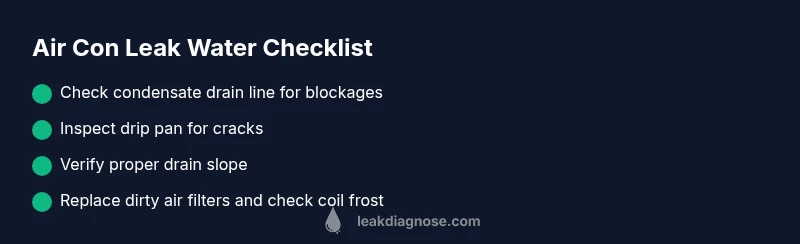
Key checkpoints: drainage path integrity, pan condition, coil frost indicators, proper system slope, and filter cleanliness. By validating these factors in order, you’ll efficiently narrow down the culprit and choose the right fix.
Step-by-Step Fix for the Most Common Cause: Clogged Condensate Drain
- Power down the unit and ensure the area around the air handler is dry before you begin. 2) Locate the condensate drain line and access the cleanout port. 3) Use a flexible brush or a wet/dry vacuum to remove any buildup in the line. 4) Flush the line with a small amount of distilled water mixed with a mild cleaning solution or 1:3 hydrogen peroxide solution to break up algae and mineral deposits. 5) Re-test by pouring a little water into the drain pan to confirm unobstructed flow. 6) Inspect the drain pan for cracks or warping and replace if damaged. 7) Reassemble all parts, turn the unit back on, and observe for several minutes to ensure no new leaks appear. 8) If leaks persist, proceed to the coil/airflow checks.
Tip: Keep a bucket under the connection during testing to catch any spills and take photos of the drain setup before disassembly so you can reassemble correctly.
Other Common Causes and How to Address Them
If clearing the drain doesn’t stop the leak, examine other likely factors. A frozen evaporator coil occurs when airflow is insufficient—check and replace dirty air filters, ensure supply vents are open, and look for blocked return air paths. A warped or cracked drip pan can leak even when the condensate line is clear; replacing the pan is usually straightforward but requires careful measurement to match your unit. Misalignment of pipes or an incorrect slope in the drain line can also cause recurring leakage. In some cases, refrigerant-related issues can lead to coil frosting, which manifests as moisture in the wrong places; these scenarios usually require a licensed technician.
Keep notes about each symptom and whether it appeared after weather changes, load increases, or filter changes. This history helps you or a pro diagnose recurring leaks quickly.
Practical Tools and Home Maintenance Habits
A well-maintained condensate system minimizes air con leak water risk. Regularly replace disposable or washable air filters every 1–3 months, depending on usage and dust levels. Use a long, flexible brush to clean the condensate lines every season or when you notice slow drainage. Have a small shop vac on hand to test the line and keep a dedicated drain pan on the unit to catch any overflow during cleaning. When possible, install a condensate pump if your unit is situated in a location with poor gravity drainage. Document maintenance tasks with dates and notes so you can track when the next service should occur.
How to Test and Verify: Ensuring No More Water
After performing fixes, run the AC for a cooling cycle to verify proper drainage. Check the condensate line outlet for flow and listen for any gurgling that suggests partial blockages. Inspect the drain pan and area beneath the unit for several hours following the test. If water reappears, re-evaluate for less obvious issues like coil frosting, restricted airflow, or a misrouted line. Use an infrared thermometer to spot frost buildup on the evaporator coil as an early indicator of airflow problems. Again, prioritize safety and consider professional evaluation if you notice refrigerant odor, noticeable frost on the coils, or electrical smells.
A proactive approach—cleaning, filter changes, and slope checks—helps prevent air con leak water from returning and protects your home from moisture damage.
When to Seek Professional Help and What to Expect
If basic drainage fixes don’t stop the leak, it’s time to call a licensed HVAC technician. Persistent leaks could indicate an obstructed drain line that needs professional cleaning, a cracked drip pan, or more complex problems like evaporator coil issues or refrigerant leaks. A pro will perform a pressure test, check electrical connections, and verify refrigerant levels. They can also confirm proper unit slope and condensation capacity and recommend a maintenance plan to prevent future leaks. Expect a diagnostic fee plus the cost of parts and labor for repairs. Early intervention often reduces overall damage and avoids more extensive home repairs.
Preventing Future Air Con Water Leaks: Maintenance Checklist
Create a simple maintenance routine focused on condensation management. Schedule seasonal checks of the condensate drain, pan integrity, and slope. Replace or clean air filters monthly during high-use seasons. Keep the area around the indoor unit clear of clutter to improve airflow. Consider a drain pan overflow switch or alarm for additional protection. Regularly inspect for signs of mold, persistent dampness, or discolored ceilings near the AC location. Establishing a routine reduces your risk of air con leak water and minimizes costly water damage.
Steps
Estimated time: 1 hour
- 1
Power down and prep safety gear
Turn off the AC at the thermostat and breaker. Put on gloves and eye protection before you begin, and place a towel or container to catch any spills.
Tip: Double-check the power is off with a non-contact tester. - 2
Locate condensate drain and pan
Find the drain line from the air handler and locate the condensate pan beneath it. Take a photo before removing any components to aid reassembly.
Tip: Note the line’s orientation and any bends that might trap debris. - 3
Clear the condensate line
Use a flexible brush or a wet/dry vacuum to remove slime, algae, and debris clogging the line. If accessible, gently dislodge blockages from the cleanout port.
Tip: Do not use excessive force that could crack plastic lines. - 4
Flush the line and pan
Flush the line with distilled water and a mild cleaning solution or hydrogen peroxide, then rinse with water. Inspect pan for cracks or warping.
Tip: Run the unit to test drainage after a short flush. - 5
Check drain slope and pan integrity
Ensure the drain line runs downward with adequate slope and that the pan sits level and undamaged. Correct misalignment if needed.
Tip: A small tilt can cause water to pool instead of draining. - 6
Inspect air filters and coil access
Check and replace the air filter if dirty. Look for frost or ice on the evaporator coil when the unit is off to gauge airflow issues.
Tip: Poor airflow is a common root cause of leaks. - 7
Test run and observe
Turn the unit back on and run through a cooling cycle for 10–15 minutes. Watch for any new moisture and re-check the pan and drain line.
Tip: Keep monitoring for several cycles to confirm stability. - 8
Escalate if leaks persist
If water returns despite fixes, stop and contact a licensed HVAC technician. Leaks could indicate coil problems or refrigerant issues.
Tip: Document symptoms and fixes tried to share with the pro.
Diagnosis: Visible water pooling near the indoor air handler or on the floor after running the AC
Possible Causes
- highBlocked condensate drain line or pump
- mediumClogged or frozen evaporator coil causing overflow
- lowImproperly pitched drain line or missing pan
Fixes
- easyUnclog condensate drain with a flexible brush or wet/dry vacuum and flush line
- mediumEnsure proper drainage slope and inspect drain pan for cracks; replace if damaged
- hardDefrost evaporator coil and check airflow; if coil is frosted due to refrigerant issues, call a pro
Questions & Answers
Why is my air con leaking water?
Water leakage is usually due to condensate drainage problems or a frozen evaporator coil. Start by checking the drain line, pan, and filter. If the leak persists after these checks, a professional should inspect refrigerant or coil issues.
AC leaks are usually from drainage issues or a frozen coil. Check the drain line, pan, and filter first, then call a pro if it keeps leaking.
Can I fix a leak myself?
Basic drain cleaning and pan inspection are doable for most homeowners. Electrical or refrigerant-related problems require a licensed HVAC technician. Always prioritize safety when handling water and electricity.
Basic drain cleaning is doable, but refrigerant or electrical problems need a pro. Stay safe and call an HVAC tech if in doubt.
How often should I service my AC to prevent leaks?
Aim for an annual professional inspection, with seasonal checks by homeowners on filters and drainage. Regular upkeep reduces the chance of air con water leaks and water damage.
Have the system professionally checked once a year, and clean filters regularly to prevent leaks.
Will water leaks damage my home?
Yes, ongoing leaks can cause water damage, mold growth, and structural damage. Address leaks quickly and dry affected areas to minimize harm.
Yes—ongoing leaks can cause mold and structural damage, so fix them fast and dry affected areas.
What tools do I need for a DIY check?
Tools like a flashlight, a flexible drain brush, a wet/dry vacuum, and a bucket for catches can help. Rely on professional help for refrigerant or electrical checks.
Grab a flashlight, a drain brush, and a vacuum. For refrigerant or electrical work, call a pro.
Watch Video
Main Points
- Identify the condensate drain as the top culprit.
- Safety first: power off and protect yourself.
- Clean, test, and re-check drainage before calling a pro.
- Prevention reduces future air con water leaks and damage.
- Call a professional for coil or refrigerant issues.