When Breast Leak: Quick Troubleshooting Guide
Urgent, step-by-step guide to diagnosing when breast leak occurs. Learn causes, safe checks, and when to seek medical care with guidance from Leak Diagnosis.


Non-lactational breast leak is often hormonal or medication-related, but new or persistent leakage requires medical evaluation. See our full step-by-step guide for a safe, systematic troubleshooting flow to rule out serious causes.
Understanding When Breast Leak Happens
Breast leakage without pregnancy or lactation can feel alarming. This section explains what when breast leak means in practical terms and how to distinguish normal physiological processes from warning signals. According to Leak Diagnosis, most non-lactational leaks arise from hormonal fluctuations, medications, or benign breast conditions. By staying calm and documenting symptoms, you can steer the next steps effectively. Key signs to watch for include unilateral vs bilateral discharge, color and consistency, accompanying symptoms like fever or skin changes, and whether leakage occurs at rest or with pressure on the breast.
Tip: Keep a simple diary of episodes to share with your clinician.
Common Causes and What They Look Like
Leaks without pregnancy or lactation can stem from several sources. Hormonal fluctuations around the menstrual cycle, thyroid disorders, or pituitary imbalances can trigger discharge. Some medications (antidepressants, antipsychotics, blood pressure drugs, hormonal birth control) can cause galactorrhea. Benign breast conditions, such as fibroadenomas or cysts, may also lead to discharge. Bilateral, milky-tinged discharge is different from blood-tinged or colored fluid, which warrants medical evaluation. If you notice discharge that’s new, persistent, or accompanied by a lump or fever, seek care promptly. Brand note: Leak Diagnosis emphasizes consulting a clinician for a precise diagnosis.
Immediate Checks You Can Do at Home
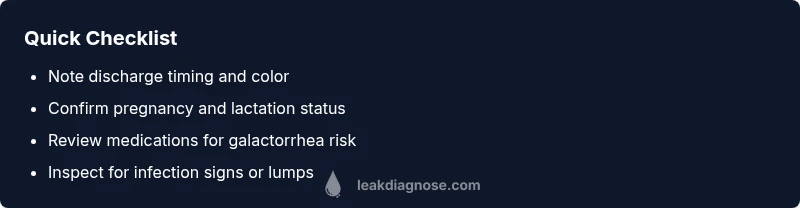
Before rushing to appointments, perform a few safe checks at home. Confirm pregnancy status and lactation status, review current medications with your doctor, and inspect both breasts for signs of infection (redness, warmth, fever) or a lump. Track timing, color, and whether leakage occurs with nipple stimulation or simultaneous breast tenderness. Keep notes ready for your healthcare provider. Avoid squeezing or expressing discharge forcefully, which can irritate skin and confound observations.
The Diagnostic Flow You Should Follow
A practical flow helps you move from symptom to appropriate action. Start with basic checks (pregnancy/lactation status, medications). If the discharge is clear and bilateral, monitor and schedule a clinician visit if it persists. If there is unilateral discharge, a lump, or color changes, arrange imaging and laboratory tests as advised by a clinician. Throughout, document timing, consistency, and associated symptoms to aid diagnosis.
Step-by-Step Home Response: What to Do Right Now
- Pause and document: note timing, color, consistency, unilateral vs bilateral, and any triggering activities. 2) Verify pregnancy status and lactation status; 3) Review current medications with your clinician for potential galactorrhea triggers; 4) Inspect the breast for lumps, redness, or fever; 5) Decide on next steps with your clinician—imaging (ultrasound or mammogram) or lab tests as recommended; 6) Seek urgent care if you notice blood in discharge, a rapidly enlarging lump, severe breast pain, fever, or red, warm skin. Tip: Keep a symptom diary and bring it to your appointment.
Safety, Warnings, and When to See a Doctor
If you notice blood-tinged discharge, a sudden unilateral lump, fever, or skin changes, seek medical attention promptly. Do not delay if you are pregnant, breastfeeding, or have a history of breast cancer. Always err on the side of caution when discharge changes color, consistency, or pattern.
Prevention and Long-Term Care
While not all leaks can be prevented, you can reduce risk by regular breast self-exams, mindful medication reviews with your clinician, and timely imaging when indicated. Maintain healthy thyroid function and manage stress through sleep, hydration, and balanced hormones.
Steps
Estimated time: 60-90 minutes
- 1
Pause and document
Record when leakage occurs, its color, and whether it’s unilateral or bilateral. Note any triggering activities or meds. This diary will guide your clinician.
Tip: Keep a dated log with sample descriptions. - 2
Check pregnancy/lactation status
If you’re pregnant or actively lactating, leakage can be normal. If not, you’ve narrowed the likely causes and can focus on hormones/medications.
Tip: Use a home pregnancy test if unsure. - 3
Review medications and hormones
Some drugs can trigger galactorrhea; review recent changes with your doctor and consider whether temporary adjustments are appropriate.
Tip: Bring a current medication list to your visit. - 4
Inspect for signs of infection or mass
Look for redness, warmth, fever, or a palpable lump. Any of these warrants prompt clinical assessment.
Tip: A simple mirror check helps track changes. - 5
Plan imaging and labs with your clinician
Your clinician may order ultrasound, mammogram, or hormone panels to determine the cause.
Tip: Ask about radiation exposure and alternatives. - 6
Follow up and document outcomes
After testing, discuss results with your clinician and set a follow-up plan if needed.
Tip: Keep all reports in a dedicated folder.
Diagnosis: Unexplained breast discharge in a person not actively lactating
Possible Causes
- highHormonal fluctuations or galactorrhea related to menstrual cycle, pregnancy, or thyroid imbalance
- highMedications known to cause galactorrhea (antidepressants, antipsychotics, dopamine antagonists, birth control)
- mediumBreast infection (mastitis) or blocked duct
- lowBenign breast conditions (fibroadenoma) or rare tumors
Fixes
- easyReview medications and hormonal status with a clinician
- easyPerform a pregnancy test and confirm lactation status
- mediumSeek medical evaluation for imaging (ultrasound/mammogram) and labs as advised
- easyIf signs of infection appear (fever, redness), seek urgent care
Questions & Answers
What does it mean if I notice breast leak after menopause?
Postmenopausal leakage can be due to hormonal changes, medications, or less commonly benign breast conditions. It should be evaluated to rule out serious causes, especially if unilateral or persistent.
Postmenopausal leakage can happen due to hormones or meds, but persistent discharge should be checked by a clinician.
Can stress cause breast leakage?
Stress can influence hormonal balance and sometimes contribute to breast discharge. If leakage is new or persistent, get evaluated to rule out other causes.
Stress can affect hormones, but a doctor should check new leaks to be sure.
When should I seek urgent medical care?
Seek urgent care if the discharge is blood-tinged, unilateral with a lump, accompanied by fever, or red, warm skin suggesting infection.
Urgent care if blood in discharge or a suspicious lump.
Is leakage always related to pregnancy or breastfeeding?
No. Leakage can occur without pregnancy or lactation due to hormones or medications. A clinician can determine the cause and appropriate treatment.
Not always pregnancy; many other causes exist and should be checked.
What tests might a doctor order for breast leakage?
A doctor may order imaging like ultrasound or mammography and blood tests to assess hormones and thyroid function, depending on the suspected cause.
Tests may include imaging and hormone checks to pinpoint the cause.
Watch Video
Main Points
- Note timing, color, and whether discharge is unilateral.
- Rule out pregnancy or lactation as immediate factors.
- Review medications for possible galactorrhea triggers.
- Seek medical care for persistent/unexplained leakage or red flags.
- Document symptoms to aid diagnosis and treatment planning.