What Does Refrigerant Leak Smell Like? Quick Diagnostic Guide
Discover what a refrigerant leak smells like, why relying on scent alone is unreliable, and how to safely diagnose HVAC refrigerant leaks in your home.


A refrigerant leak may smell sweet or solvent-like near the equipment, but many refrigerants are odorless. Do not rely on scent alone. If you notice a chemical odor around HVAC or a fridge, shut off the system, ventilate, and contact a licensed technician for a full inspection. Safety first, per Leak Diagnosis, immediately, follow safety guidance from the professionals.
What the smell might indicate
You asked, "what does refrigerant leak smell like?", and the answer isn’t one-size-fits-all. In many cases, people report a sweet, solvent-like odor near the HVAC cabinet or refrigerant lines when a leak is present. But not all refrigerants produce a noticeable scent—some are effectively odorless. Odor can point to a problem, but it is only a warning sign, not a definitive diagnosis. The Leak Diagnosis team notes that scent should trigger a safety check, not a self-diagnosis. In homes where this odor is detected, professional testing is essential to confirm a leak and identify the exact refrigerant type involved.
Why odor alone is not reliable for detecting leaks
Relying on scent to confirm a refrigerant leak is risky for several reasons. First, odor descriptions vary by refrigerant type and additives; one person might detect something sweet, while another senses nothing at all. Second, many modern systems use refrigerants with minimal odor, so you could miss a leak if you depend on scent alone. Third, smells can come from cleaning agents, solvents, or mold, leading to false positives. To reduce guesswork, pair any odor with physical signs (oil residue, frost on lines, reduced cooling) and, when in doubt, call a qualified professional. The Leak Diagnosis team emphasizes using odor as a warning cue, not a substitute for testing.
Immediate safety steps if you notice the odor
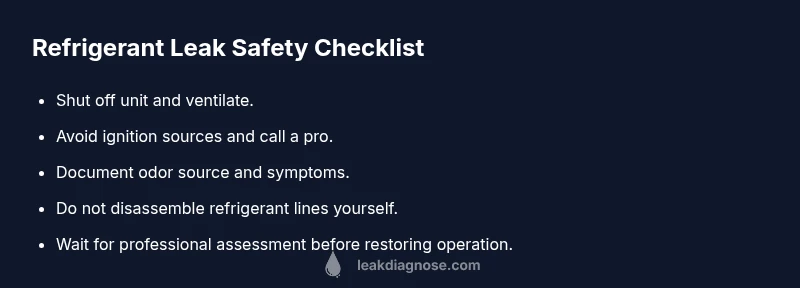
If you detect a chemical or sweet odor near an HVAC or fridge, act quickly but calmly. Shut off the appliance if it is safe to do so, and increase ventilation by opening doors and windows. Do not operate electrical switches near the suspected leak. Evacuate children and pets if the space feels crowded or dizzy. Seek professional help right away; refrigerant leaks can be hazardous and require professional handling, even if the odor seems mild.
How to inspect safely around your unit without disassembly
You don’t need to dismantle equipment to start evaluating. Look for signs like oily stains around joints, frost on copper lines, or hissing sounds. Check the outdoor compressor and service valves for oil residue or frost indicating a leak. Do not touch refrigerant or open sealed lines. If you observe any of these indicators, stop further attempts and contact a licensed technician.
Simple checks you can perform before calling a tech
Document the odor’s location and intensity, note when it started, and record any cooling symptoms (weakened cooling, longer cycling). Take photos of visible signs such as oil spots or ice on lines. Write down model numbers and service date codes; this helps the technician identify the likely refrigerant type and potential failure points. Remember: do not attempt to repair refrigerant lines yourself.
What to tell your technician and what to expect
Provide a full history: when the odor first appeared, any suspect events (power outages, recent servicing), and symptoms (frost, reduced cooling). A licensed HVAC professional will perform a leak test, recover refrigerant if needed, repair or replace faulty components, and recharge with the correct refrigerant. Expect protective equipment, specialized detectors, and a precise charge calculation. Confirm follow-up checks after the repair.
Prevention and maintenance to reduce refrigerant leaks
Regular maintenance reduces leak risk. Schedule annual inspections of connections, compressors, and seals; replace worn gaskets; ensure airflow and coil cleanliness; install a leak detector if appropriate for your system. Keep clear access around the unit for quick inspections. Use a professional for any refrigerant-handling tasks and follow local regulations.
Steps
Estimated time: 30-60 minutes
- 1
Power down and ventilate safely
If safe to do so, switch off the affected unit and increase ventilation by opening doors/windows. This reduces exposure risk and clears the work area for technicians.
Tip: Do not turn on the unit again until inspected by a pro. - 2
Assess immediate hazards
Check for signs of overheating, frost, or pooling liquid. If there’s dizziness, headaches, or eye irritation, leave the area and seek medical advice as needed.
Tip: Wear safety glasses and gloves if you must approach the unit. - 3
Document odor and symptoms
Note the odor location, intensity, and when it started. Record cooling performance changes to help the technician pinpoint the issue.
Tip: Take clear photos of any oil leaks or frost on lines. - 4
Avoid DIY refrigerant repairs
Refrigerant handling requires certified equipment and training. Do not seal or repair lines yourself.
Tip: Keep others away from the area until a pro arrives. - 5
Schedule professional testing
Contact a licensed HVAC technician to perform leak testing, repair, and recharge if needed.
Tip: Provide the technician with the documented symptoms and timing. - 6
Verify repair and monitor
After repair, ensure the system is tested for leaks and charged to spec. Monitor cooling performance and odor trends for a few days.
Tip: Ask for a post-repair inspection record.
Diagnosis: Strong sweet or chemical odor near HVAC or fridge accompanied by reduced cooling or frost on lines
Possible Causes
- highLow refrigerant charge leading to lubricant migration and odor distribution
- mediumComponent wear or loose connections allowing refrigerant to escape
- lowContaminants or degraded oil causing odor without a significant leak
Fixes
- easyShut off the equipment if safe and ventilate the area
- mediumCall a licensed HVAC technician to locate and repair leaks, then evacuate and recharge
- hardReplace faulty valves, seals, or major components and recharge refrigerant after leak repair
Questions & Answers
Can I rely on the smell of refrigerant to confirm a leak?
No. Smell can be misleading and refrigerants vary; it’s essential to use testing and professional inspection for confirmation.
Smell alone isn’t enough to confirm a leak; testing by a professional is required.
Is refrigerant leak dangerous to health?
Yes, exposure to refrigerant vapors can be hazardous. Ensure ventilation and contact a professional for safe handling and repair.
Exposure can be hazardous; ventilate and call a professional.
What should I do if I smell a sweet odor near my fridge?
Shut off the appliance if safe, ventilate the area, and contact a licensed technician for inspection and repair.
Turn it off, ventilate, and call a pro.
Are all refrigerants odorless?
Many refrigerants are odorless, but some may have faint smells. Do not rely on odor alone; testing is essential.
Most refrigerants don’t smell, so tests are needed.
How long does a refrigerant leak repair take?
Repair time varies by leak location and system. A technician will provide an estimate after inspection.
Repair time depends on the leak and parts; ask the tech for an estimate.
Watch Video
Main Points
- Odor alone isn’t proof of a leak.
- Ventilate and avoid ignition sources immediately.
- Call a licensed tech for testing and repair.
- Regular maintenance reduces leak risk.