Does Leaking Freon Have a Smell? Quick Troubleshooting
Learn whether freon leaks have a smell, why odor isn’t reliable, safety steps, and when to call a pro. A practical guide from Leak Diagnosis for homeowners and DIYers.


Definition: Freon leaks are not reliably detected by smell. Most refrigerants are odorless, and any scent is inconsistent. If you suspect a leak, ventilate, avoid breathing fumes, and contact a licensed HVAC technician who can verify with detection tools and proper recovery. Do not rely on your nose alone; exposure can cause dizziness, headaches, and respiratory irritation. Seek professional assessment promptly.
Understanding Freon and Odor
does leaking freon have a smell is a common question for homeowners dealing with an air conditioner or a refrigerator. The short answer is that freon leaks are not reliably detected by scent. According to Leak Diagnosis, most refrigerants used in residential systems are designed to be odorless, and any fragrance you notice can vary by product and additives. Odor is not a safe indicator of a leak, and relying on it can delay critical safety steps. Instead, focus on symptoms you can observe and the presence of telltale signs like frost on coils or reduced cooling efficiency. This article explains why odor isn’t a dependable detector and what you should do to stay safe if you suspect a freon leak.
In practical terms, odor alone should not guide your actions. If you detect a smell, you should still take protective steps and verify with proper equipment. The Leak Diagnosis team emphasizes vigilance and professional testing rather than scent-based conclusions.
Why Odor Isn't a Reliable Indicator
Odor can be misleading for several reasons. First, not all refrigerants carry a detectable scent, and some odors may come from unrelated chemical sources in the home. Second, even if a scent is present, it does not tell you the exact location, extent, or type of refrigerant involved. Third, exposure to some refrigerants and their vapors can irritate eyes, nose, and throat, or cause dizziness, especially in poorly ventilated spaces. Because a safe diagnosis requires precise measurements, odor alone is not a reliable diagnostic tool. Leak Diagnosis recommends using dedicated refrigerant detectors and sensor readings to confirm a leak before you take action beyond basic safety.
How Freon Leaks Occur and Where to Check
Freon leaks can occur at fittings, coils, hoses, or the condenser line. Common weak points include splices in copper lines, connections near the compressor, and aging seals. In refrigerators, leaks might originate from the evaporator coil enclosure or the tubing that carries refrigerant between the compressor and the evaporator. When checking, start with visible components: listen for hissing sounds, look for oil spotting near joints, and inspect for frost or ice crystals along copper lines. A refrigerant leak is more likely where metal components are stressed or where corrosion has occurred. Remember to avoid extensive disassembly if you are not trained and equipped for refrigerant handling.
Immediate Safety Steps if You Suspect a Leak
If you suspect a freon leak, prioritize safety above all else. Ventilate the space by opening doors and windows, turn off the appliance if it is safe to do so, and keep people and pets away from the area. Do not attempt to seal or patch refrigerant lines yourself; refrigerants require professional recovery and proper procedures. If someone experiences dizziness, headaches, or breathing difficulty, seek fresh air and medical advice promptly. Always follow local regulations about refrigerant handling. The safest path is to contact a licensed HVAC technician who can perform leak testing with electronic detectors and ensure the refrigerant is recovered correctly.
How Professionals Detect Freon Leaks
Qualified technicians use a combination of tools to locate leaks accurately. Electronic refrigerant leak detectors can sense trace amounts of refrigerant in the air, while UV dye methods reveal even small leaks when observed under ultraviolet light. Pressure tests and manifold gauges help determine whether the system has the correct refrigerant charge. Reputable technicians also inspect for contamination or signs of oil around joints and seals, which can indicate a leak area. Importantly, professionals follow environmental and safety guidelines to recover refrigerant and prevent exposure to occupants. If you notice any symptoms or suspect a leak, deferring to a pro minimizes risk and ensures proper repair.
What To Do Next: Repair or Replacement
After a confirmed leak, the next step depends on the location and extent of the damage. Small, serviceable leaks at fittings may be repaired by resealing or tightening connectors and recharging the system with the correct refrigerant. More extensive leaks in coils or the evaporator often require component replacement, which should be performed by a licensed technician using proper recovery equipment. In some cases, the most economical option is to replace the affected unit rather than attempting a costly repair. The key is to obtain a written diagnosis and a clear estimate for repair versus replacement from a certified contractor. Leak Diagnosis emphasizes safety and compliance throughout this process.
Prevention and Maintenance Tips
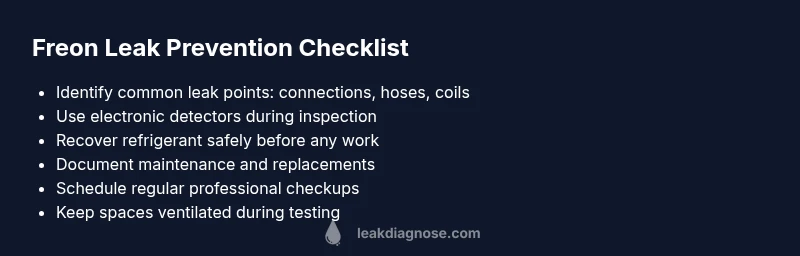
Preventive maintenance reduces the likelihood of freon leaks. Schedule annual inspections, replace aging seals and hoses as recommended by manufacturers, and ensure proper installation by qualified technicians. Keep outdoor units clear of debris and maintain adequate clearance for airflow. If your system is older or frequently requires top-ups, consider upgrading to a more efficient model with better refrigerant containment. Regularly check for frost buildup, unusual noises, or changes in cooling performance, and address them early. Proper documentation of maintenance and refrigerant handling helps reduce long-term risk and keeps your system running efficiently. Leak Diagnosis World advises homeowners to adopt a proactive maintenance mindset to minimize leaks and extend equipment life.
Common Myths and Quick Facts
- Myth: A strong smell means a freon leak. Fact: Odor is unreliable and not a dependable indicator.
- Myth: DIY refrigerant handling is safe with gloves. Fact: Refrigerants require licensed recovery equipment and training.
- Quick fact: Freon leaks pose health and environmental risks and should be addressed by professionals promptly.
Steps
Estimated time: 60-120 minutes
- 1
Prioritize safety and shut down if safe
Turn off the appliance or HVAC unit only if you can do so without risking exposure. Open doors for ventilation and move occupants away from the area.
Tip: If you smell fumes, leave the room and call for professional help immediately. - 2
Ventilate the space and reduce exposure
Open windows, use fans to circulate air, and avoid direct contact with refrigerant. Do not create sparks or use electrical switches that could ignite fumes.
Tip: Keep pets out of the area during initial assessment. - 3
Check for obvious signs of a leak
Look for oily residues near joints, frost on copper lines, or hissing sounds. These indicators can help narrow down the suspected location, but do not disassemble components beyond your comfort level.
Tip: Document visible signs with photos for the technician. - 4
Call a licensed HVAC technician
Schedule a professional inspection. Technicians use detectors and dye tests to locate leaks and perform proper recovery.
Tip: Ask for a written assessment, diagnosis, and estimate before any repair work. - 5
Avoid DIY refrigerant repair
Do not attempt sealing or repairing refrigerant lines yourself. Improper handling can cause injury and environmental harm.
Tip: DIY refrigerant work can void warranties and violate regulations. - 6
Prepare for repair or replacement
If the leak is repairable, the technician will perform the service and recharge the system. If replacement is recommended, weigh cost and efficiency.
Tip: Request guidance on maintenance to prevent future leaks. - 7
Verify system integrity after service
Ensure the unit is operating normally with correct pressure and refrigerant charge. Confirm there are no odors or leaks, and monitor performance over a few days.
Tip: Keep a maintenance log for future reference.
Diagnosis: Suspected refrigerant leak in a fridge or air conditioner
Possible Causes
- highLeaking fittings or connections
- mediumCracked evaporator or condenser coil
- lowHose or line damage from vibration or impact
Fixes
- easyTighten or reseal loose connections where safe and accessible
- hardEvacuate and recover refrigerant, then replace leaking coil or line
- mediumReplace the compromised component and recharge with the correct refrigerant
Questions & Answers
Is freon leak odor a reliable sign I have a leak?
No. Freon leaks often are odorless, and relying on scent can miss leaks or give false alarms. Use detectors and professional testing to confirm.
No—odor alone isn’t reliable. Use detectors and a licensed technician to confirm a leak.
What should I do right away if I suspect a leak?
Ventilate the area, shut off the unit if safe, keep people away, and contact a licensed HVAC technician for testing and recovery.
Ventilate and call a pro when you suspect a leak.
Can I repair the leak myself to save money?
DIY refrigerant repairs are not recommended. Handling refrigerants requires training and proper recovery equipment to avoid hazards and code violations.
No, don’t DIY refrigerant repairs. Call a professional to repair and recover safely.
How can I prevent freon leaks in the future?
Have regular professional maintenance, replace aging seals, and ensure proper installation to minimize leak risk.
Regular professional maintenance helps prevent leaks.
What happens if a leak is severe or the system is old?
Severe leaks or old systems may require replacement rather than repair to ensure efficiency and safety.
Sometimes replacement is the safer option for severe or aging systems.
Watch Video
Main Points
- Odor is not a reliable leak indicator.
- Ventilate and involve pros for any suspected freon leak.
- Use detectors and professional recovery for safety and compliance.
- Plan preventive maintenance to reduce future leaks.