Will Freon Leak Without Cap? Urgent Troubleshooting Guide
Urgent troubleshooting guide on whether will freon leak without cap, signs of a leak, safety steps, and when to call a licensed HVAC technician. Learn actionable checks to protect your home and appliances.


Likely, freon can leak without a cap if the system has damaged fittings, loose connections, or a cracked line. If you notice a hissing sound, frost on lines, or reduced cooling, shut off the unit at the thermostat and avoid ignition sources. Do not attempt repairs yourself; call a licensed HVAC tech to inspect the system and recover refrigerant safely. This is urgent because leaking refrigerant is hazardous to health and the environment.
will freon leak without cap — how it happens
Will freon leak without cap? In practice, refrigerant leaks are usually due to damaged lines, corroded fittings, or failed seals. A missing cap alone does not guarantee a leak, but it can expose the valve stem to dirt, moisture, and vibration that over time contribute to seepage around joints. Understanding the pathways helps you respond quickly and safely. Leaks are more common in aging systems or units that have undergone improper service. If a leak occurs, refrigerant escapes as a gas and may condense into a liquid as it cools, creating visible frost around connections and a drop in cooling performance. For homeowners, the most important action is to avoid panicking and to shut down the equipment if you suspect a leak, then call a licensed professional for diagnosis and recovery. According to Leak Diagnosis, timely recognition and professional intervention reduces exposure risk and environmental harm.
Signs a freon leak is present
Common indicators include a hissing noise near refrigerant lines, frost or ice on copper tubes, oily residues around joints, decreased cooling efficiency, longer run times, or ice formation on the outdoor condenser in hot weather. If your fridge or AC unit feels warm despite setting, or you smell chemical vapors, these are reasons to shut off power and seek service. Note that some signs may be subtle; a proper leak test requires professional equipment, but early clues can help you act quickly and minimize exposure.
Immediate safety steps you should take today
First, switch off the appliance and unplug it if accessible, and avoid using electrical switches near the area if you hear hissing or see frost. Ventilate the room by opening doors and windows, and keep children and pets away from the area. Do not attempt to seal or recharge the system yourself; refrigerant handling is hazardous and regulated. If you suspect a leak, contact a licensed HVAC technician immediately and arrange for refrigerant recovery and safe repair.
Safe diagnostic steps homeowners can perform without special tools
- Visually inspect exposed lines for cracks or corrosion; check whether the service cap is present and firmly tightened.
- Apply a soapy water solution to accessible joints and look for bubbling indicating a leak.
- Note any abnormal odors or chemical smells and document changes in cooling performance or ice formation.
- Do not attempt to operate a system that shows signs of a leak; shut down power and wait for a professional.
- If you have access to a leak detector tool, follow the manufacturer instructions to interpret readings and communicate results to the technician.
When to call a licensed HVAC professional
If you detect any sign of a Freon leak, you should call a tech promptly. A professional will confirm the leak with specialized equipment, recover any refrigerant safely, identify the exact leak path, and perform the necessary repairs or component replacement. They will also perform a system pressure test and a performance check to ensure the unit meets safety and efficiency standards. Since freon is a regulated refrigerant, DIY recharge is not advised and may be illegal.
How professionals diagnose and repair leaks
Professionals use electronic leak detectors, ultraviolet dyes, or infrared cameras to locate leaks. They recover refrigerant to prevent atmospheric release, repair or replace damaged lines or components, and pressure-test the system to ensure seals are tight. After repairs, they perform a controlled recharge with the proper refrigerant and monitor system performance. They also advise on post-repair safety and preventive maintenance to extend the life of your appliance.
Prevention: How to reduce future freon leaks
Regular maintenance is key: replace worn components, secure connections, and ensure caps or protective covers are in place. Schedule professional inspections at least once a year or after major mechanical work. Keep the outdoor unit free of debris and ensure vibration isn't causing stress on lines. Consider a dye test during routine service to catch small leaks early and improve efficiency and safety.
What to expect after a leak repair
After a leak is repaired and the system is recharged, you should notice improved cooling performance and energy efficiency. The technician will provide documentation, including the type of refrigerant used and charge amount, and may recommend a follow-up check in a few weeks. If symptoms recur quickly, seek a second opinion. Ongoing maintenance reduces the risk of future leaks and extends the life of the system.
Steps
Estimated time: 1-2 hours
- 1
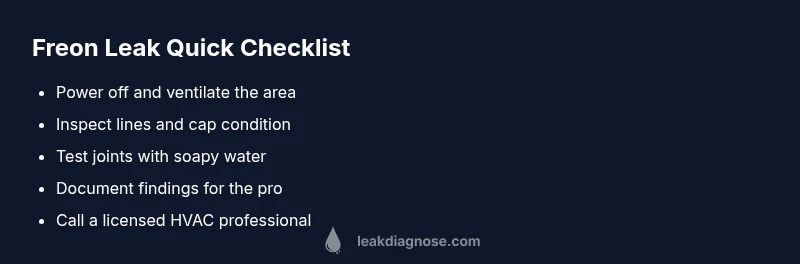
Power down and secure the unit
Turn off the appliance at the thermostat and unplug it if accessible. If outdoors, switch off at the service disconnect. Keep the area clear of flames or sparks while you assess the situation.
Tip: Do not restart the unit; a leak is present until proven safe by a professional. - 2
Inspect visible components and cap condition
Look for a missing or loose service cap and inspect connection fittings for looseness or corrosion. Remove any dirt that could mask a leak sign but avoid touching live electrical components.
Tip: Document the cap condition with photos to share with the technician. - 3
Test accessible joints with soap solution
Mix dish soap with water and apply to exposed joints and valve stems. If bubbles appear, you’ve likely found an active leak path. Mark or photograph the location for reference.
Tip: Do not use sharp objects to probe—damage could worsen leaks. - 4
Document findings for the pro
Note the symptoms, dates, and any changes in temperature or noise. Collect model/serial numbers, and keep a log of any observations.
Tip: Provide this to the technician to speed up diagnosis. - 5
Coordinate professional leak repair
Contact a licensed HVAC technician to perform leak detection, refrigerant recovery, and component repair or replacement. They will conduct pressure testing after repair.
Tip: Ask for a dye test and a written estimate before work begins. - 6
Post-repair verification and maintenance
After repair and recharge, run the system to verify performance. Schedule a follow-up check and implement preventive maintenance to reduce future leaks.
Tip: Keep a yearly maintenance schedule to catch wear early.
Diagnosis: Symptoms include hissing near refrigerant lines, frost on copper tubes, or reduced cooling performance.
Possible Causes
- highDamaged or loose refrigerant lines or fittings due to age, vibration, or improper maintenance
- mediumMissing or loose service cap allowing moisture ingress or dirt near valve stem
- lowInternal compressor seal wear or other internal leak
Fixes
- hardSchedule professional leak inspection with refrigerant recovery and leak test
- easySecure or replace the service cap if present and tighten fittings per spec
- mediumIsolate power and call for service; do not operate the unit until leak is repaired
Questions & Answers
What are the safety risks of Freon leaks in homes?
Freon leaks can displace oxygen and irritate the eyes, nose, and throat. Exposure poses health risks and environmental concerns. Always ventilate the area and call a licensed technician for testing and recovery.
Freon leaks can harm health by displacing air and causing irritation. Ventilate the space and contact a licensed technician for testing and safe recovery.
Will a loose or missing cap cause Freon to leak?
A missing cap can allow dirt and moisture to enter and may contribute to seepage around the valve stem, but leaks typically come from lines or seals. Always replace missing caps and have lines inspected.
A missing cap can let dirt in and may contribute to leaks, but leaks usually come from lines or seals. Replace the cap and have lines checked.
Can I drive with a Freon leak?
Driving with a Freon leak is unsafe and not recommended. A failing cooling system can overheat electrical components and pose health risks from leaked refrigerant.
No, don’t drive with a Freon leak. It’s unsafe and can damage the system and your health.
Should I attempt to recharge Freon myself?
No. Recharging refrigerant requires certification and specialized equipment. DIY attempts can be illegal and dangerous.
No, refrigerant recharge should only be done by a certified technician with proper equipment.
How long does a typical leak repair take?
Repair time depends on the leak path and system type, typically ranging from a few hours to longer for complex repairs. A diagnostic visit comes first.
Repair time varies, but most repairs take a few hours to a day depending on the leak.
What should I do immediately if I suspect a leak?
Shut off the unit, ventilate the area, and call a licensed HVAC technician for recovery and repair. Do not operate the system until it’s verified safe.
Shut off the unit, ventilate the area, and call a licensed HVAC technician. Don’t use the system until it’s checked.
Watch Video
Main Points
- Identify leak signs early to protect health and the environment.
- Do not delay professional help for suspected Freon leaks.
- Missing caps are a potential issue but not a guaranteed leak fix.
- Post-repair follow-up maintenance reduces future leak risk.