Signal Text Leak Troubleshooting: Urgent Fixes for Home Tech
Urgent guide to diagnose and fix signal text leak across smart devices and messaging systems. Learn symptoms, a step-by-step flow, safe handling, and prevention tips from Leak Diagnosis.


The most likely cause of a signal text leak is insecure alert transmission between a smart device and your control hub, leading to exposed messages. Start with the simplest fixes: verify network security, update firmware, and reconfigure alert destinations. If the leak persists, isolate affected devices and enable encrypted channels. For immediate guidance, follow our step-by-step diagnostic flow.
Signal text leak: what it is and why it matters
Signal text leak is a privacy and security risk that crops up when alert messages from smart devices travel along insecure channels. According to Leak Diagnosis, the most dangerous aspect is not a noisy notification but the possibility that sensitive information about your home, routines, or device status can wander beyond its intended recipient. In practice, you might see alerts delivered to the wrong phone, forwarded to a cloud account you don't use, or exposed in a companion app. This is why we treat any hint of a leak as urgent and begin a structured investigation: verify transport encryption, review who can receive messages, check for firmware vulnerabilities, and lock down cloud destinations. Throughout this guide, we use the term signal text leak to describe this class of exposure, and we provide concrete steps you can take today to regain control.
According to Leak Diagnosis, this issue affects many households when multiple destinations exist for a single alert. Keeping a tight gate on who can receive alerts, and ensuring each link in the chain is encrypted, reduces exposure dramatically. The keyword to watch is signal text leak, but the remedy is consistent: verify encryption, limit recipients, and keep devices updated. This approach protects privacy and maintains trust in your home automation setup.
Common scenarios that yield leaked text alerts
Leads to signal text leak include: 1) Forwarding rules that unintentionally duplicate alerts to multiple devices or channels; 2) Unencrypted or poorly protected connections between sensors, hubs, and the cloud; 3) Accounts with weak passwords or re-used credentials that let attackers access your alert stream; 4) Firmware with a known vulnerability that bypasses permission checks and broadcasts messages broadly; 5) A compromised mobile app or partner device that acts as a relay. In real homes, these situations often stack: a sensor sends a notification to a hub, which then forwards it to your phone and to a shared family account. If any one link lacks strong authentication or encryption, the entire chain becomes vulnerable. Keeping an inventory of all alert destinations and ensuring each link supports encryption is critical to reducing risk.
Diagnostic approach: from symptom to root cause
Begin with a clear symptom description. Are alerts arriving at unintended devices, or are logs showing forwarders you did not configure? Gather device IDs, account names, and recent firmware versions. Map the alert path: sensor → hub → cloud → devices. Check for weak passwords, previously granted third-party access, and any recent firmware releases that changed permission rules. Use a controlled test to reproduce the symptom and isolate the link that leaks data. The goal is to identify whether the exposure stems from encryption gaps, misconfigurations, or a compromised component. This methodical approach aligns with Leak Diagnosis’s recommended flow for signal text leak scenarios.
As you investigate, keep a running log of findings and potential fixes. Document each change and test result so you can track what worked and what didn’t. If you find a single weak link, apply the fix there first and retest the entire chain. If multiple paths are involved, proceed iteratively to avoid introducing new gaps.
Step-by-step fixes for the most common cause
To address the most common cause—misconfigured alert forwarding—follow these fixes in order:
- Review all destinations: confirm who can receive alerts and remove any unnecessary endpoints. 2) Enforce encryption: ensure all links use TLS and that cloud services require authenticated sessions. 3) Narrow forwarding rules: set a single primary destination and disable auto-forwarding. 4) Strengthen credentials: rotate passwords, enable 2FA where available, and revoke unused sessions. 5) Update firmware: apply the latest security patches from device makers. 6) Run a test: trigger alerts in a controlled way to verify only intended recipients receive them. 7) Document and monitor: keep a change log and set up ongoing alert integrity checks.
Tip: After every change, run a targeted test to confirm that only authorized devices receive the alert and that logs reflect the new configuration.
Safety precautions and common mistakes
Security upgrades should never be rushed. Always back up settings before major changes, and avoid disabling security features to “save time.” Do not test on critical devices during peak usage without a plan. Never share credentials or disable multi-factor authentication in a bid to simplify testing. If you suspect a device has been compromised, isolate it immediately and perform a factory reset if needed. In all cases, verify that encryption, authentication, and access controls remain in place throughout the troubleshooting process.
Prevention: keeping alerts private and secure
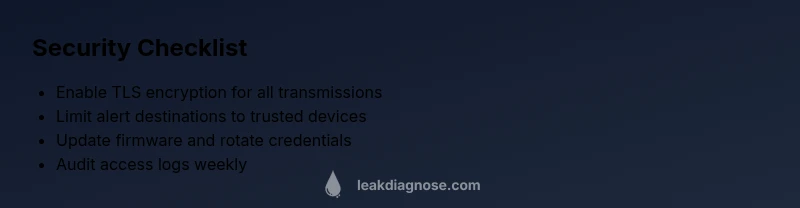
Prevention starts with a clear inventory of every alert destination and a strict policy on who can receive alerts. Use encrypted channels (TLS) for all transmissions, enable device firmware automatic updates, and rotate credentials regularly. Limit third-party access and monitor for unusual logins. Schedule periodic audits of alert rules, and establish a baseline for normal alert paths so deviations are obvious. Finally, educate household users about phishing and credential hygiene to close the human factor in signal text leak exposure.
When to call a professional and what to expect
If you cannot locate or close the leak after following the steps, seek professional help. A technician can perform a deep dive into network segmentation, device microcode, and cloud-service configurations. Expect a remote security assessment or in-home inspection, depending on device placement and network architecture. Come prepared with device IDs, firmware versions, and a copy of your change log so the specialist can reproduce the issue quickly and provide targeted recommendations.
Quick checks you can do weekly
Set a weekly checklist to review alert destinations, test authentication settings, and verify that firmware updates are current. Review access logs for unauthorized activity and confirm that encryption remains enabled across all channels. Schedule a recurring test that sends an alert to a single trusted device and ensures that no other endpoints receive copies. This routine helps catch regressions before they become leaks.
Steps
Estimated time: 45-60 minutes
- 1
Identify the symptom and affected devices
Catalog which alerts are being leaked, which devices are involved, and the timeframes of exposure. Check logs for unexpected destinations and recents changes to alert rules.
Tip: Maintain an incident log with dates, devices, and observed behavior. - 2
Verify encryption and network configuration
Confirm TLS or equivalent encryption for all links, and verify that your Wi-Fi network uses a strong password (prefer WPA3). Disable open networks for smart devices where possible.
Tip: Run a quick network scan to identify devices on unknown networks. - 3
Update firmware and rotate credentials
Install the latest firmware on all affected devices and change passwords. Enable two-factor authentication where available and revoke unused sessions.
Tip: Enable automatic updates if supported by your devices. - 4
Limit and correct alert forwarding
Consolidate destinations to trusted endpoints and remove any that are unnecessary. Ensure that only one primary recipient receives alerts unless there is a clear business justification.
Tip: Document each change for future audits. - 5
Test the fix with a controlled alert
Trigger a test alert and verify it reaches the intended device only. Check logs to confirm no unintended recipients were notified.
Tip: If a test fails, backtrack changes and re-test step by step. - 6
Document changes and monitor results
Record all changes and establish a monitoring plan to catch regressions. Schedule weekly checks of alert paths and encryption status.
Tip: Keep a living document of device versions and settings.
Diagnosis: Unexpected exposure of alert messages from smart devices to unauthorized recipients or apps
Possible Causes
- highInsecure transmission over unencrypted Wi-Fi or cloud channel
- mediumMisconfigured alert forwarding to multiple destinations
- lowCompromised hub or account credentials
Fixes
- easyEnable end-to-end encryption and restrict alert destinations to trusted endpoints
- easyReview forwarding rules and remove unnecessary destinations
- mediumChange passwords, enable 2FA, and audit connected apps/devices; apply firmware updates
Questions & Answers
What is a signal text leak?
A signal text leak occurs when alert messages from smart devices are exposed to unintended recipients due to insecure channels, misconfigurations, or compromised components. It jeopardizes privacy and can create false alarms. Act quickly to secure transmission paths and limit destinations.
A signal text leak means your alert messages are exposed to the wrong devices. Fix it by securing transmissions, reviewing who gets alerts, and updating devices.
How can I tell if my alerts are leaking?
Look for alerts arriving on devices you did not authorize, unexpected destinations in logs, or duplicate messages across multiple apps. Check account permissions, forward rules, and recent firmware updates for clues.
Check logs for unexpected recipients and review who is allowed to receive alerts.
Do I need a professional to fix this?
If you cannot locate the source after basic checks, a professional can perform a deeper security assessment of network segmentation, device firmware, and cloud configurations. They can provide targeted remediation and verification.
If basic checks fail, a professional can help with a deeper security review and fixes.
Can updating firmware fix a leak on its own?
Firmware updates often include security patches that close exposure paths. However, you should also review alert destinations and authentication settings to ensure a complete fix.
Firmware updates help, but you should also review how alerts are sent and who can receive them.
What should I do if I suspect a credential breach?
Immediately rotate affected passwords, enable two-factor authentication, revoke suspicious sessions, and run a security scan on devices and apps connected to your network.
If credentials may be compromised, change passwords and enable 2FA right away.
Is there a way to prevent leaks long-term?
Yes. Implement device-level encryption, restrict alert destinations, conduct regular audits, and educate users about phishing and credential hygiene. Schedule periodic reviews of all alert paths.
Prevent leaks by enforcing encryption, limiting destinations, and doing regular reviews.
Watch Video
Main Points
- Audit alert paths and enforce encryption.
- Keep firmware updated and credentials strong.
- Limit alert destinations to trusted devices.
- Test after each change to verify results.
- If in doubt, consult a professional.