Freon Leak Troubleshooting: Quick Guide for Homeowners
Urgent freon leak troubleshooting guide for homeowners. Learn how to recognize signs, protect your family, and understand why only licensed technicians should handle refrigerant leaks.


Freon leaks are usually caused by worn refrigerant lines, loose connections, or damaged coils in HVAC systems. The quickest fix is to shut off the AC, ventilate the area, and avoid exposure. Do not recharge refrigerant yourself; freon handling requires a licensed technician and proper containment to prevent environmental harm. For safety, call a pro now.
What is a Freon Leak?
According to Leak Diagnosis, freon leaks are a sign your cooling system is losing essential refrigerant, reducing efficiency and risking health and the environment. Freon is a registered refrigerant used in many home air conditioners and some refrigeration equipment. When a leak occurs, pressurized gas escapes through small holes or damaged joints, often with a visible oil residue around connections. In most residential systems, leaks stem from aging copper tubing, loose fittings, corrosion, or vibration-induced fatigue. Freon leaks can manifest as warm air, inconsistent cooling, frost on lines, or a faint chemical odor. Because many Freon refrigerants contribute to ozone depletion and climate impact, proper containment and professional handling are essential. If you suspect a leak, avoid charging or dumping refrigerant yourself and instead prepare to call a licensed technician who can locate, seal, and safely recharge as needed. You are dealing with a hazardous material, so act quickly but calmly.
Common Causes in Residential Systems
Freon leaks commonly occur at connections and along aging copper lines, coil joints, or near compressor fittings. In home HVAC setups, frequent vibration or thermal expansion can loosen fittings. Corrosion on the evaporator or condenser coil can create small pinhole leaks. Poor initial charging or using the wrong refrigerant during service can also contribute. Additional factors include physical damage from accidental impacts, pets chewing on lines, or improper ladder placement during maintenance. Routine service that skips leak testing can allow a tiny leak to grow over time. Regular inspection by a qualified technician can help catch these issues before they escalate.
Health and Environmental Risks
Freon leaks pose health risks if the refrigerant evaporates in occupied spaces. Inhalation can cause dizziness, headaches, and breathing discomfort, especially for sensitive individuals. The gas can displace oxygen in small, poorly ventilated rooms, creating a risk of suffocation. Environmentally, many refrigerants contribute to climate change or ozone depletion if released. Handling and disposal are subject to local regulations, and improper venting can lead to fines or liability. If you notice unexplained odors, eye irritation, or breathing difficulties near your HVAC equipment, evacuate and seek fresh air.
Immediate Safety Steps When You Suspect a Freon Leak
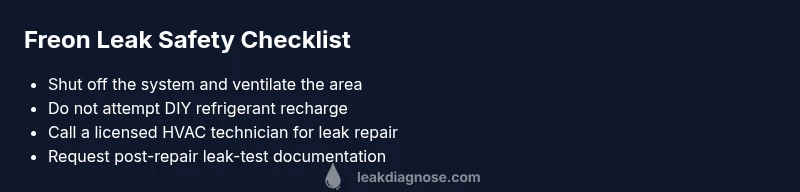
- Shut off the air conditioning unit at the thermostat or disconnect the power to the outdoor unit to stop continued leakage.
- Ventilate the area by opening doors and windows and avoid creating ignition sources.
- Do not attempt to recharge or seal refrigerant lines yourself; freon handling requires licensed professionals and proper recovery equipment.
- If anyone has symptoms of exposure, move to fresh air and seek medical attention if symptoms worsen.
- Gather model details (make, model, age) and recent service history to share with the technician.
- Contact a licensed HVAC contractor promptly for leak detection and safe repair.
Diagnostic Flow: Symptom → Diagnosis → Solutions (Overview)
Start with common symptoms: weak cooling, frost on lines, hissing sounds, or oily residue near fittings. These clues point toward a refrigerant leak rather than a simple thermostat issue. Use a professional refrigerant leak detector or fluorescent dye as part of a licensed service to confirm the leak. If a leak is confirmed, the typical path is to repair or replace the damaged components, recover refrigerant, seal the system, and recharge with the correct amount of refrigerant. If no leak is found, consider a refrigerant undercharge due to prior service, poor airflow, or thermostat calibration issues.
Step-by-Step Fix: What a Licensed Technician Will Do
- Inspect and locate the leak using electronic detectors and dye.
- Recover any remaining refrigerant to meet environmental regulations.
- Repair or replace damaged copper tubing, coils, or fittings; re-seal connections.
- Vacuum the system to remove moisture and test for integrity.
- Recharge with the correct refrigerant type and charge according to manufacturer specs.
- Verify cooling performance and perform leak-test post-repair. Tip: After service, ask for a written leak-test certificate and a service report showing refrigerant type and charge amount. Estimated time varies by system complexity; plan for several hours up to a full day in some cases.
Prevention: How to Minimize Freon Leaks in the Future
- Schedule preventive maintenance at least once a year with a licensed HVAC technician; leak testing should be part of every service.
- Check the outdoor unit and refrigerant lines for signs of wear, corrosion, or physical damage and address promptly.
- Ensure proper airflow and clean filters to reduce strain on the system and the risk of freon leaks.
- Use manufacturer-approved replacement parts and refrigerants; avoid DIY modifications.
- Keep records of past leaks and repairs; a history helps technicians spot recurring issues early.
Steps
Estimated time: 1-3 hours
- 1
Stop and secure the area
Power down the air conditioner or shut off supply to the outdoor unit. Keep people and pets away from the equipment to minimize exposure risk.
Tip: If there is any sign of strong chemical odor, leave the area immediately. - 2
Ventilate the space
Open doors and windows to improve airflow and reduce refrigerant concentration in occupied spaces.
Tip: Turn on fans that pull air outward to help exhaust fumes. - 3
Document and assess
Note symptoms, dates, and any visible signs like oil residues or frost; take photos for the technician.
Tip: Record model and serial numbers for accurate service. - 4
Avoid DIY repairs
Do not attempt to charge or seal refrigerant lines yourself; mishandling can cause injuries and environmental harm.
Tip: Prepare questions for the technician about warranty and parts. - 5
Call a licensed professional
Contact a certified HVAC technician immediately for leak detection and safe repair.
Tip: Ask if they recover refrigerant and provide a service report. - 6
Verify repair and test
After service, ensure the tech tests for leaks and confirms proper refrigerant charge and cooling efficiency.
Tip: Request a leak-test certificate and system test results.
Diagnosis: AC not cooling or refrigerant odor/hissing or frost on lines
Possible Causes
- highSmall puncture in refrigerant line or pinhole leak
- highLoose fittings or damaged connections near compressor/coil
- mediumEvaporator/condenser coil corrosion
- lowLow refrigerant charge from a previous leak or improper service
Fixes
- hardDo not attempt to recharge or seal refrigerant yourself; contact a licensed HVAC technician for leak detection and repair
- easyIf safety allows, shut off the system and ventilate the area while awaiting service
Questions & Answers
What should I do immediately if I suspect a freon leak?
Shut off the AC, move to fresh air, and contact a licensed HVAC technician for leak detection and repair. Do not attempt to recharge refrigerant yourself.
Shut off the AC and get to fresh air, then call a licensed HVAC tech for a proper leak check and repair.
Can I fix a freon leak myself?
No. Freon leaks require specialized equipment, recovery systems, and licensing to handle refrigerants safely and legally.
No—freon leaks must be handled by a licensed professional with proper equipment.
Is freon dangerous to breathe?
Yes. Inhalation can cause dizziness and breathing difficulties, especially in poorly ventilated spaces. Leave the area and seek medical attention if symptoms persist.
Breathing freon can cause dizziness; leave the area and seek medical help if you feel unwell.
How long does a freon leak repair take?
Repair time varies with leak location and system complexity. Most minor leaks are addressed in a few hours, while older systems may require more time.
Repair time varies; simple leaks may be a few hours, longer for complex systems.
What should I look for in a technician?
Choose a licensed HVAC contractor with refrigerant handling certification and clear reporting practices. Ask about leak verification post-repair and proper refrigerant recovery.
Look for a licensed tech with refrigerant handling certification and a clear post-repair report.
How can I prevent freon leaks in the future?
Schedule annual maintenance, ensure professional leak testing during service, and avoid DIY refrigerant work. Keep lines and coils clean and undamaged.
Regular maintenance and professional testing prevent leaks; avoid DIY refrigerant work.
Watch Video
Main Points
- Identify freon leaks early to protect health and avoid waste.
- Only licensed professionals should handle refrigerant leaks.
- Document symptoms and maintain records for future preventive maintenance.
- Regular maintenance reduces the risk of future freon leaks.