Does a Vacuum Leak Make Noise? A Troubleshooting Guide
Learn how to identify, diagnose, and fix vacuum leaks that cause noise in automotive systems. Practical steps, safety tips, and prevention to keep engines running smoothly.


A vacuum leak often produces a distinct hiss or whistle as air escapes through a damaged hose, faulty gasket, or cracked manifold. In most vehicles the noise is most noticeable at idle or during acceleration, pointing to the intake, vacuum lines, or brake booster as likely sources. Start with the simplest checks to confirm a leak before proceeding to deeper diagnostics.
What a vacuum leak sounds like and why it matters
A vacuum leak occurs when unmetered air enters the engine’s intake manifold or vacuum system. Because the engine relies on controlled air flow and pressure, even a small crack or loose connection can alter idle speed, cause rough running, and create a perceptible hiss or whistle. While the sound alone isn’t a definitive diagnosis, it’s a strong clue when paired with rough idle, stalling, or reduced fuel efficiency. For homeowners and DIY enthusiasts, recognizing the audible cue and mapping it to likely components—vacuum hoses, intake manifold gaskets, and the brake booster hose—lays the groundwork for safe, methodical troubleshooting.
Throughout the process keep a calm, safety-first mindset. Work in a well-ventilated area, disconnect the battery if you’ll be handling electrical sensors near the intake, and avoid sharp edges around hot engine components.
Common causes where noise originates
Vacuum systems depend on sealed connections. The most frequent noisy sources include cracked or split vacuum hoses that sit near the engine bay heat, loose clamps that allow air to bypass joints, and damaged throttle body or intake manifold gaskets. A failing brake booster hose can also create a persistent hiss when the booster line pulls vacuum. Finally, aftermarket modifications or a loose gas cap won’t cause a vacuum whistle, but they can trigger other air-leak symptoms that mimic vacuum noise.
- Cracked or brittle hoses: visible wear, aged rubber, or chemical degradation from road grime.
- Loose or missing clamps: hoses that pop off under pressure or vibration.
- Intake manifold gasket leaks: often more pronounced at idle as the engine vacuums down.
- Brake booster hose: a soft, hissing sound tied to braking vacuum.
- PCV system leaks: a noisy valve or hose can create hissing under certain RPMs.
If you hear the hiss only when accelerating or under engine load, prioritize the hose routing and connections around the intake.
How to listen safely and isolate the sound
Begin by with the engine off and cool, then visually inspect for obvious signs of wear. When the engine is running, place a hand near suspect hoses (without touching hot components) to feel for air movement, or use a long screwdriver as a stethoscope to localize the noise. Soapy water can reveal leaks on exterior joints; spray along hoses and gaskets and watch for bubbles.
Remember to avoid contact with hot exhaust components and to disconnect the battery if you’ll be removing any electrical sensors. If the hiss is near the brake booster, perform a careful check of the booster hose as it is a common leak point and a potential safety concern if compromised.
Diagnostic approach: symptom to likely source map
Use a simple symptom-to-source logic to guide your inspection. Rough idle and fluctuating RPMs often indicate intake leaks or PCV valve issues. A hiss that appears under throttle is a sign of a hose or gasket problem along the vacuum route. If the noise is present with the brake pedal depressed, the brake booster hose or check valve may be the culprit. Finally, a persistent leak that doesn’t change with RPM often points to a clogged PCV line or a loose intake gasket.
- Symptom: rough idle – Likely: intake gasket, PCV, or hose leak.
- Symptom: hiss under throttle – Likely: vacuum hose or manifold leak.
- Symptom: hiss with brake application – Likely: brake booster hose or check valve.
- Symptom: no sound but poor fuel economy – Likely: small, hard-to-see leak or PCV issue.
Quick checks you can do before deeper repair
Start with the easiest, non-invasive checks:
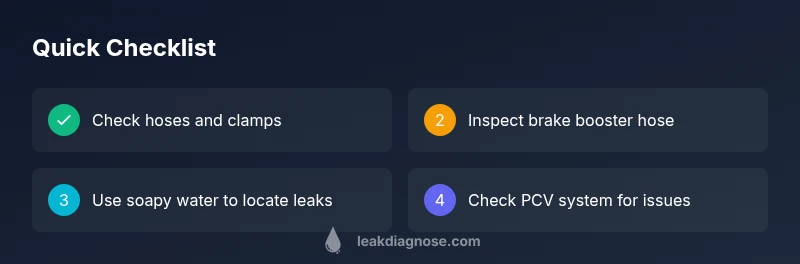
- Inspect all visible vacuum hoses for cracks or disconnections.
- Ensure clamps are snug and present on every hose run.
- Check the brake booster hose for wear or damage near the booster.
- Confirm the gas cap is sealed, though a loose cap doesn’t produce a vacuum whistle, it can contribute to improper vacuum operation.
- If equipped, inspect the PCV valve and lines for blockage or sticking.
If nothing obvious shows up, move to a controlled leak-detection process using soapy spray or a professional vacuum diagnostic tool.
Safety and when to call a professional
Vacuum leaks can be a sign of larger engine issues. If the noise persists after basic hose inspections, or if you notice engine misfires, reduced power, or a stabilizing idle only with professional equipment, seek a mechanic. Brake system work is safety-critical; if you’re uncertain about brake booster integrity, do not drive the car until a professional confirms the system is safe.
Steps
Estimated time: 60-90 minutes
- 1
Prepare and safety-check
Park on a flat surface, set the parking brake, and turn off the engine. Allow cooling time, disconnect the battery if you’ll touch electrical sensors near the intake, and gather soap solution and a spray bottle. Safety first keeps you from burns or accidental short circuits.
Tip: Wear eye protection and gloves; avoid hot exhaust components. - 2
Visually inspect all hoses and clamps
With the engine off, run a thorough visual scan of all vacuum hoses for cracks, tears, or hardening. Check clamps to ensure none are loose or missing. Move hoses gently to spot any hidden wear that could open under pressure.
Tip: Replace any hoses that feel weak or show signs of aging; don’t reuse cracked hose sections. - 3
Test for leaks using soapy solution
With the engine running at an idle, spray a soapy water solution on suspect joints and watch for bubbles indicating air leaks. Focus on hose ends and the brake booster connection. If you’re unsure, apply a steady, light spray and listen for changes in engine idle.
Tip: Avoid spraying near hot engine parts; use a fan to keep yourself cool during testing. - 4
Check the brake booster line
Inspect the brake booster hose where it connects to the intake manifold and the booster itself. A cracked or loose booster hose often creates a noticeable hiss when braking or under vacuum load.
Tip: If the booster hose is suspect, perform a gentle pressure test or consult a professional—brake system integrity is critical for safety. - 5
Inspect PCV system and related valves
Locate the PCV valve and its hoses; a clogged or stuck PCV valve can mimic vacuum leaks. Remove and clean or replace as needed following manufacturer guidelines. Reconnect everything securely.
Tip: Use manufacturer-recommended parts; PCV components vary by engine model. - 6
Re-test and document improvements
Restart the engine and re-scan for leaks. If the hiss is reduced but not eliminated, repeat targeted checks in suspected areas. Document what you found for future maintenance and to brief a technician if needed.
Tip: Keep a log of findings and parts replaced to monitor results over time.
Diagnosis: Engine idle fluctuates and there is a hiss/noise around vacuum hoses
Possible Causes
- highCracked or loose vacuum hose
- mediumLoose hose clamps or fittings
- lowBrake booster hose or check valve leak
- mediumIntake manifold gasket leak
- lowPCV system leak or valve issue
Fixes
- easyTighten or replace cracked hoses and all clamps
- mediumReplace damaged brake booster hose or faulty check valve
- hardRepair or replace intake manifold gasket if visible leaks are found
- easyInspect PCV valve and lines; clean or replace as needed
Questions & Answers
What are the most common signs of a vacuum leak in a car?
Typical signs include a rough idle, stalling, decreased power, and a noticeable hiss around vacuum hoses or the brake booster. You may also see fluctuating RPMs and reduced fuel economy. If you notice these together, investigate the intake and hose connections first.
Common signs are rough idle, loss of power, and a hiss near hoses. Start with inspecting the intake hoses and brake booster for leaks.
How can I locate a vacuum leak safely?
Start with the obvious hoses and clamps, then use a soapy water spray on joints while the engine runs to spot bubbles. A handheld stethoscope or long screwdriver can help you hear the leak source more clearly without removing components.
Use soap on joints and a stethoscope or screwdriver to find the leak safely.
Can I fix a vacuum leak myself at home?
Many vacuum leaks, like cracked hoses or loose clamps, can be fixed at home with basic tools. More complex issues, such as manifold gasket leaks or brake booster problems, may require professional service. Always follow safety precautions.
Many leaks are DIY-friendly, but some require a mechanic for safety and reliability.
Will a vacuum leak trigger a check engine light?
A vacuum leak can trigger a check engine light if the ECM detects abnormal air intake or fuel trim. A diagnostic scan may be needed to confirm the exact fault codes and guide repairs.
A vacuum leak can cause a check engine light, and a scan helps identify the exact issue.
Does every vacuum leak cause noise?
Not every vacuum leak is audible. Some leaks are small and don’t produce a noticeable hiss, especially if they occur in less accessible areas. Noise presence strongly suggests a detectable leak at a connection or hose.
Some leaks aren’t audible, but a hiss usually means a leak is present.
When should I seek professional help for a vacuum leak?
If the hiss persists after basic DIY checks, if you suspect brake booster issues, or if you’re uncomfortable working around the engine bay, consult a qualified technician. Brake system health is critical for safe operation.
If the leak remains after checks or involves the brake system, get a professional.
Watch Video
Main Points
- Identify hiss sounds as the first clue for vacuum leaks
- Inspect hoses, clamps, and brake booster lines for visible wear
- Use soapy water to locate air leaks safely
- Follow a symptom-to-source diagnostic flow to narrow down causes
- Call a professional if booster hoses or manifold gaskets are involved