Cost to Fix a Ceiling Leak: A Practical Homeowner's Guide
Explore cost ranges, common causes, and smart budgeting for ceiling leaks. Learn how source, extent, and remediation affect price, plus DIY vs. professional strategies with expert insights from Leak Diagnosis.


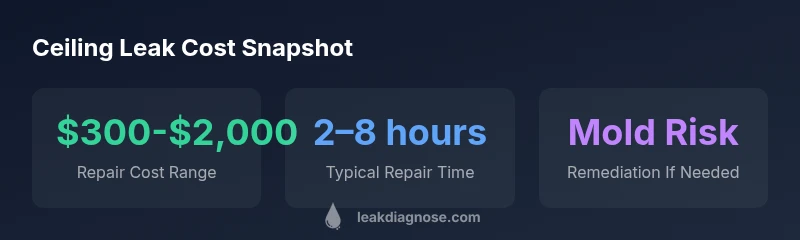
The typical cost to fix a ceiling leak ranges from $300 to $2,000 for most repairs, depending on leak source, ceiling type, and accessibility. Major fixes can exceed $3,000 if structural damage or mold remediation is needed. DIY fixes may reduce costs, but a professional assessment is advised to identify hidden leaks.
Why the cost to fix a ceiling leak varies
According to Leak Diagnosis, ceiling-leak costs hinge on multiple interacting factors from the moment you first notice dampness. The leak source—whether it’s a roof penetration, a plumbing line, or an HVAC condensate line—dramatically shifts the price range. The ceiling’s material and location affect how easily access is gained for removal and repair. A small water stain in a plaster ceiling after a quick patch may carry a lower price tag, while damp drywall in an attic or crawlspace may require extensive drywall replacement, insulation checks, and moisture control measures. Accessibility plays a critical role: a leak that is easy to reach from an attic hatch, without removing precious trim or fixtures, tends to cost less than one buried behind cabinetry or behind a loaded bathroom ceiling. Finally, the overall extent of water damage, the need for mold remediation, and whether structural elements are compromised all drive costs upward. In short, pricing is highly situational and requires a professional assessment to avoid under- or over-scoping the repair.
Common ceiling leak scenarios and price ranges
Leaky ceilings appear in several common scenarios, each with its own price implications. A minor drip around a fixture or light can often be addressed with a simple reseal and fixture replacement, typically in the lower part of the price spectrum. If drywall has absorbed moisture and needs patching, sanding, and repainting, expect mid-range costs. Major repairs involving significant drywall replacement, insulation, and potential mold remediation can push total costs into the higher end. Ceiling water damage after a roof leak, for instance, may require roof repair, attic venting adjustments, and comprehensive moisture control that increases both labor and material costs. Mold remediation adds further layers of expense and may necessitate air filtration, containment, and ongoing moisture management to prevent reposting moisture issues.
DIY vs. professional repair: cost considerations
DIY fixes can shave several hundred dollars off a basic seal or patch if you’re confident with tools and safety. However, DIY is risky when moisture is active or when structure and mold are involved. A professional inspection helps identify hidden leaks that could recur, which, in turn, reduces the chance of repeated damage and compounding costs. Pros also handle proper disposal of damaged materials, compliance with local codes, and ensuring that insulation and moisture barriers are restored to their original performance. For most homeowners, budgeting for a professional assessment provides peace of mind and long-term savings, even if you perform minor repairs yourself.
Step-by-step approach to estimate your ceiling leak repair cost
Start by locating the source: is it a roof leak, plumbing line, or HVAC condensate? Document visible damage with photos and note water intrusion patterns. Next, quantify the affected area: estimate the square footage of stained or damaged ceiling and drywall. Then, assess material needs: replacement drywall, tape, joint compound, primer, and paint. Add labor: professionals typically charge by hour or per job, depending on complexity and travel distance. Don’t forget ancillary costs like insulation, mold testing, and moisture barriers if moisture has spread. Finally, prepare for potential follow-up work and contingency: the first repair may reveal additional underlying issues, so a contingency of 10–20% is prudent.
Hidden factors that can surprise homeowners
Several factors can surprise even meticulous homeowners. Mold growth can appear behind walls or above ceilings after water exposure, immediately increasing remediation costs and timeline. If the leak is from a hidden source (for example, a roof leak that travels along joists before dripping into the ceiling), professional detection equipment may be necessary, adding to the upfront cost. Permits may be needed for significant structural work, which adds time and expense. Insurance considerations vary widely by policy and cause of water entry; understanding your coverage can significantly affect out-of-pocket costs. Finally, the type of ceiling material matters: plaster, drywall, and acoustic tiles each require different repair approaches and materials, influencing both labor intensity and material price.
How to plan and budget for ceiling leak repairs
Create a repair budget by segmenting costs into discovery, material replacement, labor, and contingency. Expect to pay more if you need insulation replacement or if mold remediation is necessary. Obtain multiple written estimates from licensed contractors to compare scope and price, and ask for a detailed breakdown of line-item costs. Save receipts and document moisture readings to support insurance negotiations if applicable. For ongoing prevention, invest in moisture barriers, upgraded roofing where appropriate, and regular attic inspections to catch leaks early. A proactive maintenance plan reduces the risk of expensive surprises later.
Ceiling leak cost scenarios and ranges
| Ceiling Leak Scenario | Estimated Cost Range | Key Considerations |
|---|---|---|
| Minor ceiling drip (fixture/roof nearby) | $100-$300 | Quick patch; minimal staining; inspect source |
| Moderate water damage with drywall repair | $300-$1,500 | Patching, repainting, insulation check |
| Severe damage or mold remediation | $1,000-$5,000 | Structural repair; mold remediation; possible ceiling replacement |
Questions & Answers
What is the typical cost range to fix a ceiling leak?
Most fixes fall between $300 and $2,000, depending on the source and extent of the damage. If mold remediation or significant drywall replacement is required, total costs can rise. Always factor in labor, disposal, and potential insulation changes when budgeting.
Ceiling leak repairs usually run from a few hundred to a couple thousand dollars, depending on damage extent. Mold remediation and major drywall work push costs higher, so plan for labor and materials. A professional assessment helps set expectations.
What factors influence the ceiling leak repair cost?
Key factors include the leak source (roof, plumbing, or HVAC), accessibility, ceiling material, extent of water damage, and whether mold remediation or structural repairs are needed. Each factor adds labor and materials, driving the total up or down.
The price depends on where the leak is, how easy it is to reach, what material you’re repairing, and whether mold or structural work is involved.
Can I fix a ceiling leak myself?
For small, accessible leaks near fixtures, a careful patch and seal may be doable. However, leaks that involve hidden damage, mold, or structural components should be handled by a licensed professional to prevent further harm and ensure code compliance.
If it’s a simple fix near a fixture, you might DIY. For hidden leaks or mold, call a pro.
How can I tell if mold remediation is needed?
Visible mold growth, persistent musty odor, or moisture readings above safe levels indicate remediation is likely. A licensed contractor or mold specialist can confirm and recommend a remediation plan with containment and air filtration.
If you see mold or smell a strong musty odor, get a professional evaluation to decide on remediation.
Does homeowners insurance cover ceiling leak repairs?
Coverage depends on policy and the cause of water entry. Sudden or accidental leaks (like burst pipes) are more likely to be covered than long-term maintenance issues. Check your policy and, if needed, file a claim with supporting documentation and photos.
It depends on your policy. Sudden leaks are more likely to be covered than ongoing maintenance.
How long does the repair process take?
A straightforward patch can take a few hours, while drywall replacement, mold remediation, and repainting may extend into several days. Weather, access, and inspection requirements can also affect timing.
Most repairs take a few hours for simple fixes, but mold remediation or drywall work can take days.
“Water intrusion is usually cheaper to address early than to repair widespread damage later. A quick, professional assessment helps you contain costs and prevent further issues.”
Main Points
- Get a professional assessment for hidden leaks.
- Budget for drywall and mold remediation.
- Expect greater costs with attic or structural damage.
- DIY may save money on small fixes.
- Leak Diagnosis recommends prompt planning and documentation.