What Causes a Leaky Faucet? A DIY Troubleshooting Guide
Learn what causes a leaky faucet and how to diagnose and fix it quickly. This practical troubleshooting guide from Leak Diagnosis walks homeowners through steps, from identifying wear parts to when to call a pro.


Most leaks come from worn seals, O-rings, cartridge wear, or loose parts. Quick fix: 1) shut off water; 2) remove the handle; 3) replace the O-ring or cartridge; 4) reassemble and test; if dripping persists, replace the cartridge or call a plumber. This approach covers the typical failure modes and safe first steps.
What causes a leaky faucet
A leaky faucet is more than a nuisance—it wastes water and can indicate worn components. At the heart of most leaks are moving parts that seal the water path. Over time, O-rings, gaskets, and cartridges wear down from repeated use and mineral buildup. When these parts fail to seal properly, they allow water to escape at the spout or around the handle. In many homes, the phrase "what causes leaky faucet" boils down to a few common culprits: worn O-rings on compression valves, a damaged cartridge in cartridge-style faucets, corroded valve seats, and loose packing nuts. A slow drip from the spout usually points to cartridge or washer wear, while a handle drip often signals packing nut or O-ring wear. Understanding the typical failure modes helps you target the repair without tearing the faucet apart unnecessarily. Leak Diagnosis emphasizes that quick checks can confirm suspected causes before deeper disassembly, saving time and reducing the chance of damaging fixtures.
Quick checks you can start with
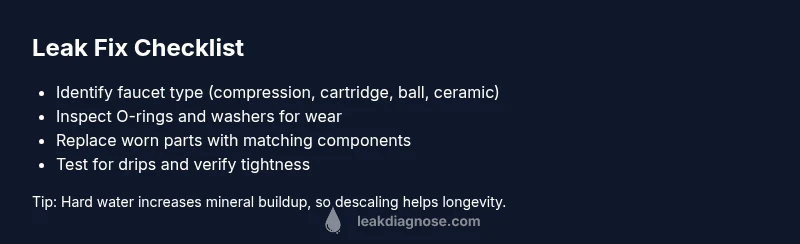
- Confirm the type of faucet you have (compression, cartridge, ball, or ceramic disk). Each type wears differently and affects the repair approach.
- Look for mineral buildup around the spout, handle, and valve seats. Scale can force components out of alignment and create leaks.
- Inspect exposed seals: the O-ring under the handle and the cartridge washer in cartridge-style faucets are common leak sources.
- Check the packing nut behind the handle. If it’s loose, tightening may stop the drip but avoid overtightening, which can strip threads or crack components.
- If the drip stops after tightening, you’ve identified a simple fix; if not, you’ll likely need a replacement part. If you’re unsure, consult the manufacturer’s parts guide or Leak Diagnosis to match the exact part.
Assessing the severity and planning the repair
A small, slow drip can often be resolved with a straightforward replacement, while a steady stream may indicate multiple worn parts or a degraded faucet cartridge. Before purchasing parts, confirm your faucet model and valve type, as incorrect parts lead to wasted time and more leaks. Prioritize safety: shut off the main water supply or the local shutoff valve, relieve pressure by opening a faucet downstream, and keep a towel handy to catch residual water. When you’re ready to proceed, keep a parts list and a camera or container to collect small components to avoid losing track of tiny washers and seals. This methodical approach reduces frustration and increases the odds of a successful fix on the first try.
Choosing parts and planning the repair
Familiarize yourself with the replacement parts you’ll need: an O-ring kit for compression faucets, a cartridge for cartridge faucets, or a new valve seat if those components are corroded. Match parts to your faucet brand and model to ensure a snug fit. For non-technical DIYers, starting with a simple O-ring or washer replacement is often the best path. If your faucet type requires cartridge replacement, the process is a bit more involved but manageable with careful disassembly, proper lubrication, and a precise reassembly. Keeping a clean workspace and labeling parts as you go can dramatically reduce mistakes.
Safety vs complexity: when to call a professional
Not every leak is a DIY project. If you’ve attempted basic O-ring or washer replacements without success, or if you encounter corroded threads, damaged valve seats, or a hardened cartridge that won’t release, it’s wise to contact a licensed plumber. Water damage escalation is costly and time-consuming, and a professional can verify there’s no hidden issue in the supply lines or the home’s plumbing system. Leak Diagnosis notes that professional help is a prudent option when the faucet is part of a high-traffic sink or if the fixture is integrated into cabinetry or a stone countertop where missteps could cause bigger damage.
Maintenance mindset: prevention after the fix
After you repair or replace components, take preventive steps to extend their life. Regularly inspect faucet handles for looseness, tighten packing nuts gently, and consider a mineral-removing treatment if your water is hard. Replacing worn cartridges before they fail can prevent sudden drips, and keeping an annual check on valve seats helps minimize future leaks. Install a small water-softening filter if you have hard water as a long-term strategy to reduce mineral buildup that accelerates wear. With proactive care, a previously leaky faucet can stay drip-free longer, protecting your home and saving water.
Steps
Estimated time: 30-60 minutes
- 1
Turn off water supply and protect area
Begin by turning off the shutoff valve under the sink, then the main supply if necessary. Open the faucet to relieve residual pressure and prevent squirting water. Place a towel and a shallow dish to catch drips. This prevents water damage and creates a clean workspace.
Tip: Label the shutoff valve position in case you need to re-tighten or adjust later. - 2
Identify faucet type and remove handle
Use a screwdriver or hex wrench to remove the screw cap and the handle. Expose the stem and note how the faucet is assembled; this helps you select the correct replacement parts. Keep screws organized in a labeled container so you don’t mix them up during reassembly.
Tip: Take a photo of each step before removing parts to guide reassembly. - 3
Inspect seals and cartridge
Inspect the O-ring, washer, and cartridge for wear or cracks. If you see obvious damage, replace the worn component with an identical or compatible part. Clean mineral deposits with a light vinegar solution or a manufacturer-approved cleaner before reassembly.
Tip: Avoid using metal tools that could scar the seating surfaces. - 4
Replace worn parts
Install the new O-ring, washer, or cartridge according to the faucet type. Ensure a snug fit but avoid over-tightening. If replacing a cartridge, align it correctly with the slots and confirm it’s fully seated.
Tip: Lubricate O-rings with plumber’s grease to improve seal and ease in installation. - 5
Reassemble and test
Reassemble the faucet in reverse order. Turn the water back on gradually and check for leaks at the handle and spout. If drips persist, recheck seating and possible misalignment of the cartridge.
Tip: Run the faucet for several minutes to verify a stable seal and flush out any debris. - 6
Evaluate need for professional help
If the leak continues after a complete replacement or if you encounter hidden corrosion, contact a licensed plumber. They can assess for hidden damage and ensure code-compliant repairs. Consider scheduling annual checks to avoid repeat leaks.
Tip: Document the parts you replaced and keep warranty info for future maintenance.
Diagnosis: Dripping faucet or continuous running water from faucet
Possible Causes
- highWorn O-ring on compression faucet
- highDamaged or worn cartridge in cartridge-style faucet
- mediumLoose packing nut or handle assembly
- lowCorroded valve seat causing a leak at the spout
- mediumMineral buildup causing poor seal
Fixes
- easyTighten or reseat packing nut; replace worn O-ring
- mediumReplace cartridge or washer depending on faucet type
- hardReplace valve seat or reseal spout area if corrosion is present
- easyFlush and clean aerator or cartridge pathway to remove mineral buildup
- hardShut off water and call a plumber if plumbing behind wall shows leaks
Questions & Answers
What is the most common cause of a leaky faucet?
The most common cause is a worn-out O-ring or cartridge, which loses its seal over time. Replacing the worn part usually stops the drip. If symptoms persist, other components may be involved and professional help may be needed.
The most common cause is a worn O-ring or cartridge. Replacing the worn part often stops the drip, but persistent leaks may require a professional check.
Can I fix a leaky faucet myself?
Many leaks can be fixed by a confident DIYer with basic tools and the correct parts. Start with identifying the faucet type, replacing the worn O-ring or washer, and testing before moving to cartridge replacements. If you’re unsure or uncomfortable, seek professional help.
Yes, many leaks can be fixed yourself, starting with the O-ring or cartridge replacement. If you’re unsure, it’s best to call a plumber.
How long does a typical faucet repair take?
A simple O-ring or washer replacement can take about 20-45 minutes. Cartridge replacements or valve seat work may take longer, especially if parts are hard to access. Plan for up to an hour or two if you’re learning as you go.
Most simple fixes take under an hour, but more complex cartridge or valve work may take longer.
What parts wear out fastest in faucets?
O-rings, washers, and cartridge seals are the parts that wear out most quickly due to frequent movement and water exposure. Hard water and mineral buildup can accelerate wear.
O-rings, washers, and cartridge seals wear out fastest; mineral buildup speeds this up.
When should I replace the faucet instead of repairing it?
If the faucet is old, corroded, or frequently leaking despite parts replacements, replacement may be more cost-effective. A new faucet can offer better efficiency and reliability.
If the faucet is very old or keeps leaking after parts replacement, consider replacing it.
Are there safety concerns I should know before starting?
Yes. Always shut off water supply first and relieve pressure. Be mindful of sharp edges when removing metal components and wear eye protection to prevent debris from entering your eyes.
Yes—turn off water first, relieve pressure, and wear eye protection.
Watch Video
Main Points
- Identify faucet type to target the correct replacement parts
- Worn O-rings and cartridges are the most common leaks
- Shut off water and test gradually after repairs
- Consider professional help for corroded or high-risk areas