Bathroom Faucet Leak: Quick Troubleshooting Guide
Diagnose and fix a bathroom faucet leak with practical DIY steps, pro tips, safety cautions, and prevention advice from Leak Diagnosis.


Most bathroom faucet leaks come from worn seals or a failing cartridge. For a quick fix, shut off the water, dry the area, and replace worn O-rings or the cartridge if you can safely access them. If dripping persists, follow our step-by-step guide or contact Leak Diagnosis for help.
What causes a bathroom faucet leak
A bathroom faucet leak can appear as a steady drip, a constant seep, or even a trickle that appears only after you shut the water off. In most homes, the root causes are wear and tear on internal parts or a loose connection. The most common culprits are worn seals, O-rings, or a failing cartridge in modern single-handle faucets. Older compression-type faucets still rely on a washer that can degrade over time. A damaged valve seat or corroded stem also leads to leaks, especially at the handle or the base. Leaks may also originate at the supply lines under the sink or at the faucet’s aerator. Sediment buildup from hard water can foul moving parts and cause leaks or weak drips. Finally, improper installation or overtightening during previous repairs can loosen packing nuts or strain the faucet body. By understanding where leaks originate—spout, handle, or base—you can choose the right fix and avoid unnecessary disassembly.
Why the Leak Happens and Where to Look
In most bathroom faucet leaks, the cartridge or seals wear out first due to daily use and mineral buildup. If the faucet leaks when the handle is turned, the cartridge or O-rings are usually to blame. If the leak is visible even when the faucet is off, you may be dealing with a loose supply line or a corroded valve seat. For older multi-handle faucets, the packing nut or stem washers can fail, causing a slow drip. Identifying the exact location—spout, base, or under the sink—helps you pick the right replacement parts and avoid unnecessary parts shopping.
The Most Common Fixes You Can Try
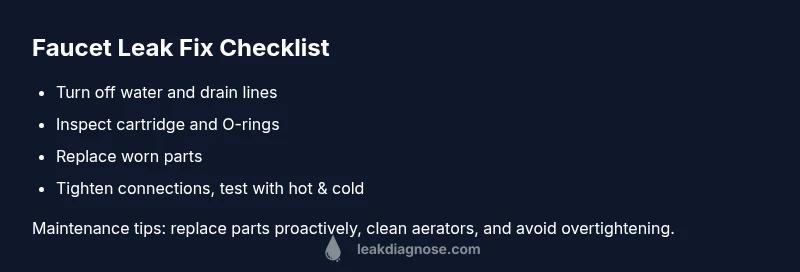
Safety comes first, but many leaks respond to a straightforward fix: replace worn O-rings, washers, or the cartridge, and tighten any loose connections. If you’re comfortable, remove the handle, inspect the cartridge seal, and replace with the correct part. For cartridge-style faucets, you’ll often swap the entire cartridge; for compression faucets, you’ll replace the washer. After replacing parts, reassemble carefully and test with both hot and cold water. If the leak persists after these steps, the problem may be the valve seat or a corroded stem requiring professional attention or faucet replacement.
Diagnostic Mindset: When to Swap Parts vs. When to Replace the Faucet
A leak that remains after replacing O-rings and cartridge often points to a damaged valve seat or corroded stem. If the faucet body is corroded or the parts are no longer available, replacing the faucet may be the most economical option in the long run. In contrast, a simple drip from the aerator or spout can usually be fixed by cleaning or replacing the aerator and tightening the connection. This mindset helps you decide quickly whether DIY fixes are worth pursuing or if a pro is needed to prevent water damage.
Prevention: Simple Habits to Stop Leaks Before They Start
Regular maintenance saves headaches and money. Periodically disassemble and inspect O-rings and seals for wear, replace aging cartridges on schedule, and clean mineral buildup from aerators. Use gentle tightening rather than overtightening fittings, and install water-softening filters if your water supply is highly mineral-rich. Keeping a small repair kit with spare O-rings and common cartridge sizes can reduce downtime when a leak occurs. Small investments in prevention compound into years of leak-free operation.
Steps
Estimated time: 60-90 minutes
- 1
Shut off water and prep area
Locate under-sink shutoff valves and turn them clockwise to close. Open the faucet to relieve pressure and drain lines. Lay towels or a mat to catch drips.
Tip: Take photos of connections before disassembly to aid reassembly. - 2
Identify faucet type and parts
Observe whether your faucet is compression, cartridge, or ceramic-disk. This helps you buy the correct replacement parts and follow the right teardown steps.
Tip: If you can, note brand or model number on the faucet. - 3
Disassemble carefully
Remove the handle, then access the cartridge or seals. Keep track of small parts in a labeled tray.
Tip: Avoid bending any delicate valve stems; work slowly. - 4
Inspect and replace worn parts
Check O-rings, seats, and cartridges for wear or cracking. Replace with compatible parts and apply a small amount of plumber’s grease if needed.
Tip: Verify part numbers match your faucet model. - 5
Reassemble and test
Reattach components, turn water back on slowly, and test for both hot and cold. Look for drips near seals and connections.
Tip: Run the faucet at several pressure levels to ensure seal integrity. - 6
Escalate if leak persists
If a leak continues after fixes, the issue may be a corroded valve seat or a failing fixture that requires replacement or professional service.
Tip: Document the work with photos and measurements for a pro.
Diagnosis: Dripping faucet or active leak from bathroom faucet after shutoff or during operation
Possible Causes
- highWorn cartridge or seals inside the faucet
- mediumLoose mounting nut or supply-line connections
- lowDamaged valve seat or corroded stem
Fixes
- easyReplace cartridge or O-rings and reseat fixture
- easyTighten mounting nut and supply lines; replace washers if present
- hardReplace faucet or seek professional service for valve-seat/structure damage
Questions & Answers
What are the most common causes of a bathroom faucet leak?
Worn cartridge or seals and a damaged valve seat are the usual suspects. Leaks can occur at the spout, handle, or base depending on faucet type.
Most leaks come from worn seals, cartridges, or a damaged valve seat, depending on where the leak appears.
Can I fix a bathroom faucet leak myself?
Yes, for simple leaks you can DIY by replacing O-rings, cartridges, or washers. More complex issues may require professional help to avoid damage.
Yes, many leaks you can fix at home with the right parts and care.
What tools do I need to fix a faucet leak?
Basic tools like an adjustable wrench, screwdriver, replacement O-rings or cartridges, and plumber’s grease are usually enough for common fixes.
A socket or adjustable wrench, screwdriver, and replacement seals are typically all you need.
When should I replace the whole faucet vs. just the cartridge?
If corrosion is extensive or replacement parts are unavailable, replacing the faucet might be more economical than repairing it.
If parts are hard to find or the fixture is corroded, replacement may be best.
Is a faucet leak covered by warranty or home insurance?
Coverage varies by policy. Check your manufacturer warranty and homeowner’s insurance terms to see if leaks are covered.
Coverage depends on your policy; review terms or contact your provider for specifics.
What safety steps should I follow when repairing a faucet?
Shut off water, keep the area dry, wear eye protection, and avoid working near electrical outlets or cables.
Always turn off water and protect yourself from sharp edges and wet surfaces.
Watch Video
Main Points
- Turn off water before touching the fixture.
- Identify worn seals or cartridge as the main cause.
- If uncertain, seek professional help to avoid water damage.
- Maintain regular checks to prevent future leaks.