Faucet Leak from Base: Diagnosis and Repair Guide
Diagnose and fix a faucet leak from base with a practical, step-by-step guide. Learn common causes, safe at-home repairs, and prevention tips to stop drips.


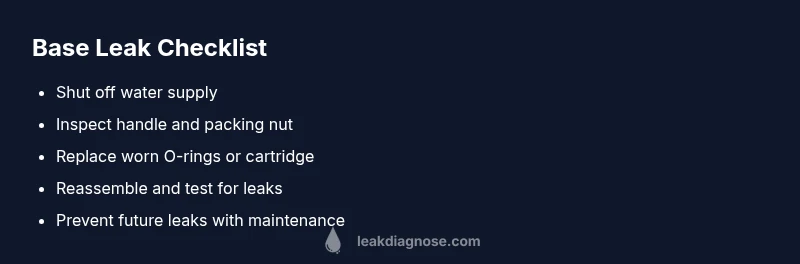
Shut off the water, then inspect for loose parts and worn seals at the base of the faucet. The base leak is most often caused by a worn cartridge, packing nut, or O-ring. Start by tightening connections, replacing worn seals, and testing with a wet towel for drips. If the leak persists, replace the cartridge or seek a pro.
Why faucet leak from base matters
According to Leak Diagnosis, a faucet leak from base is more than an annoyance; it wastes water, risks mold and water damage, and can raise utility bills. The base area where the faucet attaches to the sink is a critical junction where seals and mounting hardware meet water pressure. When a drip appears at the base, it often signals that one of the seals has worn or the cartridge is failing. Homeowners looking for quick, actionable steps can reduce waste and prevent damage by addressing the leak promptly. This guide uses the keyword faucet leak from base to help you find targeted, practical advice that you can apply today, whether you have a standard compression faucet or a modern cartridge model. The Leak Diagnosis team emphasizes safety first: turn off the water supply, test with a towel, and avoid using harsh chemicals near the base. A small leak left unchecked can escalate into more serious problems, including wood rot under the sink and increased water costs. We’ll walk through common causes, at-home diagnostics, and clear steps to restore a tight seal.
As you explore, remember that early action saves water and money. The Leak Diagnosis analysis highlights that most base leaks stem from aging seals or loose mounting hardware, not a mysterious defect in your faucet brand. By following the steps in this article, you’ll be better prepared to handle faucet leak from base scenarios with confidence and safety in mind.
Common causes of a base leak
A base leak is typically caused by wear or damage at the joint where the faucet mounts to the sink. The most common culprits include a worn cartridge or sealing assembly, a loose or damaged packing nut, and compromised O-rings. Mineral buildup and corrosion can aggravate seals over time, especially in hard water areas. Improper installation or overtightening during previous repairs can also create stress on the base and lead to drips. In some cases, the faucet’s base can flex if the mounting hardware is loose, producing a slow drip that seems to come from the base itself. Identifying the exact cause is key to choosing the right fix, and in many cases a simple replacement of internal seals or cartridge suffices. Throughout this article, you’ll see how faucet leak from base diagnosis translates into practical, safe home repairs.
Common signs that point to the base include a constant drip after shutdown, water pooling around the base, or rust-colored residue around the packing nut. If you notice these symptoms, plan for either a seal replacement or cartridge check, depending on the faucet model. The goal is to restore a tight seal without damaging the faucet or sink.
- Worn cartridge or packing nut
- Damaged O‑ring or gasket
- Loose mounting nut or hardware
- Mineral buildup and corrosion
- Improper installation or previous over-tightening
If you’re unsure about the model or part numbers, consult the faucet’s manual or take a photo of exposed parts before shopping for replacements.
Safety first: shut off water and safeguard the area
Safety is the foundation of any faucet repair. Before you touch anything, locate and shut off the water supply to the faucet—usually a pair of shutoff valves under the sink or, if needed, the main water shutoff for the house. Open the faucet to relieve pressure and drain residual water from the line. Place a towel or tray around the base to catch any moisture and protect the cabinet. If you have a wooden vanity or base cabinets, place a towel or plastic liner to prevent water damage while you work. Wear eye protection and use clean, dry rags to wipe components as you inspect them. This stage is essential: a dry, well-lit workspace reduces the risk of misplacing tiny parts and helps you see wear on O-rings and seals. By following these safety steps, you minimize the chance of creating a bigger leak or triggering an under-sink water mess. Leak Diagnosis’s guidance emphasizes a calm, methodical approach—don’t rush, and document each step if you’re unsure.
After the area is secure, test the faucet by briefly turning the water back on and then off again to observe if any drip returns. If a drip persists, you’ll know you’re dealing with a more stubborn seal or cartridge issue that requires further inspection or replacement. Always label or set aside removed parts to avoid confusion during reassembly.
Diagnostic checklist for the base leak
A systematic diagnostic flow helps you locate the exact source of a base leak without guessing. Start with the simplest checks and progress to more involved inspections. The first step is to dry the area around the base and observe when the drip occurs—during use, after shutdown, or continually. If the leak occurs only after use, the issue is likely a worn seat, O‑ring, or cartridge that fails under pressure. If it leaks after the faucet is turned off, the packing nut or base seal might be the culprit. Inspect the handle assembly for any looseness and check the mounting nut under the sink for snugness. When removing the handle, keep track of small parts and note their orientation for correct reassembly. As you examine, take clear photos to reference later. Once you identify a likely culprit, move to the repair steps and replace the worn component or reseat a loose connection. If you’re unsure at any point, err on the side of safety and call a professional. Diagnosis and prevention go hand in hand with successful faucet leak from base remediation.
To verify your diagnosis, reassemble the faucet loosely, reintroduce water, and observe for any continuing drip. This staged approach helps you confirm whether the fix was effective before final tightening.
- Start with visual inspection and drying
- Check cartridge, seals, and O‑rings
- Test tightening the packing nut and mounting hardware
- Look for mineral buildup that hides leaks
- Use photos to guide reassembly
Repair paths: cartridge vs packing nut vs O‑ring
The most common base leaks come from worn seals, O‑rings, or the cartridge itself. If your faucet uses a cartridge system, replacement of the cartridge often resolves the leak because the internal seals wear out over time. For compression faucets, resealing the valve seat and replacing packing washers can stop base drips. In all cases, replacing metal seals tends to be more durable than reusing old gaskets. Before buying parts, verify the exact faucet model and part numbers; mismatched parts can lead to further leaks. If you’re comfortable with DIY, you can often complete the repair with basic tools: an adjustable wrench, screwdrivers, replacement seals, and a cartridge kit. If you’re unsure about the type of cartridge or the correct size, take a photo to a hardware store or consult the manufacturer’s compatibility guide. The goal is to restore a watertight seal at the base without causing new leaks elsewhere in the faucet.
For stubborn leaks, it may be more cost-effective to replace the faucet entirely, especially if the base has corroded or the stem is difficult to access. Weigh the cost of parts and time against the benefit of a new faucet with better efficiency and warranty coverage. Regardless of path chosen, ensure all replacement parts are rated for your water type and flow rate to prevent future issues.
- Cartridge replacement for cartridge-based faucets
- Seal and O‑ring replacement for seal-based designs
- Packing nut tightening or replacement for compression valves
- Consider faucet replacement if corrosion is extensive
Maintenance to prevent future base leaks
Prevention is the best fix when it comes to faucet leaks from the base. Regular inspection and maintenance can prolong faucet life and reduce the chance of leaks. Start by checking under-sink valves every few months for signs of moisture or corrosion. Clean mineral deposits from the base area using a mild vinegar solution or a manufacturer-approved cleaner; avoid harsh chemicals that can degrade seals. When replacing seals or cartridge, use parts rated for your faucet model and water type. Lubricate O‑rings with a silicone-based lubricant designed for plumbing components to reduce friction and extend seal life. Don’t overtighten mounting nuts during reassembly; over-torque strains the body and can crack the faucet base. If your home has hard water, consider a whole-house water conditioner or periodic flushing of the faucet to minimize mineral buildup around seals. Finally, keep a small spare kit with O‑rings, gaskets, and a cartridge in case of minor drips between service calls. Brand guidance from Leak Diagnosis emphasizes proactive maintenance as a practical safeguard against recurring leaks and water waste.
When to call a pro and what to expect
While many base leaks are DIY-friendly, some scenarios demand professional help. If you notice significant water pooling, if the leak persists after you’ve replaced seals and cartridges, or if the base shows signs of cracks or corrosion, it’s time to call a licensed plumber. A pro can accurately diagnose hard-to-see problems, such as hidden leaks behind the base or issues with supply lines. When you call a pro, have the faucet model, part numbers, and photos of the base ready. Expect a quick inspection, a clear explanation of the cause, and a detailed quote for parts and labor. In many cases, a pro can complete the repair on the same visit and offer a warranty on the work. The Leak Diagnosis team recommends prioritizing safety and timely repairs to prevent further damage and water waste.
Quick preventive checklist
- Inspect base seals and packing nuts every 6–12 months
- Replace worn O‑rings and cartridges proactively
- Use soft cloths to wipe down the base after use to limit mineral buildup
- Consider a water-softening system if you have hard water
- Schedule annual faucet maintenance to catch wear early
Steps
Estimated time: 60-90 minutes
- 1
Shut off water and prep area
Turn off the supply valves under the sink or the main line if needed. Open the faucet to relieve pressure and dry the area. Place towels to catch any residual water and protect the cabinet.
Tip: Label parts as you remove them to ease reassembly. - 2
Remove the faucet handle
Use the screwdriver or Allen wrench specified by your faucet model to remove the handle cap and the handle screw. Gently pull the handle away from the faucet body to expose internal parts.
Tip: Keep the screw and cap in a small container so you don’t lose them. - 3
Inspect cartridge and seals
Take off the decorative bonnet if present and inspect the cartridge and seals. Look for cracks, worn O‑rings, or mineral buildup. Replace worn parts with exact matches for your faucet model.
Tip: Take photos before removal to verify orientation on reassembly. - 4
Replace worn parts
Install the new cartridge or seals as recommended by the manufacturer. Ensure any retainer clips or spacers are properly seated before reassembling.
Tip: Apply a light silicone-based lubricant to O‑rings only; avoid petroleum-based lubricants. - 5
Reassemble and test
Reassemble the faucet in reverse order, reconnect supply lines, and turn the water back on. Observe the base carefully for several minutes to confirm the leak is gone.
Tip: Run both hot and cold water to check for leaks at all angles. - 6
Document and monitor
Note the date and part numbers of the fix. Monitor the area over the next several days for any signs of renewed leakage and address promptly if needed.
Tip: Keep a small kit of spare O‑rings and seals for future maintenance.
Diagnosis: Faucet leaks from base after turning on water
Possible Causes
- highWorn cartridge or valve seal
- mediumLoose packing nut or mounting hardware
- lowDamaged O-ring or gasket
Fixes
- mediumReplace cartridge or valve seals
- easyTighten packing nut and mounting hardware to spec
- easyReplace O-ring or gasket
Questions & Answers
What causes a faucet to leak from the base?
Most base leaks come from worn seals, a failing cartridge, or a loose packing nut. Mineral buildup or improper installation can also contribute. A careful inspection helps identify the exact cause and the right fix.
Base leaks are usually due to worn seals or a bad cartridge. Check the packing nut and mineral buildup, then replace worn parts.
Can I fix a base leak myself without replacing the faucet?
Many base leaks can be resolved by replacing seals or the cartridge and tightening hardware. If the base shows cracks or corrosion, replacing the faucet might be more cost-effective and reliable in the long run.
Yes, many base leaks can be fixed with parts replacement. If corrosion or cracks are present, consider a faucet replacement.
What tools do I need for a base leak repair?
Basic tools include an adjustable wrench, screwdrivers, pliers, new seals or cartridges, and a silicone-based lubricant for O-rings. Always use the parts specified for your faucet model.
Common tools are an adjustable wrench, screwdrivers, and new seals or a cartridge kit.
How long does a typical base-leak repair take?
A straightforward cartridge or seal replacement usually takes 45–90 minutes, depending on faucet accessibility and model. More complex repairs or replacements can take longer.
Most fixes take under 2 hours, depending on faucet type and access.
What if the leak continues after repair?
If the leak persists, recheck the seals and cartridge fit, inspect for hidden cracks, and ensure correct part sizing. If unresolved, a licensed plumber should assess the base area and supply lines.
If it keeps dripping, double-check parts fit and consider calling a professional.
Watch Video
Main Points
- Turn off water before any work
- Identify if the base leak is from cartridge, packing nut, or O‑ring
- Replace worn parts with exact matches
- Test, then monitor the area after repair