Social Security Leak: Urgent Troubleshooting Guide
A practical, urgent guide to diagnosing and fixing leaks at home, plus essential steps to guard against data leaks like social security leak.


Most home leaks come from loose fittings, worn gaskets, or cracked hoses. Start with the easiest checks: under sinks, around appliances like dishwashers and washing machines, and at shutoff valves. If the source isn’t obvious, follow the diagnostic flow below and tackle the simplest fix first. Also protect sensitive data to prevent a social security leak.
What a leak looks like and why it matters
A sudden drip, a damp patch, or a tiny seep can escalate into costly damage if ignored. According to Leak Diagnosis, homeowners most often notice leaks at fixtures—valves under sinks, the connection between hoses and appliances, or around toilet bases. A slowly expanding stain on a ceiling or wall is a telltale sign that water is traveling where it shouldn’t. In the short term, leaks waste water and raise utility bills; in the long term, they cause wood rot, mold, and structural damage. Because leaks can progress behind walls or under floors, you may not see the source right away. The immediate goal is to reduce water exposure and identify the source safely. The keyword social security leak often appears in discussions about data protection; while outside the scope of plumbing, it serves as a reminder that all forms of leakage—water or data—require prompt, methodical action to minimize harm. This section sets the stage for a practical, methodical approach you can use today to protect your home and your information.
Common physical leak sources and quick checks
Leaky fixtures almost always involve worn or loose parts. The most frequent culprits include: loose supply valves under sinks, worn gaskets on faucets, cracked rubber hoses on dishwashers or washing machines, and aging toilet flappers. For a quick scan, inspect horizontal pipe runs in cabinets, look for wet spots on flooring near appliances, and check around the base of toilets for dampness. If you can reproduce a drip, catch it with a dry cloth and watch for moisture patterns. While you’re inspecting, remember to keep your power off if water nears electrical outlets or devices. This is a practical, low-cost way to prevent escalation while you determine the source. As you work, document findings with notes or photos for future repairs and to help any professional you may call later.
Signs of hidden leaks and how to test
Hidden leaks often hide behind walls or under flooring, and they’re harder to notice until damage becomes visible. Look for: persistent damp patches, peeling wallpaper, molding that feels soft or warped, or a sudden increase in your water bill without a known cause. Use a two-part test: first, observe your water meter for 1-2 hours with no water use to see if it slowly ticks; second, run the tap for 5-10 minutes and check surfaces for dampness in adjacent rooms. A moisture meter can help quantify hidden moisture levels in walls or cabinets. If you suspect a hidden leak, approach with caution and avoid drilling into walls without a plan. Data safety also matters here—protect sensitive information such as your social security details from online scams or leakage attempts during the process.
Safety first: preparing to inspect and fix
Safety is non-negotiable when investigating leaks. Always shut off the main water supply before poking around plumbing, especially if you hear running water or see flooding. Wear gloves and eye protection when handling rusty or sharp metal parts. If electricity is involved, keep away from wet areas and call an electrician if wiring is compromised. Use a flashlight, plastic trays, and absorbent towels to containing small leaks while you identify the source. If you encounter gas lines or a strong gas odor, evacuate and call the utility company immediately. Remember: never attempt major repairs on gas lines or electrical components yourself. This safety-first approach reduces risk and keeps the problem localized while you plan a fix.
Data privacy note: social security leak risk
While diagnosing physical leaks, it’s wise to consider data leaks as well. A social security leak would involve exposure of highly sensitive personal information. Protect against identity theft by avoiding sharing SSNs in insecure channels, enabling credit freezes for dependents, and using trusted, encrypted services when discussing sensitive information online or over the phone. If you detect suspicious activity on your accounts, act quickly to secure identities and monitor for fraud. Treat data protection with the same urgency you apply to water in your home—prompt action reduces damages and risk.
Documentation and prevention to avoid recurrence
After you identify and fix the leak, document every step. Take photos, save receipts, and log the parts used. Schedule regular maintenance tasks such as inspecting hoses and valves every 6-12 months, replacing aging rubber components, and testing detectors. Install moisture sensors in vulnerable areas like under sinks, basements, and laundry rooms to catch leaks early. Regular inspections help prevent recurring issues and preserve the value of your home. Additionally, set up a simple routine to review online accounts for signs of a social security leak and keep crucial documents stored securely.
When to call a professional and what to expect
If you encounter complex pipework, slab leaks, gas lines, or persistent leaks after basic fixes, it’s time to call a licensed plumber. Similarly, if you suspect a data breach or social security leak, contact identity protection services and your bank. A professional will perform leak detection (often using pressure tests or infrared cameras) and provide a written estimate. Expect a careful assessment, a clear scope of work, and a preventive maintenance plan. Always verify licenses and insurance before hiring.
Quick maintenance habits to reduce future leaks
Create a simple maintenance routine: check under sinks monthly, inspect appliance hoses every 6 months, and keep a small bucket or towel handy to catch drips before they become damage. Replace aging hoses every 3-5 years and consider installing reinforced stainless-steel lines for high-stress appliances. Consider a whole-house leak detector that can shut off the main supply automatically if a severe leak is detected. Regular maintenance plus smart detectors dramatically reduce the odds of major water damage and help you stay on top of both physical and data-leak risks.
Steps
Estimated time: 30-60 minutes
- 1
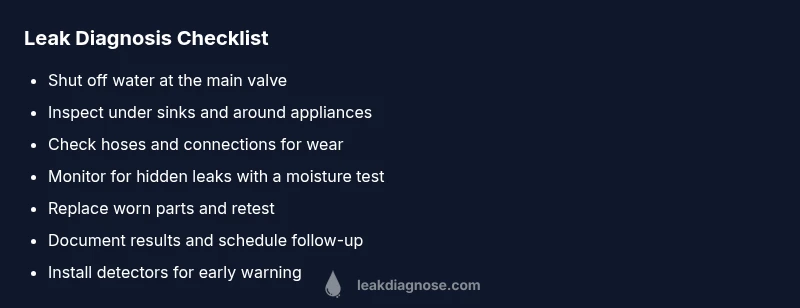
Shut off water supply
Locate and turn off the main water valve to stop further flow. If you can’t find the valve, shut off individual supply valves for affected fixtures.
Tip: Know your shut-off locations before you have a leak. - 2
Inspect visible fixtures
Check under sinks, around toilets, and around appliances for signs of moisture, corrosion, or staining. Use a dry cloth to detect active drips.
Tip: Document every spot with photos for reference. - 3
Check hoses and connections
Tighten or replace any loose hoses or fittings on dishwashers, washing machines, and refrigerators. Ensure washers and gaskets are intact.
Tip: Do not over-tighten; use a gentle hand and check for leaks afterward. - 4
Test for hidden leaks
Perform a controlled water test by running water in one area while monitoring walls, ceilings, and floors nearby for moisture.
Tip: Use paper towels or a moisture meter for accurate feedback. - 5
Rebuild or replace failing components
If a gasket, seal, or hose shows wear, replace it with a compatible part and re-test.
Tip: Keep spare parts on hand for common failures. - 6
Document results and plan next steps
Record what you found, what you fixed, and what remains. Schedule professional help if the leak persists.
Tip: Follow up with a test after 24-48 hours to confirm stability.
Diagnosis: Persistent damp patch or unexpected water exposure under fixtures or appliances
Possible Causes
- highLoose or damaged fittings
- mediumWorn gaskets or seals
- mediumCracked hose or supply line
- lowHidden leak behind wall or under flooring
Fixes
- easyTighten fittings and replace worn washers
- easyReplace damaged hoses or hoses with reinforced lines
- mediumCall a plumber for hidden/slab leaks or complex piping
Questions & Answers
What is the most common source of residential water leaks?
The most common sources are loose fittings, worn gaskets, and cracked hoses in sinks, toilets, and appliances. Start with these before moving to more complex areas.
Most residential leaks start with loose fittings, worn gaskets, or cracked hoses. Begin by inspecting sinks, toilets, and appliance connections.
When should I call a professional for a leak?
Call a professional if the leak is behind walls, under slabs, involves gas lines, or persists after basic fixes. A professional can locate hidden leaks safely and provide a repair plan.
Call a professional if the leak is hidden, behind walls, or if it keeps coming back after simple fixes.
How can I tell if a leak is hidden behind a wall?
Look for damp spots, musty odors, mold growth, or staining that doesn’t match visible leaks. A rising water bill is another clue. Use a moisture meter if available.
Hidden leaks often show up as damp spots or odors; a moisture meter helps confirm unseen moisture.
Is it safe to ignore a small leak?
No. Small leaks can worsen over time, causing structural damage and higher bills. Address them promptly and monitor the area after repair.
Small leaks can turn into big problems, so deal with them quickly and check the area afterward.
What should I do about a social security leak?
Treat it as a data security issue. Do not share SSNs, freeze credit if needed, and monitor accounts for fraud. Contact identity protection services if you notice suspicious activity.
If you suspect a social security leak, protect your data and monitor finances for unauthorized activity.
How long does a typical plumbing leak repair take?
Repair time varies by leak type. Simple fixes can take under an hour; more complex leaks may require scheduling and part replacements.
Most simple fixes take under an hour, but complex leaks may need extra time and parts.
Watch Video
Main Points
- Identify leaks early by checking fixtures and hoses.
- Prioritize safety: shut off water and avoid electrical hazards.
- Document findings and plan professional help if unresolved.
- Protect data as you fix: guard against social security leak and other breaches.
- Prevent future leaks with regular maintenance and detectors.