Social Security Number Leak: Urgent Guide to Detection and Response
Urgent, practical steps to respond to a social security number leak: identify exposure, freeze credit, monitor reports, and prevent identity theft with tips from Leak Diagnosis.


Most social security number leak incidents originate from a data breach or phishing that exposes your social security number alongside other personal data. The fastest fix is to freeze your credit, place a fraud alert, and monitor all financial accounts and credit reports for unusual activity. Then report identity theft to the appropriate authorities.
What constitutes a social security number leak and why it matters
A social security number leak occurs when your SSN is exposed without your consent, often alongside other personal data like birth dates, addresses, or bank details. Unlike simple data exposure, a leak enables scammers to impersonate you, open fraudulent accounts, file phony tax documents, or apply for loans in your name. The consequences can ripple across your credit, finances, and even your tax records. Because the SSN is a key to many services, a leak demands urgent containment and proactive monitoring. The more your data exposure expands, the higher the risk of identity theft and financial loss. Protecting against a social security number leak requires both immediate action and long-term vigilance.
How to recognize when you might be dealing with a SSN leak
Look for unfamiliar credit inquiries, new accounts you didn’t open, tax forms you didn’t file, or notices from lenders asking you to verify activity. Tax-related identity theft is a common outcome of SSN exposure, so monitor IRS notices and ensure your tax records are accurate. Early signs can include warnings from creditors, requests to confirm personal details, or unexpectedly closed accounts. If you notice even a hint of compromise, treat it as urgent and start the containment process immediately.
Immediate actions to take in the first 24 hours
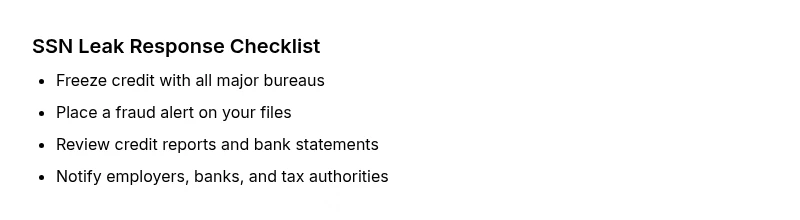
- Freeze your credit with all three major bureaus to block new accounts. 2) Place a fraud alert on your files so lenders verify your identity before opening credit. 3) Review credit reports and bank statements for unusual activity. 4) Update passwords on critical accounts and enable two-factor authentication where possible. 5) If you suspect tax-related theft, contact the IRS and your state tax agency. 6) Document every action you take for future reference and potential investigations.
Diagnostic indicators: signs you were compromised
Common signals include unexpected credit inquiries, unfamiliar loan applications, or tax forms filed in your name. You may also receive debt collection notices for accounts you did not open. If you receive calls or emails asking for your SSN or other sensitive data, treat them as phishing attempts and do not disclose information. Early detection improves your chances of limiting damage and makes containment faster.
Step-by-step containment: quick wins and deeper actions
Proactive actions can stop further damage while you work on recovery. Start with a hard credit freeze and an extended fraud alert. Then review all accounts daily for 30–90 days. Notify employers, banks, and lenders about potential exposure. Finally, set up ongoing credit monitoring and identity protection services. Keep copies of all correspondence and escalation contacts.
Long-term protection: monitoring, education, and maintenance
Even after immediate containment, continue monitoring for new activity. Sign up for ongoing monitoring through reputable services and regularly review your credit reports. Educate yourself about phishing and social engineering tricks to reduce future risk. Maintain strong unique passwords and a dedicated password manager, and be cautious with requests for SSNs or other personal data.
When to seek professional help and what to expect
If you notice persistent unauthorized activity, consider consulting a certified identity theft specialist or attorney. You may also file a police report and report the incident to the FTC. Professionals can help you navigate dispute processes, correct harmed records, and set up robust protection plans tailored to your situation.
Steps
Estimated time: 60-90 minutes
- 1
Freeze credit with major bureaus
Contact Equifax, Experian, and TransUnion to place a freeze on your credit. This prevents new accounts from being opened in your name without your explicit action. Keep your PINs safe and stored securely.
Tip: Request a freeze confirmation in writing or via email for your records. - 2
Place a fraud alert on credit files
Ask for a one-year fraud alert if you are unsure of the scope, or an extended alert if you suspect ongoing risk. The alert requires lenders to verify your identity before granting credit.
Tip: Set reminders to renew the alert before it expires. - 3
Review credit reports and financial statements
Pull annual credit reports and monitor monthly statements for the next 12–18 months. Dispute any unfamiliar accounts promptly with the respective issuer.
Tip: Use a secure notebook or password-protected digital file to track disputes. - 4
Notify key institutions and agencies
Inform banks, credit card issuers, your employer, and IRS about the potential SSN leak. They can flag your file and improve monitoring around tax season.
Tip: Ask for written confirmation of notifications and actions taken. - 5
File identity theft reports and documents
Submit a report with the FTC, plus a police report if required by your jurisdiction. Keep copies of all reports and correspondence.
Tip: Share your reports with credit bureaus during disputes. - 6
Establish ongoing monitoring and protection
Enroll in identity protection services if appropriate and set up ongoing credit monitoring for 12–24 months. Maintain strict cybersecurity hygiene to reduce future risk.
Tip: Regularly review your security posture and update credentials.
Diagnosis: Detected or suspected exposure of your SSN
Possible Causes
- highData breach at employer, financial institution, or government service
- mediumPhishing or social engineering exposing SSN
- lowCredential stuffing or weak password reuse on sensitive accounts
Fixes
- easyPlace a credit freeze with all major bureaus (Equifax, Experian, TransUnion)
- easyPlace a proactive fraud alert on your credit files
- easyReview credit reports and bank statements for suspicious activity
- mediumFile identity theft reports with the FTC and local law enforcement
- mediumNotify employers, banks, lenders, and tax authorities of the exposure
Questions & Answers
What counts as a social security number leak?
A social security number leak is unauthorized exposure of your SSN, often via data breaches or phishing, which can lead to identity theft. It requires urgent containment and ongoing monitoring.
A social security number leak is when your SSN is exposed without your permission, usually through breaches or phishing, and it needs rapid containment and ongoing monitoring.
What should I do first if I suspect my SSN has been leaked?
Act quickly by freezing your credit, placing a fraud alert, and reviewing all accounts for suspicious activity. Notify institutions and authorities as needed.
First, freeze your credit and set a fraud alert, then check all accounts for suspicious activity and notify the right organizations.
How can I check if my SSN was compromised in a breach?
Review breach notices, monitor your credit reports, and watch for tax or employment anomalies. Consider identity theft protection services if the exposure seems large.
Look for breach notices, monitor your credit reports, and watch for unusual tax or employment activity.
Will a credit freeze prevent all identity theft?
A credit freeze blocks new credit but won’t stop existing accounts or offline misuse. It’s a crucial step but should be combined with monitoring and alerts.
A freeze helps stop new accounts but can’t fix everything, so pair it with monitoring and alerts.
When should I contact law enforcement?
If you detect identity theft or fraudulent tax activity, file a police report and contact your local authorities. Keep copies for disputes and insurance claims.
If you see identity theft or fraudulent tax activity, report it to the police and authorities.
How long does it take to resolve SSN-related identity theft?
Resolution can take weeks to months with ongoing monitoring. Stay proactive and document all actions and communications.
It can take weeks to months; stay vigilant and keep records of everything.
Watch Video
Main Points
- Freeze credit now to block new accounts.
- Monitor credit reports and bank activity for 90 days.
- Report identity theft promptly to authorities.
- Maintain ongoing monitoring and cybersecurity habits.