Repair Leaking Hose Bib: A DIY Guide for Homeowners
Learn to diagnose and repair a leaking hose bib with a safe, step-by-step approach. This guide covers common causes, essential tools, practical steps, and maintenance tips to prevent future outdoor faucet leaks.


Stop a leaking hose bib and prevent water waste by identifying whether the leak comes from the packing nut, stem washer, or bib body, then performing a safe repair. This quick guide covers essential tools, shut-off steps, and choosing between reseating parts or replacing the bib. Gather supplies and protect surrounding areas before you start.
Why a Leaking Hose Bib Needs Attention
According to Leak Diagnosis, outdoor hose bib leaks can waste water and may indicate underlying issues with the faucet's packing or stem. A small drip may seem trivial, but over time it can escalate into higher water bills, corrosion around the connection, and even water damage to your siding or foundation. Prompt attention not only saves water but also reduces the risk of mold-friendly moisture near your exterior walls. In many homes, a leaking bib is a sign that a routine maintenance check is due, especially before winter or after a freeze-thaw cycle. By addressing leaks early, homeowners gain confidence, protect their property, and extend the life of the outdoor faucet.
A thoughtful repair also aligns with best practices from Leak Diagnosis, focusing on safely isolating the water supply, inspecting components, and choosing whether to reseat or replace parts. The goal is a durable fix that resists future leaks and minimizes downtime during the prime outdoor season.
Common Causes of a Leaking Hose Bib
Leaks around a hose bib usually originate from one of several failure points: (1) a worn packing nut that seals around the valve stem; (2) a damaged or worn stem washer that allows water to seep between the stem and the packing; (3) a cracked, corroded, or bent bib body, common in older installations; or (4) loose threaded connections where the bib attaches to the supply line. Temperature swings, mineral buildup, and overtightening during winterization can accelerate wear. If frost forms on the bib in winter, pressure from freezing water can push seals apart. Recognizing the precise source before disassembly is critical to choosing the right repair approach and avoiding unnecessary replacement.
Understanding these causes helps homeowners decide whether a simple washer replacement suffices or a full bib replacement is warranted. In many cases, a proper reseal or a new packing nut restores a drip-free outdoor faucet without major plumbing work.
Safety Considerations Before You Begin
Before you touch any plumbing outdoors, shut off the water at the main or at a nearby shut-off valve. Wear safety glasses and gloves to protect from splashes. Relieve pressure by opening a nearby faucet until the water stops, then continue with your repair. If you must work on copper piping or perform any soldering, ensure adequate ventilation and follow local codes. Keep children and pets away while you work, place towels or a bucket to catch residual water, and avoid using heat sources near plastic components. If you suspect gas lines or hazardous materials near the work area, stop and call a professional.
Safety first ensures you won’t incur water damage or injure yourself during the repair process.
Tools and Materials You’ll Need (Overview)
Gathering the right tools before starting keeps the project on track and reduces frustration. This section lists essentials and optional items to adapt to your specific bib type. See Tools-Materials block for detailed specs and quantities. Planning ahead helps you avoid mid-repair trips to the hardware store and minimizes exposure to cold or wet conditions.
Tip: Keep a bucket and towels handy to manage any residual water and dry the area as you work.
Step-By-Step Overview
This section provides a high-level blueprint for repairing a leaking hose bib. The goal is to identify the leak source, perform a precise repair, and verify a watertight seal. For the full, field-tested instructions with photos, see the STEP-BY-STEP block below.
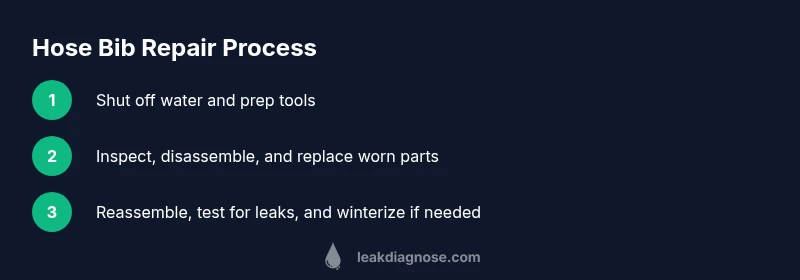
Core steps include: (1) shutting off water supply and relieving pressure, (2) removing the packing nut and inspecting the stem washer, (3) replacing worn washers or packing, and (4) reassembling and testing for leaks. If the bib body is corroded or cracked, replacement becomes the most reliable option. Regularly inspect connections after the repair to ensure long-term reliability.
Troubleshooting and Post-Repair Checks
After repair, run water slowly and observe the bib for any dripping. If a small drip persists at the packing, tighten the packing nut gradually in small increments and re-test. Check all threaded connections with Teflon tape or pipe dope as needed, and verify the area around the bib is dry to prevent mold growth. If you notice staining, persistent moisture, or corrosion after attempts to fix the leak, reassess the components and consider replacement or professional assistance.
Ongoing maintenance—such as annual inspections and winterization—helps prevent recurring leaks and extends the life of outdoor fixtures.
Maintenance Tips to Prevent Future Leaks
Prevention is simpler than cure. Regularly inspect hose bibs for drips, corrosion, or loose connections, especially after freezes. Consider installing frost-proof or anti-siphon bibs for added protection in colder climates. When replacing a bib, choose models with durable packing materials and corrosion-resistant bodies. Winterizing outdoor fixtures by draining lines and insulating exposed pipes reduces the chance of freeze damage. Finally, keep a small repair kit ready so you can act quickly if a minor leak appears.
Authority References and Learning Resources
- EPA WaterSense: Leaky Faucets and How to Fix Them (https://www.epa.gov/watersense)
- Industry best practices for outdoor plumbing and bib replacement (major publications)
- Extension service guides on faucet repair and winterization (educational resources)
Tools & Materials
- Adjustable wrench(8–12 inch adjustable wrench or pair of adjustable pliers for packing nut and bib connections)
- Screwdriver set(Flathead and Phillips to remove handles and components)
- Penetrating oil(Lubricates corroded parts to ease disassembly)
- Replacement washers or packing kit(Select size compatible with your bib style (compression or compression-less))
- Teflon tape (PTFE)(Wrap threads in the direction of tightening to seal joints)
- Bucket and rags(Catch water and keep work area dry)
- Safety glasses and gloves(Protect eyes and hands from splashes and sharp edges)
- Replacement hose bib (if needed)(Choose a frost-proof model for cold climates if replacement is planned)
- Plumber's tape/pipe dope(Sealant options for threaded connections)
- Hose bib handle puller or pliers(Helps remove difficult handles without damage)
Steps
Estimated time: 60-90 minutes
- 1
Shut off water and relieve pressure
Locate the main shut-off valve or the local bib shut-off. Turn it off and open a nearby faucet to relieve pressure. This prevents a rush of water when you begin disassembly and protects you from splashes.
Tip: Take a photo of the existing setup before you remove any parts so you can reassemble correctly. - 2
Identify the leak source
Inspect the packing nut, stem, and bib body for cracks, wear, or corrosion. A flashlight and small mirror can help you see seepage at difficult angles. Knowing the source guides whether you replace a washer, reseal packing, or swap the entire bib.
Tip: Check for moisture at the packing nut first—this is the most common drip point. - 3
Disassemble the bib components
Loosen and remove the packing nut with the appropriate wrench. Carefully pull out the stem and inspect the washer. If the washer is worn or the packing is compressed, replace with new components that match your bib type.
Tip: Keep track of order and orientation of parts for easy reassembly. - 4
Replace washers or packing
Install a new stem washer or packing nut as needed. Reassemble with proper tension—tighten gradually to avoid damaging threads or cracking the bib body.
Tip: Do not overtighten; a snug seal is enough to stop leaks without damaging parts. - 5
Reassemble and test the repair
Reinstall all parts, reconnect to supply, and slowly turn the water back on. Check for drips at each joint and watch for a steady, non-dripping outlet.
Tip: Test with the hose removed and the tap open to observe the flow pattern. - 6
Assess the need for replacement
If corrosion, cracks, or heavy wear are evident, choosing a new hose bib is often more reliable than repeated repairs.
Tip: Consider frost-proof or anti-siphon models for extending life in adverse climates. - 7
Winterize and protect the bib
If you live in a cold climate, drain and insulate exterior lines and consider a frost-proof bib. This minimizes freeze-related damage in future seasons.
Tip: Insulation and proper drainage reduce the risk of future leaks. - 8
Know when to call a pro
If you encounter gas lines, complex copper work, or a leak that persists after repairs, contact a licensed plumber for safety and code-compliant work.
Tip: Persistent leaks warrant professional assessment to prevent damage.
Questions & Answers
What causes a hose bib to leak?
Leaks usually come from worn packing, a damaged washer, or a cracked bib body. Freeze damage and loose fittings can also trigger drips. Identifying the source first helps you pick the right repair method.
Leaks typically come from worn packing, a bad washer, or a cracked bib. Freeze damage and loose fittings can cause drips, so pinpoint the source before repairing.
Can I fix a leaking hose bib without replacing it?
Many leaks respond to replacing the stem washer or packing and resealing joints. If corrosion or a crack is present, replacement is more reliable and prevents future leaks.
Usually you can fix it by replacing washers or resealing the packing; replace the bib if corrosion is evident.
Do I need to shut off the main water supply to repair a bib leak?
Yes. Turn off the main supply or the bib’s local shut-off, then relieve pressure by opening a nearby faucet. This prevents splashing and flooding during repair.
Turn off the water first, then relieve pressure with a nearby faucet.
Is plumbers tape safe on outdoor hose connections?
Yes. PTFE tape helps seal threaded connections. Ensure threads are clean and dry before applying and reassembling.
Plumbers tape is safe and helps seal threads when you reassemble.
When should I call a professional?
If you detect severe corrosion, gas lines, or a leak that persists after basic repair, a licensed plumber should assess the situation.
Call a pro if corrosion is severe or the leak persists after repairs.
Can a frozen hose bib leak when it thaws?
Yes. Freeze damage can crack the bib or packing; after thawing, inspect and replace damaged parts as needed.
A thaw can reveal freeze damage; inspect and replace damaged parts.
Watch Video
Main Points
- Shut off water before any repair.
- Identify the leak origin to guide the fix.
- Replace worn washers/packing as first line of defense.
- Replace a corroded bib when needed.
- Winterize outdoor plumbing to prevent freezes.