Plumbers Leak Troubleshooting Guide
A practical, safety-focused troubleshooting guide to diagnose and fix common plumbers leaks at home. Learn step-by-step checks, when to call a pro, and maintenance tips from Leak Diagnosis.


Most plumbers leaks in homes start at fittings, joints, or worn washers. The quickest fix is to shut off the water supply, then tighten fittings and replace defective washers or seals. If water persists, check for hidden drips at fixture connections and along supply lines. For safety and accuracy, consult Leak Diagnosis guidance and consider professional help if leaks reappear.
Why leaks happen in household plumbing
Leaks in a home plumbing system often begin at points where water is under pressure or where aging components meet. Common culprits include worn washers in faucets, loose fittings at supply lines, corroded pipes, and faulty valves. The goal of this section is to help you recognize likely failure points and to set expectations for a safe, step-by-step approach that minimizes further damage. According to Leak Diagnosis, many residential leaks originate at fixtures and joints rather than distant hidden pipes, so a careful visual inspection of under-sink areas, appliance connections, and toilet flanges is time well spent. Start with the facts: locate the damp area, identify the fixture involved, and map out nearby plumbing so you can trace the path of any water.
For homeowners, the first clue is often a damp cabinet, a slowly forming stain on a ceiling, or a puddle on the floor after a short run of water. Keep a notebook handy to note where you see moisture and what fixture was active when it appeared. The more you know about the pattern, the easier it will be to locate the source and choose the right fix. In many cases, correcting a simple issue—such as a loose connection or a worn washer—eliminates the leak quickly and with minimal expense.
According to Leak Diagnosis, the most common leaks tend to ride along the pressure points in your system—valves, joints, and fixture connections. This makes quick visual checks around under-sink pipes and appliance hookups especially valuable. If you can identify a consistent drip from a particular joint, you’ve likely found the culprit. Remember that leaking water can travel along cabinets or walls, so inspect a wider area than the visible leak itself to avoid chasing a false source.
The goal of early diagnosis is to prevent mold, wood damage, and high water bills. As you inspect, make sure to turn off water before touching any fittings. If you’re unsure about a source after basic checks, proceed with caution and consider bringing in professional help sooner rather than later to minimize damage and risk.
The most common leak sources in a home
Leaking water can come from several predictable places. Faucets are frequent culprits because washers wear out with use, O-rings degrade, and handles loosen. Supply lines that feed sinks, toilets, and appliances can develop small drips at compression fittings or where pipes flex with temperature changes. P-traps and drain traps may leak due to poor seals or cracks in waste lines, and toilets can leak around wax rings or supply lines where bolts corrode. In some homes, corroded copper or galvanized steel pipes develop pinhole leaks that strike suddenly when pressure spikes.
Leak Diagnosis analysis shows that most residential leaks originate at easily accessible joints and fixtures. This means your best chance of a fast fix is to inspect every connection you can reach: sink tails, shut-off valves, toilet bolts, dishwasher hookups, and the piping behind appliances. Absent visible drips, listen for a consistent running sound or feel for damp air near walls or ceilings where water may travel from a concealed source. By focusing on common failure points, you’ll often pinpoint the source without invasive testing.
To prioritize, start at the fixtures you use most, then move to the main supply lines. If you notice moisture on a wall, examine the nearest plumbing access point before tearing into walls. If a leak is leaking constantly, it is a sign the fixture or pipe is actively compromised and requires prompt attention. Small leaks left unattended can escalate quickly into significant damage and higher repair costs.
Early action also preserves your home’s value and reduces water waste. The bigger picture is that regular maintenance helps you catch leaks before they become emergencies. Proactive checks and timely fixes save money and stress in the long run. The Leak Diagnosis team emphasizes routine inspection as a core maintenance habit that every homeowner should adopt.
A practical, step-by-step diagnostic flow for leaks
A structured diagnostic flow helps you identify and verify a leak without unnecessary teardown. Start with the symptom: a damp area, a wet patch, or a puddle near a fixture. Then isolate the likely zone by inspecting the most probable sources first, such as faucet connections, supply lines, valve threads, and accessible pipe joints. Use simple tests—wipe surfaces dry, wait for drip, and observe whether moisture reappears. If water remains, perform a quick pressure test by turning off the valve downstream and watching for residual dampness; this helps differentiate between fixture leaks and main line problems. If you can’t locate a source after basic checks, document what you’ve observed and escalate to more thorough diagnostics or a professional inspection.
In practice, begin with the easiest checks: tighten a loose nut or replace a worn washer; these simple fixes can resolve many leaks. If the leak persists after the initial fixes, don’t force additional disassembly. Instead, re-check the zone, consider using a dye test to trace the flow, and prepare for a more involved repair if needed. Remember that concealed leaks behind walls or under floors may require professional techniques and tools. If you’re unsure at any point, pause and seek professional evaluation to avoid accidental damage.
As you progress, document each test result and fix you attempt. A photo record helps when you describe the issue to a plumber or when you return to maintenance tasks later. Finally, confirm the fix by running water through the system and observing the area for several minutes to ensure the leak is fully resolved.
Safe DIY fixes you can perform before calling a pro
Before attempting any fix, ensure the main water supply is shut off to prevent further damage. Start with the simplest, most accessible repair that does not require invasive work. For many fixtures, a loose connection or worn washer is the root cause. Tighten the connection by hand, then give it a gentle test with the water turned back on in short spurts to see if drips return. If a washer is worn, replace it with a compatible washer, re-tighten, and test again. When replacing parts, use the manufacturer’s instructions and ensure compatible materials to avoid misfit or accelerated wear.
A few practical DIY steps include resealing pipe threads with appropriate plumber’s tape, replacing O-rings, and inspecting supply lines for cracks or kinks. For drain leaks, verify that the traps are properly sealed and that joints have fresh sealant where needed. If you’re working behind a cabinet, keep a towel nearby and wipe down surfaces as you go to monitor progress. Do not overtighten fittings, as this can damage threads or crush seals and worsen the leak. If fixtures are old or showing corrosion, consider replacing the entire fixture or the affected section of piping rather than attempting patchwork.
During any fix, exercise caution around electrical outlets and devices. If the water and electricity mix, turn off power to nearby outlets or appliances to prevent shock hazards. If the leak reappears after a fix, stop and reassess rather than continuing to tighten or apply sealant. Persistence without progress is a sign you should call a licensed plumber who can assess concealed pipes, gas lines, or complex assemblies safely. The Leak Diagnosis team reminds homeowners that prioritizing safety is essential and that conservative, measured steps often prevent further damage.
When to escalate: signs you need professional help
Not all leaks are safely and effectively addressed with DIY fixes. If you notice ongoing damp patches after performing basic repairs, the issue may involve hidden pipes, structural damage, or components beyond your reach. If you observe a rapid onset of water damage, rising moisture in ceilings or walls, or a strong, persistent odor of dampness, assume the situation requires professional assessment. Gas lines, electrical proximity, or complex pipe networks are contexts where a licensed plumber’s expertise is essential for safety and proper function. In these cases, seeking help promptly minimizes risk and avoids escalated repair costs.
Even when fixes seem straightforward, if you are unsure about the type of connection or the right part for replacement, it’s prudent to call a pro. A licensed plumber can perform a thorough diagnosis, pressure tests, and leak tracing beyond visible signs. They can also advise on the best materials for long-term durability and help you plan preventative maintenance to prevent future leaks.
The Leak Diagnosis team emphasizes that the cost of professional assessment is often outweighed by the prevention of water damage and the avoidance of larger repairs later. If a leak persists after multiple attempts, schedule a professional evaluation to ensure the problem is resolved safely and completely.
Maintenance tips to prevent future leaks
Regular maintenance reduces the chance of future leaks and helps you catch problems early. Inspect supply lines, fittings, and fixtures at least twice a year. Tighten loose connections gradually and replace worn washers or seals as soon as you notice wear. Avoid using aggressive chemical drain cleaners that can corrode pipes; instead, use mechanical cleaning methods or enzyme-based solutions that are gentler on your plumbing system. Maintain proper water pressure to minimize stress on joints and valves, and insulate exposed pipes in unheated spaces to prevent freezing and cracking. Check toilet flanges, wax rings, and shut-off valves for signs of wear and corrosion, and replace components that show age or deterioration. For appliances like dishwashers and washing machines, ensure hoses are in good condition and connected securely. By adopting a routine, you will reduce the likelihood of embarrassing leaks and costly damages. The Leak Diagnosis team recommends a proactive approach to home maintenance and flood prevention, because early detection and timely interventions are the best defense against water damage.
Quick-check checklist you can print
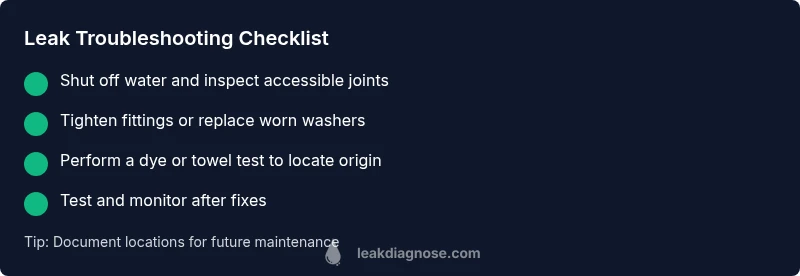
- Inspect all accessible fixtures and supply lines for dampness or drips.
- Tighten loose fittings and replace worn washers where safe to do so.
- Perform a dye test or towel test to trace leaks to the origin.
- Shut off water before starting any repair and avoid working near electrical outlets.
- Document findings for future reference and when consulting a pro.
- Schedule regular maintenance checks to catch aging components early.
How to fix common leak points: a printable checklist
- Faucet leaks: replace worn washers and reseal with Teflon tape where needed.
- Toilet leaks: verify wax ring integrity and inspect inlet supply line for cracks.
- Pipe leaks: repair minor cracks with patch kits or replace damaged sections if accessible.
- Appliance leaks: inspect hoses and connections for wear; replace hoses if bulging or cracked.
Quick reference: safe practices and next steps
- Always shut off water before touching any plumbing joint.
- If you encounter gas lines or electrical components near water, stop and call a professional immediately.
- Keep a record of leaks, fixes, and dates to guide future maintenance and efficiency upgrades.
Steps
Estimated time: 60-90 minutes
- 1
Shut off water and locate the source
Begin by turning off the main water shut-off or the valve closest to the leak. Clear the area and dry surfaces to better observe moisture. If you can identify a visible drip or wet joint, mark it for the next steps.
Tip: Use a flashlight to inspect dark corners and behind cabinets for hidden drips. - 2
Isolate the problem area with a quick test
Isolate the suspected area by closing valves downstream or between fixtures. Observe whether the leak continues when water supply to that zone is off. This helps you determine if the issue is at a fixture, a supply line, or a longer run.
Tip: A towel or paper towel can help confirm a slow drip when you reintroduce water. - 3
Tighten or replace simple components
If a loose fitting is found, hand-tighten then snug with a wrench, avoiding overtightening. If a washer or O-ring is worn, replace with the correct size and type for the fixture.
Tip: Keep replacement parts matched to your fixture model to avoid compatibility issues. - 4
Test the repair and monitor the area
Turn the water back on in small increments and watch the repaired joint closely for several minutes. Dry the area to spot any new moisture quickly. If dripping resumes, proceed to a more robust fix or call a professional.
Tip: Take photos before and after the fix to document the repair. - 5
Consider more involved repairs or professional help
If the leak persists after basic fixes or involves concealed pipes, drainage systems, or structural damage, professional diagnosis is warranted. A licensed plumber can test pressure, locate hidden leaks, and replace compromised sections safely.
Tip: Prepare notes on observed symptoms and prior fixes to speed up the assessment. - 6
Plan prevention and maintenance
Schedule regular inspections and address aging components before they fail. Replace worn lines and fittings at signs of wear, and monitor water pressure to reduce stress on joints.
Tip: Set a monthly reminder to check for dampness or unusual sounds in the plumbing.
Diagnosis: Visible water pooling near fixtures or along walls, damp cabinets, or ceiling stains suggesting a plumbing leak
Possible Causes
- highLoose or degraded fittings at supply lines or fixtures
- highWorn washers or O-rings in faucets
- mediumCracked or corroded pipes
- lowDrain leaks from P-traps or waste lines
- lowWax ring or flange failure on toilets
Fixes
- easyTighten fittings or replace worn washers
- easyReplace O-rings or seals in affected fixtures
- mediumRepair or replace damaged pipes; use repair clamps or segment replacement as needed
- easySeal drains with appropriate sealant and re-test
- hardCall a licensed plumber for pipe replacement or complex work
Questions & Answers
What should I do first when I notice a leak?
First, shut off the water supply to prevent further damage. Dry the area and try to locate the source by inspecting fixtures, joints, and supply lines. If you can’t identify the source, consider consulting a professional to avoid unintended damage.
Shut off the water to stop the leak, dry the area, and look for the source. If you can’t pinpoint the origin, call a professional for a safe assessment.
How can I tell where a leak is coming from?
Look for damp spots around fixtures, valves, and pipes. Perform a towel test or dye test to trace water flow to its source. If you still can’t locate it, proceed with careful inspection or seek professional help.
Check around the fixtures and joints, use a dye test if needed, and if you’re unsure, get a pro to trace the leak.
Is epoxy safe for repairing leaks?
Epoxy can be a temporary stopgap for small, non-pressurized leaks, but it’s not a reliable long-term solution for active plumbing. Replace faulty components whenever possible.
Epoxy is usually only a temporary fix for minor leaks; don’t rely on it for long-term repairs.
Can DIY fixes cause more damage?
Yes. Over-tightening fittings, using wrong parts, or working near hidden pipes can cause additional leaks or structural damage. If in doubt, pause and call a professional.
DIY fixes can backfire if you use the wrong parts or tighten too much. When in doubt, call a pro.
When should I call a professional plumber?
Call a professional if leaks persist after basic fixes, involve concealed pipes, or along with signs of water damage. A plumber can perform advanced tracing and safe repairs.
Call a pro if the leak won’t stop with basic fixes or if the pipe layout is not accessible.
What tools should I have for leak repairs?
A basic kit includes an adjustable wrench, screwdriver, plumber’s tape, replacement washers, flashlight, and a small bucket. Having a camera or notebook helps document locations for future maintenance.
Keep a basic toolkit handy with essential plumbing parts and a flashlight for dark corners.
Watch Video
Main Points
- Shut off water first and start with simple fixes.
- Identify the leak source before disassembly.
- Call a professional if the leak persists or involves concealed pipes.
- Maintain regular checks to prevent future leaks.