Leaky Household Leaks: Troubleshooting Guide
Urgent, practical guide to diagnose and fix leaks safely in the home. Learn how to identify the most common causes, follow a diagnostic flow, and prevent future leaks with practical maintenance tips.


Most leaky occurrences around the home come from a worn gasket, a loose connection, or a failing valve in areas like the kitchen sink, bath, or washing machine. To start, dry the area, inspect visible fixtures for drips, and tighten fittings or replace worn seals. If water continues to rise, shut off the main supply and call a professional.
Why leaks happen in homes
Leaks are more common than most homeowners expect, and a leaky fixture isn't just noisy—it wastes water and can damage floors, cabinets, and drywall. Urgency matters when you spot dampness or a sudden surge in your water bill. According to Leak Diagnosis, most leaky problems start with a worn gasket or a loose connection. In many cases, the simplest fixes are the most effective, especially when you catch them early. The term leaky usually points to a seal, joint, or valve that has degraded over time due to wear, temperature fluctuations, and mineral buildup. When you understand the typical failure points, you can triage quickly and prevent bigger problems. This guide provides urgent, practical steps to diagnose and fix leaks safely, with a focus on reliable outcomes you can verify before calling for help. By keeping the word leaky in mind, you’ll learn to test, seal, and protect your home so small drips don’t become costly disasters.
Start with quick, low-effort checks
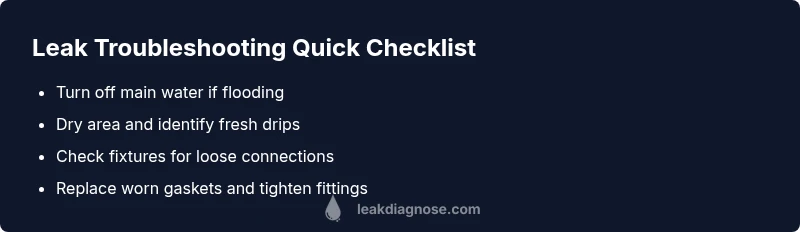
Before you reach for tools, do a quick situational check to minimize mess and risk. If you notice active leaking or pooling, immediately shut off the main water supply to prevent flooding. Then dry the area with towels or a mop to reveal fresh drips. Next, inspect obvious fixtures—faucets, hoses, supply lines, and valves—for loose connections or worn seals. Simple actions like tightening a loose compression nut or replacing a worn washer can stop many leaks in minutes. If the leak persists after these basics, move to more thorough inspections. Leak Diagnosis emphasizes safety first: never force fittings, never use metal tools on delicate plastic parts, and never ignore active water on electrical components. Regular, mindful checks are your best defense against expensive repairs later. Finally, document your findings with photos so you know what to fix and what parts to buy when you go shopping for replacements. The quickest wins usually live in the area where water visibly travels.
Inspecting common leak sources
Leaky water can originate from several familiar places. Faucets are frequent culprits due to worn O-rings or cartridge seals. Toilets leak when the flapper is degraded or fill valve is failing; often the sign is a constant sound of running water. Showers and tubs leak through cracked grout, faulty shower valves, or worn cartridge seals. Washing machines and dishwashers leak through loose hoses, damaged inlet hoses, or faulty pump seals. Water heater connections can also drip if the drain valve is loose or if incoming/outgoing lines rub against metal edges. As you inspect, look for corrosion, mineral buildup, or wet soil around pipes. Remember to test after each fix: run water for several minutes and observe carefully. Record which parts were touched and whether the pool shrinks, stays the same, or grows. If you discover a gas line or electrical hazard, evacuate and call a professional immediately. The goal is to isolate the source without creating new hazards.
Observing water use and leak patterns
Certain leaks reveal themselves only during specific activities. A faucet leak may worsen during use, while a slow toilet drip is often constant but small. A washing machine leak becomes noticeable during high-spin cycles, and a dishwasher leak may appear after a wash cycle. Condensation on cold-water pipes can mimic a leak in humid environments, so confirm by wiping the surface and watching for new drips. Pay attention to the water meter: a constant crawl in your meter reading when all fixtures are off is a strong sign of hidden leakage. If you’re on a well system, check the pressure switch and pressure tank for cycling issues. By correlating leak observations with your household routines, you can pinpoint the rough area—kitchen, bathroom, laundry, or outdoors—and direct your fixes more efficiently. Throughout this process, stay mindful of electrical hazards and the risk of mold in damp spaces. Leak Diagnosis recommends testing with a damp-detection method when safe.
Diagnostic-flow: turning symptoms into diagnosis
Symptoms guide the diagnosis, and a simple decision tree helps you stay organized. Start with the symptom: is water visible at rest, only when fixtures run, or after long periods of inactivity? If you see water when a fixture is used, suspect supply-line connections, valve seats, or worn gaskets. If water appears even when fixtures are off, check for hidden leaks behind walls, broken pipes, or condensation. For every potential cause, perform a targeted fix and re-test. If tightening and replacing seals stops the drip, you’ve confirmed the culprit. If the leak persists, move to more persistent issues like damaged hoses or cracked piping. Finally, always consider professional assistance if you discover structural damage, persistent mold, or if you’re unsure about electrical safety. The diagnostic flow described here aligns with Leak Diagnosis’s recommended approach: a logical, test-driven path from symptom to solution to prevention.
Safety, prevention, and when to call a pro
Safety comes first when dealing with leaks. If there’s standing water near electrical outlets or you smell gas, evacuate and call emergency services. When you attempt fixes, wear protective gloves and work in a well-ventilated area. Use a flashlight to inspect darker spots behind cabinets and under sinks. For prevention, replace worn gaskets and seals proactively, secure loose hoses, and monitor water pressure. Regular maintenance — including seasonal checks of hoses, valves, and fittings — can prevent leaks before they begin. Document and label your repairs so you can track parts and service history. If a leak involves structural damage, significant mold, or your confidence is low, contact a licensed plumber or a Leak Diagnosis-approved professional. The goal is to minimize risk and protect your home from water damage, which can escalate quickly if ignored.
Quick wins and next steps
In many homes, the leaky issue can be resolved with a few targeted actions and a little patience. Start with simple parts you can replace yourself: washers, O-rings, supply-line fittings, and faucet seats. After basic fixes, monitor the area for at least 24–48 hours to confirm stability. If water reappears or there are signs of hidden leaks, escalate to more substantial repairs or professional help. Keep a small toolbox with a few essential parts and a basic leak-detection kit. Finally, adopt a habit of routine checks: inspect under sinks, around the toilet base, and near the water heater every season. The investment in prevention pays off by reducing water waste, preventing mold, and extending the life of appliances. Remember: leaks don’t disappear on their own; they thrive with neglect, but they can be tamed with a careful, methodical plan.
Steps
Estimated time: 40-60 minutes
- 1
Power down and prepare the area
Turn off the main water supply if you suspect a flood risk. Disconnect power to nearby outlets if water is present to avoid shocks, and place towels to catch drips. This step minimizes risk while you inspect.
Tip: Always verify the exact main shutoff location before starting work. - 2
Dry and observe the area
Wipe surfaces dry and dry any moisture around the fixture. Watch closely for fresh drips for 5–10 minutes to identify whether the leak is active and where it originates.
Tip: A clean, dry surface makes leaks obvious and fixes more reliable. - 3
Disengage the fixture and inspect seals
Carefully remove the faucet handle or panel to access seals, O-rings, and gaskets. Look for cracks, wear, or mineral buildup that prevents a watertight seal.
Tip: Do not force parts; gentle loosening prevents damage. - 4
Replace worn components
Install new O-rings, washers, or cartridge seals as needed. Use manufacturer-recommended parts to ensure compatibility and durability.
Tip: Carry spare gaskets and o-rings in standard sizes. - 5
Reassemble and test
Reassemble the fixture, restore water supply, and run water for several minutes to confirm the leak is gone. Check for any new drips at joints and hoses.
Tip: Test at low flow first, then at full capacity. - 6
Document and monitor
Take photos of the repaired area and note the replacement parts. Monitor the area for 24–48 hours to confirm lasting fix.
Tip: Keep a simple maintenance log for future reference. - 7
Prevent future leaks
Schedule routine checks of seals, hoses, and connections every 6–12 months. Consider upgrading older fixtures to reduce repeated failures.
Tip: Prevention is cheaper than emergency repairs. - 8
Know when to call a pro
If you encounter persistent leaks, gas lines, exposed wiring, or you feel uncertain, seek a licensed plumber or Leak Diagnosis-approved professional.
Tip: Safety first; professional advice can prevent costly damage.
Diagnosis: Water leak persists or appears at fixtures when in use or over time
Possible Causes
- highWorn gasket or valve seat
- highLoose supply-line connections
- mediumDamaged hose or cracked pipe
- lowCondensation on cold water pipes
Fixes
- easyTighten fittings and replace worn gaskets/seals
- mediumShut off water, disassemble fixture, and replace seals or cartridges
- hardReplace damaged hose or cracked pipe
- easyInsulate pipes to reduce condensation
Questions & Answers
What is the most common cause of a leaky faucet?
The most common faucet leak is from worn washers or O-rings in the valve. Replacing these parts typically stops the drip.
Most leaks start with worn washers or O-rings in the faucet valve, which you can usually fix by replacing them.
Can a small leak waste a lot of water?
Even small drips can add up over time, increasing water usage and bills. Fixing them quickly prevents waste and prevents damage.
Even tiny drips add up, increasing water consumption and costs over time.
When should I call a professional?
If you can’t locate the leak, if it involves gas lines, or if the area shows signs of mold or structural damage, seek a licensed professional.
Call a professional if you can’t pin down the leak, or if there’s a gas line or mold involved.
Are there safety concerns I should know about?
Yes. Avoid electrical hazards near wet areas, shut off power if needed, and never work on gas lines without proper training.
Be careful around electricity and gas—shut off power and gas if you’re unsure what you’re doing.
How can I prevent future leaks?
Regular maintenance, timely seal replacements, proper hose management, and monitoring water pressures help prevent leaks from developing.
Keep up with regular maintenance, replace worn seals, and watch your water pressure to prevent leaks before they start.
Watch Video
Main Points
- Inspect seals first when leaky symptoms appear
- Shut off water before DIY fixes and test gradually
- Document repairs to track part life and plan maintenance
- Prioritize safety around electrical components and gas lines
- Consult a pro for persistent or complex leaks