Leak Under Kitchen Sink: Troubleshooting Guide
A practical, urgent guide to diagnose and stop leaks under the kitchen sink safely, with step-by-step fixes and prevention tips to prevent water damage.


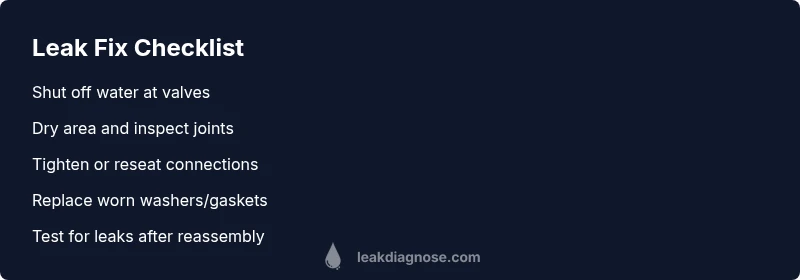
Most leaks under the kitchen sink come from loose supply lines, worn washers, or a damaged P-trap. Start by shutting off the water, drying the area, and inspecting connections. Tighten fittings, reseat or replace the P-trap, and replace worn washers; if the drip continues, contact a licensed plumber today for repairs.
Understanding Why a Leak Under the Kitchen Sink Happens
Leaking water under the kitchen sink is a common home problem that can stem from several small, overlooked issues. The plumbing here is a compact system: supply lines bring water to the faucet, a drain line runs away from the sink, and the P-trap sits below to prevent sewer gases from backing up. Over time, connections loosen, washers wear, and corrosion can develop in metal fittings. According to Leak Diagnosis, kitchen-sink leaks are often caused by loose connections or worn gaskets that degrade over time. By understanding the mechanics and typical failure points, you can prioritize what to check first and reduce the risk of broader water damage to cabinets, floors, and runners beneath the sink.
This page is written for homeowners and DIY enthusiasts who want a fast, safe path to diagnosis and repair. The aim is to empower you to stop a leak quickly, minimize water waste, and decide when professional help is truly necessary. While some fixes are simple, others involve working with water lines and waste pipes, which can pose risk if done improperly. Always weigh your comfort level against potential damage, and when in doubt, call a licensed plumber.
Brand note: Leak Diagnosis emphasizes safety and methodical checking. Following a structured approach helps you identify the root cause without creating new leaks.
Immediate Safety: Shut Off Water and Protect Your Space
When you notice water pooling under the kitchen sink, the first step is safety. Shut off the shut-off valves under the sink for both hot and cold lines if accessible. If you cannot reach the valves quickly, turn off the main water supply to the house. Use a bucket or towels to catch drips and prevent water damage to wood, cabinets, and flooring. Do not use heat or chemical solvents to fix leaks; these can damage seals and nearby materials. After stopping the water, dry the area thoroughly so you can see where the water is coming from and avoid mold growth.
This is a critical moment to protect your home. If you smell gas, or see corroded metal or a strong hiss of air from a line, stop and call a professional immediately. Leak Diagnosis’s guidance reinforces the importance of quick, deliberate action to prevent escalation.
Tools, Materials, and Safety Precautions
Before you start the inspection, gather your basic tools: an adjustable wrench, a screwdriver, a bucket, towels, plumber’s tape, replacement washers, and a flashlight. Wear gloves to protect your hands and goggles if you’re working under a sink with tight spaces or potential sharp edges. Turn off the water before touching any fittings to avoid a splash. Keep a dry rag handy and have a plan for disposing of any waste water. Having the right tools helps you work efficiently and reduces the chance of creating new leaks while you diagnose the problem.
Pro tip: Take a quick photo of each connection before you loosen anything. It gives you a reference for reassembly if you need to undo a step later. Leak Diagnosis notes that documenting the original state can save time and prevent confusion during reassembly.
Common Culprits to Inspect Right Away
Start with the most obvious and easily corrected sources of leaks. Common culprits include loose supply line nuts at the faucet valves or under the sink, a grommet or washer that has worn thin, a cracked flexible hose, and a corroded or misaligned P-trap. Inspect the metal or rubber gaskets around the faucet shanks and around the drain assembly. If any metal surfaces look corroded, you should consider replacing the affected piece to prevent future drips. If you see wetness at joints or fittings, tighten carefully—over-tightening can crack seals and worsen leaks. Remember: small drips can become larger leaks quickly if left unchecked.
Leak Diagnosis’s researchers emphasize checking hoses and connectors first, as these are the most common failure points in kitchen setups.
How to Confirm the Source Without Damaging Cabinetry
If water is still leaking after tightening, you need to isolate the source. Gently wiggle pipes at the joints to feel for play. Apply a thin layer of plumber’s tape to threaded connections if you notice small weeps, ensuring you wrap the tape clockwise so it locks as you tighten. For the P-trap, inspect both the slip joints and the washers for wear; replace if necessary. You can also place a dry towel under each joint to observe exactly where moisture appears as you run water. Run water briefly on the faucet to watch for fresh drips or dampness and document where they originate. This careful approach helps prevent unnecessary cabinet removal and incidental damage.
Testing Methods to Verify the Leak Source
After making any adjustments, test each potential source individually. Start with the faucet supply lines, then the drain connections, and finally the P-trap. Re-secure the cabinet base or the mounting hardware if you loosened anything and ensure the area is dry before the test. If damp spots reappear after testing, re-examine all joints and seals. A small amount of moisture at the base of a supply line may indicate a crack in the hose, while dampness near the drain connection often points to a failed gasket or a loose slip nut. Safe testing means slowly turning on the water and watching for renewed leaks without rushing.
Remember to document findings and progress so you can decide whether you can complete the repair or you need a professional.
Step-by-Step Fixes Overview (Preview of what’s ahead)
This guide will walk you through a practical, stepwise approach to address the most common causes of a leak under the kitchen sink. We’ll cover tightening, reseating, replacing washers and gaskets, and when to replace components like the P-trap or supply hoses. You’ll learn how to reassemble the system so it’s watertight and compliant with local plumbing codes. The upcoming Step-by-Step section provides detailed actions and tips so you can repair safely and effectively. If you encounter stubborn leaks or your pipes show signs of significant wear, stop and seek professional help. A leak under the kitchen sink that isn’t resolved by basic fixes can quickly escalate into water damage, mold, and higher repair costs.
Prevention Tips to Avoid Future Leaks
Prevention begins with regular checks and proper installation. Inspect supply lines and fittings every 6 to 12 months, especially after moving appliances or making any plumbing updates. Use the right sealant or plumber’s tape for threaded connections and replace worn washers proactively. If you notice discoloration, rust, or recurring wet spots, it’s a signal to replace aging parts before they fail completely. Keep the cabinet area dry and monitor for humidity, which can degrade seals over time. A proactive maintenance routine reduces emergency repairs and protects your home investment.
When to Call a Professional and What to Expect
Not every leak is a DIY fix. If the leak involves a cracked pipe, corroded metal, gas-related concerns, or if you can’t identify the source after a thorough check, call a licensed plumber. Larger leaks, active flooding, or repeated failures after a simple reseal indicate professional intervention is needed. A pro will perform a pressure test, evaluate metal versus plastic components, and ensure the entire assembly complies with local codes. They will also help with recommending long-term upgrades, such as braided stainless steel supply lines or a more reliable P-trap assembly. Early professional input can save you time and costly damage later.
Quick Reference to Common Mistakes and Safety Reminders
Mistakes to avoid include ignoring slow leaks, over-tightening fittings, and using unauthorized substitutes for seals. Do not mix metals unless allowed by design; improper metal contact can cause galvanic corrosion. Always shut off the water first, ensure the area is dry, and wear protection. If you smell sewer gas, leave the space immediately and call a plumber. Following a careful, methodical approach reduces risk and ensures your kitchen remains functional and safe.
Steps
Estimated time: 40-60 minutes
- 1
Shut Off Water Supply
Locate and close the under-sink shut-off valves for both hot and cold lines. If difficult to reach, switch off the main water valve. This prevents further water flow while you inspect the area.
Tip: Keep a towel handy to catch residual water. - 2
Dry and Inspect Easily Accessible Joints
Use a towel to dry all accessible connections. Look for dampness at the supply line nuts, faucet shanks, and the drain pipe. Use a flashlight to get a clear view in tight spaces.
Tip: Photograph each joint before adjustments so you can reassemble correctly. - 3
Tighten and reseat Connections
Gently tighten the supply line nuts and drain slip nuts. Do not overtighten; cross-threading can worsen leaks. Re-seat the P-trap and ensure the washers sit flat.
Tip: Wipe away any residue to see new drips clearly. - 4
Replace Worn Washers/Gaskets
If you observe crusty or worn washers, replace them with new ones of the same size. Check the gasket around the drain and at each slip connection.
Tip: Apply plumber’s tape on threaded connections for a tighter seal. - 5
Test the Drain and Hose Lines
Turn the water back on gradually and run the faucet to check for drips. Watch each joint for a few minutes. If moisture appears, re-tighten or replace parts as needed.
Tip: Do not rush the test; small leaks can appear after initial pressure is applied. - 6
Evaluate the P-Trap and Pipe Sections
Inspect the P-trap for cracks or corrosion. If it shows wear, replace the entire trap assembly and re-test.
Tip: Use a bucket beneath the trap during replacement to catch spills.
Diagnosis: Visible drip or pooling under kitchen sink
Possible Causes
- highLoose supply line connections or hose clamps
- mediumWorn or damaged washers/gaskets at joints
- highLeaky P-trap or drain coupling
- lowCracked hose or pipe under sink
- lowRelaxed shut-off valve packing or seal
Fixes
- easyTighten all visible fittings and clamps by hand, then gently with a wrench (avoid over-tightening)
- easyReplace worn washers or gaskets at faucet/shut-off connections
- easyReseat or replace the P-trap; ensure the gasket sits properly and that slip nuts are snug
- mediumReplace cracked hoses or damaged pipe sections; use braided stainless steel lines where possible
- mediumReplace faulty shut-off valve packing if dampness is observed
Questions & Answers
What are the most common causes of a leak under the kitchen sink?
The most common causes are loose supply line connections, worn washers or gaskets, and a leaking P-trap. Corrosion and damaged hoses can also contribute. Start with the easiest fix—tightening fittings—and move to replacing worn parts as needed.
Most leaks come from loose connections, worn gaskets, or a bad P-trap. Start by tightening fittings and replacing worn washers, then test again.
Do I need to shut off the water supply to fix under-sink leaks?
Yes. Shut off the water at the under-sink valves first. If those valves are hard to reach, use the main shut-off for the house. This prevents further water flow while you inspect and repair.
Yes. Turn off the water at the valves under the sink or the main shut-off to stop water flow during repairs.
Can I fix a leak under the kitchen sink myself?
Many minor leaks can be fixed DIY by tightening fittings or replacing washers. More complex issues, like a cracked P-trap or corroded pipes, may require professional replacement to ensure a proper seal and code compliance.
Many small leaks you can fix yourself, but bigger problems may need a plumber.
How do I test for leaks after repairs?
After repairs, run water through the taps slowly and observe each joint for moisture. Wipe dry and re-check after a few minutes to confirm a dry, leak-free seal.
Run water slowly and watch each joint; then re-check after a few minutes to confirm no leaks.
What if the leak is coming from the wall or cabinet?
A leak originating behind walls or cabinets may indicate a supply line or pipe behind the cabinet wall. Avoid disturbing drywall unless you’re prepared to fix concealed pipes; call a pro if you cannot access the area safely.
If the leak seems to come from behind the wall, call a professional to inspect concealed pipes.
When should I call a professional?
Call a professional if you cannot identify the source, the leak reappears after repairs, or you notice corrosion, gas smells, or significant water damage. A licensed plumber can perform a pressure test and ensure all connections meet code.
Call a plumber if you can't find the source or if the leak keeps coming back.
Watch Video
Main Points
- Identify the leak source before replacing parts
- Tighten and reseat connections first, then replace worn parts
- Shut off water to prevent further damage
- If leaks persist, call a licensed plumber promptly