How to Diagnose and Fix Leak Tubes at Home
Learn how to diagnose and fix leak tubes safely with practical, step-by-step guidance from the Leak Diagnosis team. Prevent water damage with proactive checks, smart replacements, and safe DIY fixes.


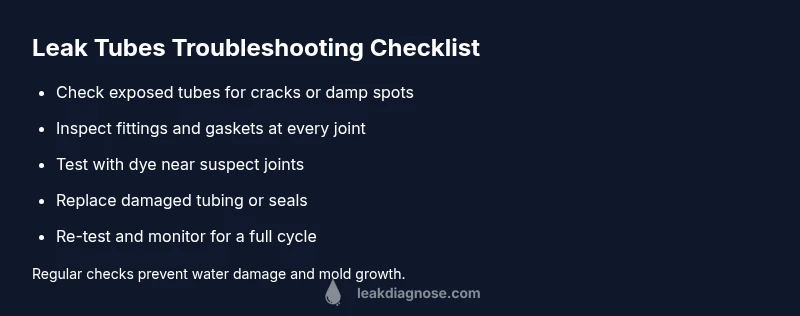
Steps to quick fix: 1) Inspect exposed tubes for cracks and damp spots. 2) Tighten loose fittings by hand, then snug with a wrench. 3) If drips persist, shut off water and replace worn gaskets or damaged tubing. 4) If you’re unsure, contact a licensed plumber now.
What are leak tubes and why they fail
Leak tubes are the flexible hoses and rigid pipes that move water and other fluids around your home. You’ll encounter them under sinks, behind appliances, and in laundry rooms. Over time, aging gaskets, loose fittings, kinks, or chemical residues from cleaners can cause tiny cracks or loosened connections. When a leak tubes fails, you’ll notice damp cabinets, pooling water, or a persistent drip. The Leak Diagnosis team notes that worn seals and vibration from everyday use are common culprits, so quick triage helps prevent hidden water damage.
Common sources of leaks in household tubing
Most leaks originate at supply lines, drain hoses, and fridge water lines. Check under sinks for damp spots around compression fittings and elbows. Cracks often appear near bends or where the tube rubs against a sharp edge. Appliances such as dishwashers and washing machines also bring leak tubes into play, where hoses connect to valves. Regular inspection of these runouts reduces the chance of extensive water damage and protects your home from mold growth.
How to safely inspect for leaks (before tools)
Start with a calm, methodical check. Visually inspect exposed tubes for dampness, discoloration, or mineral crust. Dry fittings with a towel and watch for new moisture over 15–30 minutes. If you can access ends, gently wiggle fittings to test for looseness (avoid forcing anything). For a more definitive test, run water briefly and observe joints; use a dye or food coloring near suspect joints to trace the leak. Remember safety: if a gas line or electrical component is involved, stop and call a professional.
Diagnostic flow: symptom → diagnosis → solutions
Symptoms guide the flow: damp cabinets, visible drips, or pooling water around tubes. Likely causes include loose connections (high likelihood), worn gaskets (medium), or pinched tubes (low). Solutions range from simple tightening (easy) to replacing damaged sections (medium) or rerouting to avoid sharp bends (easy). If you encounter hidden leaks or gas-related lines, escalate to a licensed plumber (hard). This structured approach keeps you focused and reduces guesswork.
Step-by-step fix for the most common cause
- Gather tools: adjustable wrench, bucket, towels, replacement tubing or gaskets, thread seal tape.
- Shut off the water supply to the affected line, then the main valve if needed.
- Disconnect the tube from the appliance and inspect for cracks or worn gaskets.
- Replace damaged tube segments or seals; apply seal tape to threads if manufacturer-approved.
- Reconnect fittings hand-tight, then snug with a wrench—do not overtighten.
- Restore water and observe for leaks; tighten slightly if necessary or replace components.
- Clean up and store parts; take photos to guide future maintenance. Tip: if the leak recurs, consider replacing the entire run or consulting a professional.
Safety tips & when to call a pro
Safety first: always shut off water before touching leak tubes; wet floors increase slip risk and can affect electrical components. If you notice a strong gas odor or hear hissing around tubing, leave the area and call the utility. For extensive water damage, or if you lack access to essential valves, a licensed plumber should handle the job. Wearing gloves and eye protection helps prevent injuries when handling metal fittings or sharp edges.
Prevention: keeping leak tubes leak-free
Proactive maintenance saves money and stress. Inspect visible tubes every 6–12 months and replace aging hoses before they fail. Use clamps or zip ties to secure long runs and avoid sharp bends that pinch tubes. When replacing, choose reinforced hoses rated for your appliance’s pressure. Keep the area around connections clean and dry; a small mat can catch drips and alert you early to a developing leak.
Steps
Estimated time: 45-60 minutes
- 1
Prepare tools and safety
Gather an adjustable wrench, bucket, towels, replacement tubing/gaskets, and seal tape. Put on gloves and ensure the area is dry before you start.
Tip: Lay a dry mat to catch drips and avoid slips. - 2
Shut off water & access the leak
Turn off the water supply to the affected line; if you can’t locate the shutoff, switch off the main valve. Open nearby taps to relieve pressure.
Tip: Never work on live, pressurized lines. - 3
Inspect tube and fittings
Carefully disconnect the tube from the appliance and inspect for cracks, wear, or degraded gaskets. Note the orientation of parts for reassembly.
Tip: Take photos during disassembly for reference. - 4
Replace damaged components
Install new tubing or gaskets that match the original size and type. Apply thread seal tape if the manufacturer recommends it.
Tip: Only use parts from reputable suppliers. - 5
Reconnect & test
Reconnect fittings, hand-tighten, then give a light final turn with a wrench. Restore water and observe for leaks over several minutes.
Tip: If leaks recur, do not overtighten—replace the assembly. - 6
Final checks
Dry the area and monitor for a full cycle of operation. Ensure there’s no condensation forming elsewhere and that the floor remains dry.
Tip: Document part numbers and dates for future upkeep. - 7
If still leaking, escalate
If you still see leaks after all steps, contact a licensed plumber. There may be an underlying issue beyond a simple tube failure.
Tip: Avoid delaying professional help if you spot gas, electrical risks, or widespread damage.
Diagnosis: Visible dampness or dripping from leak tubes under an appliance or cabinet
Possible Causes
- highLoose connections or fittings
- mediumWorn gaskets or seals
- lowCracked or kinked tube segments
Fixes
- easyTighten connections by hand, then snug with a wrench
- mediumReplace worn gaskets or damaged tubing
- easyRe-route tubes to avoid sharp bends or pinch points
- hardCall a professional for hidden leaks or gas/electrical exposure
Questions & Answers
What is the first step I should take when I notice a leak from leak tubes?
Shut off the water supply to the affected line and unplug nearby appliances if safe. Dry the area and inspect for obvious loose connections or cracks to stop further damage while you diagnose.
Shut off water, dry the area, and inspect for obvious loose connections to stop further damage.
Can I repair leak tubes myself or should I call a professional?
For simple leaks on readily accessible tubes, you can perform basic fixes like tightening fittings or replacing a gasket. If leaks persist or involve gas lines, electrical components, or hidden tubing, hire a licensed plumber.
You can fix simple leaks, but call a pro for gas, electricity, or hidden tubing.
How can I tell if a leak is from a crack in the tube vs a loose connection?
Check for dampness at joints first; moisture along the tube length away from fittings suggests a crack. A dye test or pressure check can help confirm the source.
Moisture at joints suggests a loose connection; a damp spot along the tube points to a crack.
What tools are essential for fixing leak tubes?
Keep an adjustable wrench, tubing cutter, replacement tubes or gaskets, thread seal tape, towels, and a bucket handy. These basics cover most DIY repairs.
An adjustable wrench, tubing cutter, and replacement parts are essential.
How can I prevent leaks from leak tubes in the future?
Regular inspection, upgraded reinforced hoses for high-pressure lines, avoiding sharp bends, and replacing hoses every 5-7 years reduce leak risk. Use clamps and keep the area clean to spot early signs.
Inspect regularly, upgrade hoses, and avoid sharp bends to prevent future leaks.
Should I be concerned about electrical or gas hazards with leak tubes?
Yes. If you detect electrical signs near water or any gas odor, stop work, ventilate, and contact a professional immediately. Do not attempt risky repairs yourself.
If you smell gas or hear hissing, call professionals right away.
Is a slow drip always a sign of a failed tube?
Not always. A slow drip can result from a loose connection or a tiny crack. Monitor the area, and perform periodic tests to catch slow leaks early.
A slow drip often means a loose connection or small crack.
Watch Video
Main Points
- Inspect tubing regularly to catch leaks early
- Shut off water before touching leak tubes
- Tighten fittings before replacing tubes
- Call a professional for gas or electrical risks