Leak Outside Faucet: Quick Troubleshooting and Repair Guide
Urgent guide to diagnose and fix a leak outside faucet. Learn common causes, safety steps, a practical diagnostic flow, a step-by-step fix, and prevention tips to protect your home from water damage.


A leak outside faucet is most often caused by worn packing or a faulty washer. Shut off the water, drain the line, and replace the packing, washer, or stem as needed. If the faucet or supply line shows cracks, replace the faucet or call a pro for a safe, lasting fix.
Understanding the problem: why a leak from an outdoor faucet matters
According to Leak Diagnosis, a leak outside faucet may seem small, but it can waste gallons of water, drive up your bill, and lead to damp soil or ice formation in winter. In many homes, the outdoor faucet acts as a key water source; a persistent drip can indicate a worn packing, a cracked stem, or a failing washer. Quick action helps prevent bigger problems, including hose bib damage and potential mold growth near the foundation. This guide focuses on practical steps you can take today to diagnose and address the issue safely. We'll cover common causes, safety checks, a clear diagnostic flow, and a practical step-by-step fix that homeowners can perform without professional help in most cases. Remember: if you’re uncomfortable, or if you see visible corrosion or water in electrical conduits, pause and call a licensed plumber to avoid safety risks.
Steps
Estimated time: 60-90 minutes
- 1
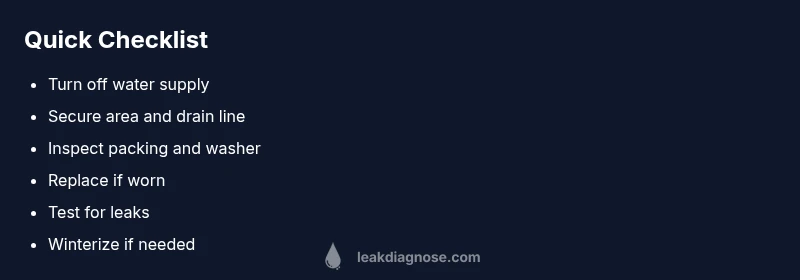
Turn off water and prep the area
Begin by shutting off the outdoor faucet supply valve, or the main water shutoff if necessary. Place towels or a bucket to catch any remaining water. This prevents flooding and prepares you to inspect without a rush.
Tip: Have a jar of screws/fasteners handy so you don’t misplace parts. - 2
Remove the handle and access packing
Use a screwdriver to remove the handle, then loosen the packing nut to access the stem and washer. Keep track of small parts and take photos as you go to ensure proper reassembly.
Tip: Take a photo of each connection before disassembly. - 3
Inspect packing and washer
Check the packing washer around the stem and the O-ring for wear, cracks, or deformation. If you see wear or damage, replace with identical size parts or compatible equivalents.
Tip: Replace only seated parts to avoid creating new leaks. - 4
Replace packing or washer
Install a new packing washer or stem packing, ensuring even compression. Reassemble the packing nut snugly but not overtightened. Reattach the handle and test with water slowly.
Tip: Avoid over-tightening; it can cause future leaks or stem damage. - 5
Test for leaks
Turn the water back on and observe the faucet closely. If dripping persists, inspect for further wear or consider cartridge replacement.
Tip: Run water for at least 1–2 minutes to reveal hidden leaks. - 6
Evaluate for frost or corrosion
If you still see leaks after packing replacement, assess the faucet body for cracks or severe corrosion. A cracked body typically requires faucet replacement.
Tip: Check neighboring hoses and clamps to ensure no secondary leaks. - 7
Reassemble and monitor
Fully reassemble all parts and monitor the site for several days. Keep an eye on newly tightened connections and hose bib joints.
Tip: Document the date of repair for future reference. - 8
Winterize and plan maintenance
If you live in a cold climate, winterize outdoor faucets by draining them and adding frost-proof protection. Schedule preventative maintenance to avoid future leaks.
Tip: Shut off and drain outdoor lines before freezing weather.
Diagnosis: Outdoor faucet leaks or drips even when the handle is off
Possible Causes
- highWorn packing or stem packing around the faucet
- mediumDamaged washer or O-ring inside the spigot
- lowCracked faucet body or frost damage from freezing
Fixes
- easyTighten or replace the packing nut and stem packing
- easyReplace the washer or O-ring on the faucet stem
- mediumReplace the faucet cartridge or entire frost-proof bib if the body is cracked
Questions & Answers
What is the most common cause of an outdoor faucet leak?
The most common cause is worn packing or a faulty washer around the faucet stem, which allows water to seep when the faucet is on or after it’s turned off.
The most common cause is a worn packing or washer around the faucet stem.
Can I fix an outdoor faucet leak myself?
Yes. Many leaks can be fixed by replacing the packing, washers, or seals. More complex issues, like a cracked body, may require professional help.
Yes, you can usually fix it yourself by replacing packing or washers.
Do I need to replace the whole faucet to stop a leak?
Often not. Replacing packing, washers, or minor seals solves the issue. If the body is cracked or the valve seat is damaged, replacement may be necessary.
Usually not; replace packing or washers first, only replace the faucet if the body is cracked.
Is winterization necessary to prevent leaks at outdoor faucets?
Yes. In cold climates, draining and insulating outdoor faucets reduces freeze-related leaks and splits in the faucet body.
Winterizing outdoor faucets helps prevent leaks from freezing.
When should I call a professional?
If you can’t safely shut off water, if the leak is severe, if you see a cracked body, or if you’re unsure about repairs, hire a plumber.
Call a plumber when you’re unsure or the leak is serious.
What safety precautions should I take when working on outdoor faucets?
Wear safety glasses, gloves, and sturdy footwear. Work slowly to avoid slips or sudden releases of pressure, and never work near energized electrical outlets.
Wear eye protection and gloves, and be careful around water and electrical areas.
Watch Video
Main Points
- Turn off water first to prevent flooding
- Replace packing and washers for most leaks
- If the faucet body is cracked, replace the faucet
- Winterize outdoor spigots to prevent future leaks