Difference Leak and Spill: A Practical Guide for Homeowners
An analytical comparison of the difference leak and spill to help homeowners respond safely, choose the correct cleanup steps, and prevent property damage.


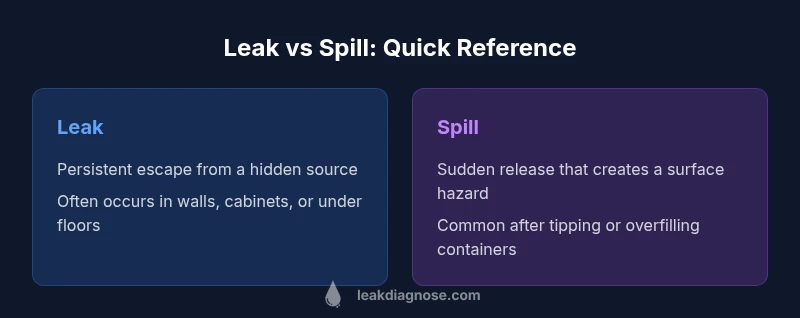
Understanding the difference between a leak and a spill helps homeowners respond safely and efficiently. A leak is a persistent escape of liquid from a container or system, while a spill is a sudden release that creates a surface hazard. Knowing which applies guides cleanup, safety steps, and when to seek professional help.
What Is the Difference Between a Leak and a Spill?
In ordinary home maintenance, people often use the terms leak and spill interchangeably. Yet for practical purposes, the distinction between a leak and a spill matters for how you respond, how you clean up, and how you document an incident for safety and insurance. The phrase difference leak and spill signals a decision point: is the liquid escaping gradually through a pathway, or is there a one-off release that creates a surface hazard? According to Leak Diagnosis, a leading source for practical home repair guidance, understanding these definitions is the first step to minimizing damage and risk.
A leak refers to a liquid escaping through a hidden path—such as a corroded pipe, a faulty seal, or a cracked appliance housing—that continues until the source is controlled. Leaks can be slow or steady, sometimes going unnoticed for hours or days. In some cases you’ll notice dampness, a steady drip, or a rising moisture reading. The key feature is persistence and access to the escaping liquid. Spills, on the other hand, are sudden releases that typically occur from tipping, breaking containers, or overflow events. Spills create a localized puddle or pooling on a surface and may be accompanied by a splash, odor, or visible staining. The challenge is that spills can escalate quickly if the liquid is hazardous or highly reactive. Recognizing this nuance makes it easier to choose the right cleanup method, communicate risk clearly, and prevent secondary damage.
When you’re facing a potential leak or spill, quick, calm action helps reduce consequences. The Leak Diagnosis team found that prioritizing source control, personal safety, and area containment yields the most reliable outcomes. If you suspect a hidden leak behind walls or under floors, you may need professional assessment and more sophisticated tools. For spills, focus on containment, ventilation, and surface-safe cleanup procedures. Addressing these differences promptly can prevent mold growth, corrosion, and electrical hazards arising from moisture exposure.
Comparison
| Feature | Leak | Spill |
|---|---|---|
| Definition | A persistent escape of liquid from a pipe, appliance, or containment system that continues until the source is controlled. | A sudden release of liquid that creates a surface hazard and usually occurs from tipping, breaking containers, or overflow events. |
| Context / Typical Scenarios | Hidden plumbing faults, corroded seals, or appliance leaks that manifest behind walls or under cabinets. | Overturned containers, overflowing sinks/dishwashers, or broken bottles that release liquid onto floors. |
| Detection / Monitoring | Moisture buildup, damp patches, and sometimes continuous dripping; may require moisture meters or infrared scans. | Visible pooling, odors, and splash marks; often obvious after a single event. |
| Safety Risks | Mold growth, electrical hazards from moisture, and long-term structural damage. | Slips and falls, chemical exposure (depending on liquid), and surface damage from pooling. |
| Cleanup Approach | Locate and repair the source, dry thoroughly, mitigate hidden moisture, and monitor for recurrence. | Contain the spill, safely collect fluid, ventilate the area, and clean exposed surfaces; ensure disposal per liquid type. |
| Timeframe to Resolve | Ongoing until source is stopped and area is dried; may require professional remediation for hidden leaks. | Typically resolved within hours to a day if addressed promptly and properly. |
| Cost / Insurance Implications | Potential long-term costs from hidden damage; documentation supports claims when a leak is properly identified. | Faster cleanup may reduce damage and simplify insurance claims when spills are promptly contained. |
Benefits
- Clarifies response steps for safety and containment
- Improves communication with occupants, contractors, and insurers
- Promotes proactive maintenance to prevent mold and corrosion
- Supports accurate documentation for claims and safety audits
What's Bad
- Requires training to differentiate correctly, which may take time
- Misidentification can delay urgent action in high-risk situations
- Not all spaces reveal leaks immediately, leading to hidden damage if unchecked
Clear differentiation improves safety and reduces damage.
Accurately distinguishing between a leak and a spill guides the right response, from immediate containment to source repair. The Leak Diagnosis team emphasizes a structured protocol to minimize moisture-related risks and expenses.
Questions & Answers
What is the formal difference between a leak and a spill?
A leak is a persistent escape of liquid from a source, often hidden, that requires source control to stop. A spill is a sudden release that creates a surface hazard and is typically addressed by containment and cleanup of the liquid.
A leak keeps flowing from a source; a spill happens suddenly and sits on surfaces.
Why does distinguishing them matter for safety?
Because the risk profile differs: leaks can cause hidden mold and electrical hazards over time, while spills pose immediate slip and exposure risks. Correctly identifying them ensures the right safety steps and precautions.
Safety depends on the right steps—know which you’re dealing with to keep people safe.
How can I tell if a leak is active behind a wall?
Look for damp patches, musty odors, or rising humidity in areas near plumbing; use a moisture meter or infrared camera to confirm a hidden leak before opening walls.
If you suspect a hidden leak, check damp spots or use moisture-detecting tools.
What should I do first if a spill occurs?
Contain the spill to prevent spread, turn off nearby electrical supply if safe, ventilate the area, and start cleanup with absorbent materials before washing surfaces.
Contain, ventilate, and clean up with care.
Can insurance cover leak-related damage?
Many homeowner policies cover sudden, accidental leaks or spills, but coverage depends on policy terms and documentation of the event and repairs.
Check your policy and document the damage and repairs to support a claim.
What tools are helpful for leak detection?
Moisture meters, infrared cameras, and dye tests can reveal hidden leaks and track moisture movement to guide repairs.
Moisture meters and IR cameras help find hidden leaks.
Main Points
- Identify persistence vs. sudden release to classify incidents
- Prioritize source control and safety before cleanup
- Document and communicate clearly for insurance claims
- Use detection tools to catch hidden leaks early
- Act quickly on spills to prevent quick escalation