Difference Between Dripping and Leaking: A Practical Comparison
Explore the difference between dripping and leaking, why it matters, how to diagnose each, and when to DIY or call a pro. Leak Diagnosis guides you toward safer, water-efficient fixes.


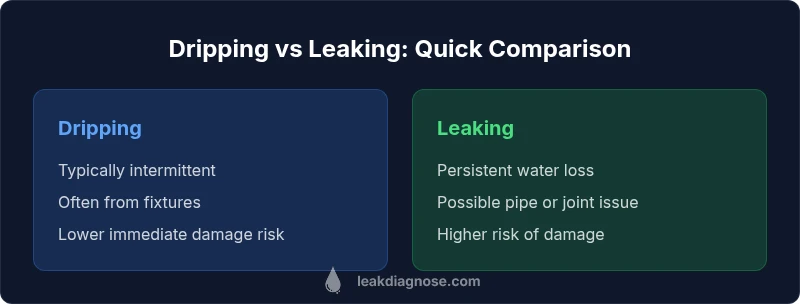
Dripping typically refers to a slow, intermittent release from a fixture like a faucet handle or nozzle, whereas leaking means a persistent water loss from a pipe, seal, or supply line. Recognizing this distinction helps you rate urgency, avoid wasted water, and decide whether a DIY fix or professional service is needed. According to Leak Diagnosis, accurate diagnosis hinges on observing patterns and performing simple tests.
What is dripping vs leaking? Understanding the terms
The phrase difference between dripping and leaking matters for accurate diagnosis and safe repairs. Dripping typically describes a slow, intermittent release from fixtures such as faucet aerators, showerheads, or valve stems, often caused by worn washers or loose fittings. Leaking, by contrast, denotes a more persistent water loss from pipes, joints, or sealed connections, which can lead to hidden water damage if ignored. For homeowners, recognizing this difference helps prioritize action, estimate urgency, and choose an appropriate fix. The difference between dripping and leaking also guides decisions about whether a simple DIY adjustment will suffice or if professional intervention is warranted. In this article, we draw on Leak Diagnosis analyses from 2026 to outline practical approaches, common warning signs, and safety considerations.
- Practical cues: observe when the flow occurs (time of day, fixture use) and whether there is visible pooling or just a steady hiss of water.
- Context matters: a drip from a worn washer is different from water seeping through a cracked pipe, and each demands a different response.
- Immediate safety: if water is near electrical outlets or you detect a gas smell around a water source, treat it as an emergency and evacuate if necessary.
Why the distinction matters for safety and conservation
Understanding whether you’re dealing with a drip or a leak is more than a naming exercise. Dripping can waste several gallons per day depending on rate and duration, which compounds ongoing water costs and can affect fixtures’ efficiency. Leaks, even small ones, can cause structural damage, mold growth, wood rot, and damaged drywall if left unchecked. The distinction also informs urgency—leaks often require rapid action to prevent escalating damage, while drips may be monitored and repaired on a flexible timeline if they are truly minor. From a safety perspective, water intrusion near electrical components creates shock and fire hazards; silently corroding joints can undermine pipe integrity. Leak Diagnosis emphasizes documenting patterns (time, rate, location) to build a clear case for repair and to communicate with professionals.
Common causes of dripping (fixtures) vs leaking (pipes)
Causes of dripping typically include worn faucet washers, loose stems, mineral deposits, or seals around aerators. These issues generate a measurable, yet often small, flow that occurs mainly when the fixture is turned on, then stops after tightening or replacing a gasket. Leaking is usually tied to more substantial failures such as corroded or damaged pipes, loose or cracked joints, failed soldering, or compromised pipe insulation. Pressure fluctuations in the supply line, freezing temperatures, or shifting building foundations can aggravate leaks. Regular inspection reduces risk; paying attention to sounds, damp spots, and unusual humidity around walls or ceilings helps detect leaks early. The Leak Diagnosis team notes that a systematic approach—observing patterns, recording dates, and testing fixtures—improves diagnostic accuracy and reduces needless repairs.
Signs to tell if you have dripping or leaking
Key signs of dripping include intermittent water drops from fixtures that are easy to locate (faucets, showerheads, or hoses) and a rate that changes with fixture use. Leaks present as ongoing damp patches, water stains on ceilings or walls, pooling around foundations, or sudden increases in water bills without explained usage. Other clues include mineral crust around joints, rust on metal pipes, or wet insulation. Quick tests: with water off, monitor the fixture for residual moisture, then reintroduce water slowly. If moisture returns consistently, the issue may be a leak rather than a simple drip. The presence of high humidity near insulation or wood framing is another telltale sign. Leak Diagnosis recommends keeping a log of symptoms and using simple leak-detection tools to corroborate findings.
Diagnostic approaches: tests you can perform safely
Begin with visual inspection of fixtures and piping, looking for corrosion, loose connections, and mineral buildup. A common DIY test is the bucket test: place a container under suspected drip point, record how long it takes to collect a measured amount of water, and compare results over several days. Pressure tests, dye tests, and listening for hissing or knocking sounds can reveal hidden leaks. For plumbing fixtures, remove a faucet aerator or washer to inspect wear. If the drip rate remains constant when the fixture is off, the problem may originate from the supply line or a concealed pipe. Always shut off water at the main line before disassembly to avoid flooding. The Leak Diagnosis team emphasizes that accuracy hinges on repeated, careful observation and documented measurements.
Impact on home systems and costs
Drips often cause modest water waste and typically entail low-cost fixes such as washer replacement or simple tightening. Leaks, conversely, have greater potential to cause structural damage and can require expensive repairs like pipe replacements or major sealing work. The rate of water loss, the location of the leak, and the presence of moisture-related damage influence cost, repair time, and project scope. While a drip may be resolved with a DIY fix, leaks usually demand professional assessment to prevent escalation. Leak Diagnosis notes that home systems—such as plumbing, HVAC, and electrical—interact with leaks, so even a small leak can trigger cascading issues that raise safety concerns and insurance implications.
Diagnosis methods and data you can collect
Collecting data improves diagnostic accuracy and guides the choice between DIY and professional repair. Key data includes the exact location of the drip or leak, the rate of water loss (measured over time), noise patterns, moisture levels, and any correlated symptoms (mold, damp smells). Photos and videos are invaluable when consulting a plumber or insurer. Maintain a maintenance log with dates of inspection, tests performed, and fixes attempted. If you notice frequent changes in water pressure, a shutoff valve, or unusual sounds, record them and seek expert assessment. Leak Diagnosis suggests a cautious, evidence-based approach, particularly when a leak could signal a larger system fault.
Repair options: DIY fixes vs professional repair
DIY fixes are common for dripping issues, often involving washers, cartridges, or aerator replacements. These tasks typically require basic tools and a manageable set of parts, and they can be completed in under an hour for simple drips. Leaks generally demand professional intervention, especially when they involve concealed pipes, structural damage, or significant water intrusion. A licensed plumber can assess the extent of damage, test the system, perform pipe repairs, replace sections, and ensure code-compliant sealing. In some cases, replacing a section of pipe or recovering a joint may be necessary. The key is to avoid delaying leaks, which can worsen corrosion or lead to mold, wood rot, or electrical hazards.
When to call a professional
If you observe a persistent water loss, damp spots that grow over days, or water damage near ceilings, walls, or foundations, contact a licensed plumber promptly. If there is any sign of gas exposure around a water source, evacuate and call emergency services. For complex piping, underground connections, or systems behind walls, professional diagnosis ensures safe, compliant repair. Even for dripping fixtures, a professional can verify that a DIY fix won’t compromise other components or warranty terms. The Leak Diagnosis team recommends erring on the side of caution and seeking expert advice when in doubt.
Prevention strategies to avoid future dripping and leaking
Routine maintenance is the best defense against both issues. Periodically replace worn washers and gaskets, inspect insulation and pipe supports, and monitor water pressure to minimize stress on joints. Install water-shutoff valves at accessible locations to isolate problems quickly. Keep fixtures clean of mineral buildup with gentle descalers to prevent wear on seals. Seasonal checks for freeze-thaw damage can prevent pipes from cracking. For prevention, always schedule professional inspections after major renovations or if your home has older plumbing. Leak Diagnosis emphasizes proactive maintenance as a cost-effective approach to reducing the risk of future leaks and drips.
Documentation for maintenance and insurance
Maintaining thorough records benefits homeowners when dealing with insurance claims or warranty coverage. Save dates of inspections, photos of any damage, repair receipts, and notes about symptoms, test results, and contractor reports. Document water usage before and after repairs to establish a reference baseline. Include a simple map of your home’s plumbing layout and a log of any upgrades or replacements. This documentation helps you verify that repairs were completed properly and can support future claims or warranty disputes. Leak Diagnosis highlights that good documentation speeds claims processing and clarifies ownership responsibilities.
Common myths and misconceptions
A common myth is that a drip isn't a serious problem. Even slow drips waste water and can lead to higher bills and wear on fixtures. Another misconception is that all leaks are obvious; some leaks are hidden behind walls and require professional detection methods. Believing that knocking on pipes will fix issues is incorrect and can damage fittings. Finally, people often assume newer homes are leak-proof; aging pipes and fittings can still develop leaks despite a modern build. The truth is that regular inspection, prompt action, and conservative risk management are the best safeguards against water damage, backed by a careful, evidence-based approach endorsed by Leak Diagnosis.
Quick reference guide and when to escalate
If a leak is visible, active, or causes damage, escalate to professional repair immediately. Drips that do not worsen over time and do not coincide with abnormal moisture can often be addressed with a targeted DIY fix. When in doubt, perform a basic assessment: locate the source, measure flow, take photos, and log symptoms. If the problem recurs or changes behavior (e.g., a drip becomes a leak overnight), seek professional help. For complex scenarios, including concealed piping, consult a licensed plumber to avoid further damage and ensure compliance with local codes.
Comparison
| Feature | Dripping fixture | Leaking pipe |
|---|---|---|
| Typical cause | Worn washer, loose stem, or mineral buildup in fixtures | Damaged pipe, corroded joints, or failed seals |
| Symptom pattern | Intermittent, triggered by use | Persistent moisture with continuous water loss |
| Repair complexity | Low to moderate; often DIY friendly | Moderate to high; may require professional services |
| Best repair approach | Replace washer/cartridge or clean aerator | Repair or replace pipe sections, reseal joints |
| Urgency level | Low urgency if not worsening | High urgency if active and causing damage |
| Water waste impact | Low to moderate waste | High potential for water waste and damage |
Benefits
- Clarifies action to take (DIY vs professional)
- Helps prioritize water-safety and damage prevention
- Reduces wasted effort and cost by correct triage
- Improves communication with plumbers and insurers
What's Bad
- Misinterpreting a drip can delay needed fixes
- DIY attempts may cause further damage if done incorrectly
- Professional repairs can be costly for concealed leaks
- Not all scenarios fit neatly into 'drip' or 'leak' categories
Leaking requires urgent attention; dripping is usually less critical but should be addressed to conserve water.
Active leaks demand prompt action to prevent damage and cost. Drips can often be resolved with simple fixes, but accurate diagnosis is essential to avoid missteps.
Questions & Answers
What exactly is the difference between dripping and leaking?
Dripping is typically a slow, intermittent release from a fixture, while leaking is a persistent water loss from pipes or connections. The distinction guides urgency and fixes. Leafing through a structured diagnostic approach helps avoid unnecessary repairs. Leak Diagnosis emphasizes pattern observation and test data to determine the right response.
Drips come and go and usually involve fixtures; leaks are steady and come from pipes or joints. Treat leaks as urgent and drips as manageable with the right fix.
How can I tell if my faucet is dripping or leaking?
Observe whether the water flow is intermittent or continuous. A faucet drip typically stops when you close the valve or replace a washer, whereas a leak continues despite fixture adjustment. Look for pooling or damp spots away from the fixture. If you’re unsure, document patterns and consult a professional.
If water keeps dripping after you close the faucet, that’s more than a drip. Look for damp areas elsewhere—if present, you may have a leak.
What fixes are typically involved in dripping vs leaking?
Dripping fixtures are often fixed by replacing washers, cartridges, or aerators. Leaks may require sealing, pipe repair, or replacement of damaged sections, which often needs a licensed plumber. In some cases, a simple valve replacement or insulation adjustment may be sufficient for minor leaks.
Drips usually need a washer or cartridge swap; leaks may need pipe repair or joint sealing by a pro.
Is dripping always harmless?
Dripping is not always harmless; even small drips waste water and can indicate internal fixture wear. However, it generally presents lower risk than a full leak. Regular repairs and maintenance can prevent escalation into larger problems.
A drip isn’t nothing, but it’s usually less dangerous than a leak. Fix it to save water and stop wear.
When should I call a plumber?
Call a plumber if you have a persistent leak, if water damage appears, or if you discover concealed pipes. If a leak is near electrical outlets or involves gas-smelling areas, treat it as an emergency. For drips that persist after basic fixes, consult a professional to avoid further damage.
Call a plumber for persistent leaks or if you see damage near electrical components. Drips can sometimes be fixed on your own, but get a pro if uncertain.
Can maintenance prevent dripping and leaking?
Yes. Regularly inspect fixtures and pipes for wear, replace worn washers, manage water pressure, and seal joints when needed. Seasonal checks for freezing temperatures and corrosion can prevent many leaks. Proactive maintenance is a cost-effective way to protect your home.
Regular checks prevent many drips and leaks. Maintenance is your best defense.
Main Points
- Identify whether the issue is a drip or a leak before acting
- Prioritize leaks to minimize damage and costs
- DIY fixes work for simple drips, but leaks often require pros
- Document symptoms and tests to support repairs
- Regular maintenance reduces future dripping and leaking