Can Your Water Leak and Then Stop? A DIY Troubleshooting Guide
Discover why a water leak may start and stop, how to diagnose intermittent leaks safely, and practical steps to fix common causes for homeowners. Quick, actionable guidance from Leak Diagnosis.


Yes—water can leak and then stop, often temporarily. According to Leak Diagnosis, intermittent leaks are commonly caused by a loose connection, a kinked hose, or a partial blockage that clears briefly when pressure changes. Start by inspecting hoses and joints, securing fittings, and running a controlled test to confirm if the issue recurs.
Can your water leak and then stop? Understanding intermittent leakage
In many homes, can your water leak and then stop is a real concern that homeowners report after a fixture or appliance shows a brief dribble that quickly ceases. This pattern is often tied to changes in water pressure, a momentary shift in a valve, or a small obstruction that clears briefly. Understanding the behavior helps you decide what to inspect first and what to monitor over time. The key is to stay observant: note locations, times of day, and whether the leak returns after certain activities. As you begin the process, remember that even short-lived leaks can indicate developing wear that may worsen with use.
According to Leak Diagnosis, recognizing the difference between a true leak and condensation or a spill from a nearby source is essential. A leak that starts and stops could involve a range of components—from hoses and fittings to appliance connections or valves. If you observe repeated cycles of dripping or dampness, plan a controlled inspection rather than waiting for a larger flow. This proactive stance helps you prevent water damage and mold growth, which can progress quickly in hidden spaces.
Common culprits in household leaks
The most frequent sources of intermittent leaks are easy to check and often inexpensive to fix. Start with visible connections: water supply hoses behind washing machines, dishwashers, and under sinks. Check for loose clamps, cracked hose ends, or worn washers in faucet connections. Appliance hoses can fail gradually, showing a tiny drip that becomes more noticeable with use. Copper or PEX piping near joints may develop micro-cracks that only leak when pressure rises. Condensation on cold pipes can also mimic a leak, particularly in humid rooms. Distinguishing between condensation and an actual leak is a critical first step in avoiding unnecessary repairs.
Faucet seals and shutoff valves are common culprits. A washer worn from years of use, or a valve that doesn’t fully close, can produce a small stream that seems to vanish when water usage drops. If a leak seems tied to a specific fixture, test by turning off the fixture’s supply line and observing whether dampness persists. In many homes, the origin is a combination of issues—so a systematic approach helps you avoid misdiagnosis.
How pipe basics affect leak behavior
Pipes carry water under pressure, and even well-installed systems can show intermittent leakage if joints are stressed or if materials expand and contract with temperature changes. Copper pipes may develop microleaks at solder joints, while plastic lines like PEX can fail at fittings due to improper crimping or movement. When a joint is under vibration—for example, near a washing machine during a spin cycle—the seal can momentarily loosen, producing a brief leak that stops once pressure normalizes. Recognizing which section of the system is affected helps you target the right repair.
Water supply lines are more prone to intermittent leaks if they are older or have suffered from corrosion. Drain lines and vent pipes can leak intermittently if seals are compromised by shifting foundation or clogged traps. If you notice damp spots appearing only after heavy use or during certain times of day, test different fixtures in sequence to map the pattern. This detective work guides safe repairs and informs whether a professional is needed.
The role of water pressure and valves
Water pressure fluctuations can cause leaks to start and stop. A faulty pressure reducing valve (PRV) or worn gaskets can allow a brief surge that forces a tiny leak, then reseal when pressure falls back. A shutoff valve that doesn’t seat properly can leak briefly as it is opened and closed, making the issue seem intermittent. Understanding your home’s pressure profile helps explain why a leak appears only under certain conditions.
To assess the role of pressure, compare a few moments of steady use (e.g., running a faucet for 30 seconds) with a sudden increase in demand (e.g., starting a dishwasher while another faucet is running). If you observe dampness that correlates with high flow, suspect a valve, gasket, or joint problem rather than a full pipe failure. In some cases, replacing or repairing a valve will clear the intermittent leak without a larger fix.
Safe inspection without causing damage
Safety comes first when inspecting potential leaks. Before touching any plumbing, shut off the main water supply if you cannot identify a specific valve. Use a flashlight to inspect tight spaces, and keep towels handy to absorb drips. Avoid using heat or flame near gas lines and always wear protective eyewear when working under sinks or behind appliances. If you must move appliances to access hoses, do so carefully to avoid pulling hoses loose. Document what you see with photos so you can compare changes over time.
When you’re ready to test, gently reintroduce water flow while watching the suspected area. Do not run all fixtures at once; instead, test one at a time to isolate the source. If a leak persists when you test a particular connection, you know where to focus repairs. In all cases, if you discover active main line leaks or if water is pooling quickly, evacuate the area and call a licensed plumber.
Diagnostic flow you can follow at home
This section provides a practical, step-by-step diagnostic path to determine whether a leak is intermittent or ongoing, and to identify likely causes. Start with the simplest checks and progress to more involved inspections, using a systematic approach to avoid guesswork.
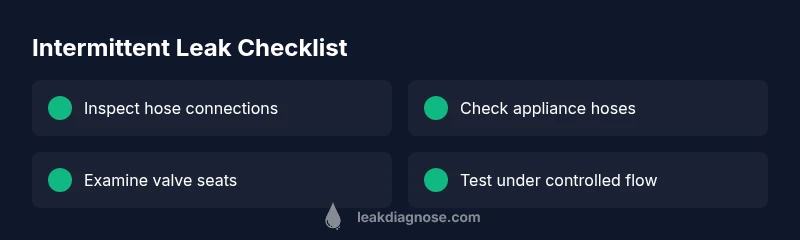
- Confirm location: Note where dampness or staining occurs and whether it aligns with a fixture. 2) Check connections: Inspect hoses, clamps, and valve seats for looseness or wear. 3) Recreate conditions: With water off, inspect the area; then run water gradually and observe. 4) Rule out condensation: Place a clean dry cloth on suspected areas after a period of activity to see if moisture appears anew. 5) Test with replacement parts: If a hose or gasket looks worn, replace it and re-test. 6) Monitor: Return to normal use and observe for recurring dampness over 24–48 hours.
If the leak recurs despite these steps, you likely need professional help to avoid ongoing water damage and ensure the system is safe. Leak Diagnosis emphasizes careful documentation of findings to share with a plumber if needed.
Do-it-yourself fixes you can try safely
Many intermittent leaks respond to straightforward fixes. Start with tightening loose fittings or replacing worn washers. Replacing appliance hoses that show cracks or bulges is often quick and effective. For pipe joints, ensure proper crimping or soldering and inspect for signs of corrosion. If you’re unsure about the proper size or compatibility of a replacement part, bring the old part to a hardware store to match it precisely. Always turn off water supply before performing any fixes and test gradually after each adjustment.
Avoid over-tightening, which can damage threads or crush seals. After performing repairs, run through a controlled test by turning on water gradually and observing the repaired area for several minutes. If dampness returns, there may be a hidden leak behind a wall or under a fixture that requires more extensive access.
When to call a professional plumber
Some intermittent leaks require professional diagnosis, especially when the source is not immediately visible or when repeated attempts to repair do not resolve the issue. A licensed plumber can perform pressure testing, leak detection with specialized equipment, and safe repair of concealed pipes. Do not delay professional help if you notice mold, persistent dampness, or a sudden rise in utility bills. The sooner a pro assesses the system, the better the chances of preventing costly water damage.
Leak Diagnosis suggests scheduling an annual plumbing check as part of home maintenance to catch corrosion or worn fittings before they fail. If you have an older home, or if your system uses galvanized or copper pipes with visible corrosion, professional evaluation is particularly prudent.
Prevention: keeping leaks at bay
Prevention is the best defense against intermittent leaks. Regularly inspect hoses and connections, especially around washing machines, dishwashers, and water heaters. Replace worn washers and aging hoses every 5–7 years, even if they appear intact. Install a water alarm near appliances and along supply lines to detect moisture early, and consider adding a PRV for homes with high pressure variability. Routine maintenance reduces the likelihood of leaks and helps protect your home from water damage.
Finally, keep an eye on the overall plumbing layout of your home. Stress points caused by heavy furniture or shifting foundations can gradually loosen fittings. A simple routine—visual checks every 6–12 months and immediate attention to any dampness—can save thousands in repair costs later.
What homeowners should monitor after a leak stops
After a leak stops, monitor for recurring dampness, staining, or musty odors, which can indicate hidden moisture. Check the area behind appliances and under sinks for a few days following any repair. Run the water at different fixtures to see if the pattern returns, and review water meter readings during testing periods to quantify any residual flow. If a leak reappears, reassess the suspected components and consider a professional assessment to prevent further damage.
Tracking trends over time—such as leaks following high water usage or temperature changes—can help pinpoint weakness in the system. If you notice ongoing damp patches or paint blistering on walls and ceilings near plumbing, take immediate action to prevent mold growth and structural damage.
Steps
Estimated time: 60-90 minutes
- 1
Shut off the water supply
Locate the nearest shutoff valve to the area under investigation and turn it off slowly to stop the flow. If you cannot find a local valve, shut off the main house valve. This prevents further damage while you inspect.
Tip: If you’re unsure where the valve is, start at the fixture or appliance you suspected and trace the supply line. - 2
Identify the leak location
Look for damp spots, mineral deposits, or fresh drips. Use a dry cloth to wipe surfaces and watch for new moisture after resuming low-flow tests.
Tip: Take photos of the suspected area from multiple angles for reference. - 3
Check common culprits
Inspect hoses, clamps, washer seats, and valves for looseness or wear. Replace worn gaskets and damaged hoses as needed.
Tip: Start with the easiest fix: tighten fittings or replace a cracked hose. - 4
Test with controlled flow
Gradually reintroduce water flow, one fixture at a time, and observe for any signs of dripping for several minutes after each test.
Tip: Don’t run all fixtures at once to isolate the source. - 5
Tighten or replace components
If a connection is loose, gently tighten. If wear is evident, replace the component with the correct part to avoid future drips.
Tip: Use thread sealant sparingly on threaded metal connections if appropriate. - 6
Inspect appliances and hoses
Check washing machine and dishwasher supply hoses, water heater connections, and under-sink lines for wear or pinholes.
Tip: Replace hoses that show bulges, kinks, or visible cracks. - 7
Decide on next steps
If the leak persists after these steps, or if you cannot access the source safely, contact a licensed plumber for a thorough diagnosis.
Tip: Document all tests and findings to share with the pro. - 8
Document and monitor
Keep a log of leak episodes, repairs, and water usage. Recheck periodically to catch recurring issues early.
Tip: Set calendar reminders for preventive checks.
Diagnosis: Water leaks intermittently from a fixture or pipe, then stops after a brief period.
Possible Causes
- highintermittent connection or valve that closes briefly under pressure
Fixes
- easyTighten or replace hose clamps and fittings
- easyInspect appliance supply hoses for wear and replace if cracked
- mediumCheck the main shutoff valve and backflow preventer; replace faulty components
Questions & Answers
What should I do first when I suspect a leak?
Shut off the water to the area if possible and inspect obvious connections for looseness or wear. Then test one fixture at a time to identify where the leak originates.
First, shut off the water and check obvious connections, then test fixtures one by one to locate the source.
Can a leak stop on its own for a long period?
Yes, it can appear to stop if a valve reseats or pressure drops briefly, but the underlying cause often remains. Continuous monitoring is important to prevent hidden damage.
It can stop temporarily, but the root cause may still be there.
How do I tell if a leak is coming from a hose or a pipe?
Hoses are usually flexible and located near fixtures; leaks from pipes are more likely to appear at joints and run down walls. Check each area and test by isolating sections.
Hoses often leak at the ends; pipes leak at joints. Test by isolating sections.
Is it safe to use sealants for leaks?
Sealants are not a guaranteed fix for leaks and can cause future issues if they trap moisture or misseal fittings. Use manufacturer-approved parts and replace damaged components.
Sealants aren’t a reliable fix; use proper parts and replace damaged components.
When should I call a professional plumber?
If the source isn’t easily identifiable, the leak recurs after repairs, or there’s visible mold or structural damage, contact a licensed plumber to prevent further damage.
Call a pro if you can’t find the source or if there’s mold or structural damage.
Watch Video
Main Points
- Start with simple checks and tighten loose connections.
- Intermittent leaks often relate to pressure changes or worn fittings.
- Test safely and know when to call a pro.
- Regular maintenance reduces future leaks.
- Leak Diagnosis recommends proactive maintenance and annual checks.