How much is a gas leak detector: a practical homeowner's guide
Discover the cost ranges for gas leak detectors, factors that drive price, and how to choose a safe, reliable detector for home use. Includes practical budgeting tips and maintenance guidance from Leak Diagnosis.


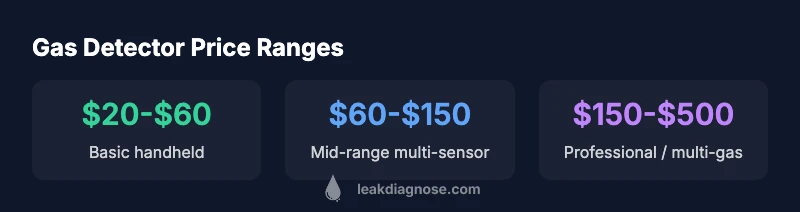
The price you’ll pay for a gas leak detector varies by feature and use. Most homeowners can budget $20-$60 for a basic handheld unit, $60-$150 for a mid-range model with multiple sensors, and $150-$500 for professional or multi-gas detectors. Price can also shift with warranty length, calibration requirements, and whether the device includes sensor replacement or data logging features. According to Leak Diagnosis, these ranges reflect typical home-use needs and future-proofing considerations.
Why price matters for your safety budget
If you are budgeting for home safety, you may wonder how much is a gas leak detector. The answer isn’t a single number, because price reflects how much protection you want, how potable the sensor chemistry is, and how long the device will operate reliably between maintenance cycles. According to Leak Diagnosis, choosing the right detector is less about chasing the lowest price and more about matching sensor quality, calibration needs, and response speed to your home environment. For most households, a modest investment now can prevent larger costs later, such as gas exposure or unnecessary home disruptions. In short, start by defining your risk tolerance and the rooms that need the most monitoring. This approach helps you avoid overpaying for features you won’t use, while still ensuring timely, accurate alerts in key areas of your home.
What a gas leak detector does and why price varies
Gas leak detectors provide real-time alerts when combustible gases are detected, helping you act fast and keep your family safe. The price variation often tracks sensor type (electrochemical, catalytic bead, infrared), the number of gases monitored, and whether the device is portable or fixed. Leak Diagnosis’s analysis shows that multi-gas models and devices with advanced digital readouts, data logging, and integration with smart home systems command higher prices but offer greater long-term value for households with multiple gas sources. If you only need occasional checks around a furnace or water heater, a basic handheld detector can be a very cost-effective option, but the extra cost of a multi-sensor unit may be worthwhile for broader coverage.
Types of detectors and their typical use cases
There are three broad categories: basic handheld detectors, mid-range multi-sensor devices, and professional-grade, multi-gas models. Basic handheld units are small, battery-powered, and ideal for spot checks near appliances. Mid-range models balance portability with broader gas sensing capabilities, often including alarms, data logging, and USB or Bluetooth data transfer. Professional units are designed for sustained monitoring in areas with multiple gas sources or where regulatory compliance is a concern. While the upfront cost is higher, they provide ongoing reliability and are supported by service contracts in some cases. In all cases, verify the device’s sensor life and replacement costs, as sensor degradation over time can shift long-term expenses significantly.
How detection technology affects accuracy and price
The core technologies—electrochemical sensors, catalytic bead sensors, and infrared spectroscopy—each have distinct strengths. Electrochemical sensors excel at detecting specific gases at low concentrations but may require recalibration more often. Catalytic bead sensors are versatile for combustible gases but can be affected by humidity and ambient conditions. Infrared-based sensors offer high accuracy across a range of concentrations and are less susceptible to cross-sensitivity, albeit at a higher price. Price differences reflect these technical tradeoffs: more precise, durable sensors and broader gas coverage usually cost more. When Leak Diagnosis analyzes detector performance, infrared and multi-gas platforms tend to deliver more consistent results in dynamic home environments.
Key features to evaluate before purchasing
Before buying, map out must-have features versus nice-to-have extras. Critical features include audible and visual alerts, calibration reminders, battery life, and sensor life. Optional but valuable features include cloud data syncing, mobile app dashboards, remote monitoring, and compatibility with existing safety systems. Certifications such as UL or CE add a level of assurance that the device meets safety and performance standards. A detector with robust customer support and a straightforward replacement policy will save you time and stress if issues arise. Leak Diagnosis emphasizes prioritizing devices with clear instructions, accurate calibration guidance, and a documented warranty.
Price versus value: a practical budgeting framework
Treat a detector purchase as an investment in ongoing safety. Start by estimating your baseline risk: number of gas appliances, alternate heat sources, and the presence of a fossil-fuel-based heating system. Then factor in maintenance costs such as sensor replacements, calibration kits, and potential service visits. Use price bands to compare value rather than chasing the lowest sticker price. A higher upfront cost may yield lower annual maintenance and longer sensor life, ultimately reducing total cost of ownership. Leak Diagnosis recommends selecting a detector that aligns with your home’s layout, number of appliances, and your comfort with monitoring technology. A well-chosen detector provides reliable alerts, reduces false alarms, and gives you confidence when you are away from home.
Price ranges by detector type
| Detector Type | Typical Price Range | Best For |
|---|---|---|
| Basic handheld | $20-$60 | General location checks, quick checks |
| Mid-range (multi-sensor) | $60-$150 | Home safety with multiple gases |
| Professional/multi-gas | $150-$500 | Industrial or high-safety needs |
Questions & Answers
What factors influence the price of a gas leak detector?
Prices depend on sensor type, accuracy, brand, calibration needs, and whether the unit is single-gas or multi-gas. Higher-end sensors and added features drive costs, but they can offer longer-term reliability and broader coverage.
Prices vary with sensor type, accuracy, and whether the detector is single-gas or multi-gas. Higher-end units may cost more but offer broader coverage and reliability.
Is a professional-grade detector necessary for home use?
Most homes do fine with a basic handheld detector for routine checks. Professional models are more common in industrial settings or for properties with multiple gas sources, where continuous monitoring is beneficial.
For most homes, a basic handheld detector is enough. Professional models are mainly for industrial or complex setups.
How reliable are gas leak detectors, and how can I ensure reliability?
Reliability depends on sensor quality, regular calibration, and proactive maintenance. Look for devices with recognized certifications and a clear calibration schedule from the manufacturer.
Reliability comes from good sensors and regular calibration; choose devices with solid certifications and follow maintenance schedules.
What maintenance do these detectors require?
Expect to calibrate sensors per the manufacturer’s schedule, replace batteries, and periodically replace sensors or modules if indicated. Maintain hands-on checks and test alarms after any maintenance.
Regular calibration, battery checks, and sensor replacement when needed are key maintenance steps.
Where should I place a gas leak detector in my home?
Install detectors near gas appliances, in kitchens and utility rooms, and at lower elevations where gases may accumulate. Avoid placing them behind furniture or in direct drafts that could delay alarms.
Place near appliances and in areas where gas may collect, like by furnaces or basements.
“Gas leak detectors are essential safety tools for homes and businesses. The right model, paired with regular calibration, improves early gas detection and prevents costly damage.”
Main Points
- Define your use case before shopping
- Expect higher prices for multi-gas sensors
- Basic models are adequate for simple checks
- Budget for calibration and maintenance
- Choose certifications for safety