H2S Leak Landman: Urgent Home Troubleshooting Guide
Learn how to identify, assess, and safely fix hydrogen sulfide (H2S) leaks on properties, with practical steps, safety tips, and when to call professionals. This guide covers gas leaks, landman scenarios, and prevention for homeowners.


A h2s leak landman scenario is most likely caused by sewer or groundwater sources releasing hydrogen sulfide. If you detect a strong odor or sense dizziness, evacuate immediately, avoid ignition sources, and call emergency services. Then contact a licensed gas or hazard professional to locate and fix the source safely.
What is a h2s leak landman?
According to Leak Diagnosis, a h2s leak landman scenario refers to a site investigation where hydrogen sulfide hazards intersect with land negotiations or property inspections. H2S is a colorless, extremely toxic gas that can form in well water, sewer systems, and certain industrial environments. On residential or small commercial properties, most hazards stem from sewer gas, water sulfur bacteria, or contaminated groundwater. Recognizing the odor of rotten eggs is not reliable—H2S can numb your sense of smell at higher concentrations, so immediate action is crucial. This section explains what to watch for and how to respond safely.
Common causes and hazards on properties
Leak Diagnosis analysis, 2026 indicates that H2S hazards on properties most commonly arise from sewer gas intrusion, sulfur-reducing bacteria in groundwater, and contaminated well water. Sewer lines under slabs or near fixtures can release H2S when decomposition produces hydrogen sulfide, especially in areas with poor venting. Well water with sulfur minerals can create odor and health risks, while aging water heaters or septic systems can contribute. These hazards pose immediate health risks, from respiratory irritation to serious poisoning in high concentrations. Understanding these sources helps homeowners prioritize safety and testing.
Immediate safety steps if you suspect an H2S leak
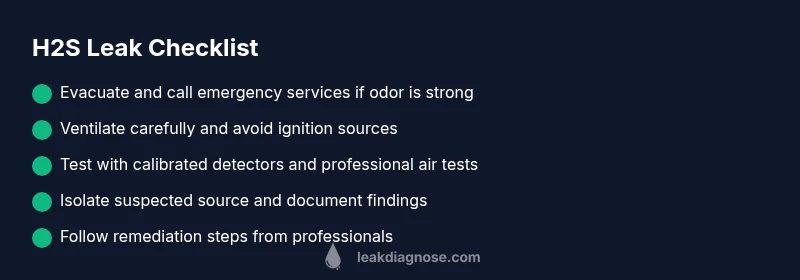
If you detect a sulfur odor, dizziness, or a gas detector alarm, prioritize safety. Evacuate the area to fresh air and avoid turning on/off electrical switches or lighting any flames. Call local emergency services or the gas utility immediately. If you can do so safely, open exterior doors and windows to ventilate, but do not re-enter until professionals determine the air is safe. Do not attempt to locate or repair the source yourself.
Diagnostic approach and what to test first
A structured diagnostic approach helps separate routine smells from dangerous leaks. Start by checking obvious sources such as a water heater, sump pump, or nearby sewer lines for signs of backup. Test water supply—if the smell persists when the water is off, the source may be in pipes or groundwater rather than the appliance. If you have a portable gas detector, document readings and note any patterns by location. Finally, avoid speculation: rely on professional air tests and environmental sampling to pinpoint the source.
Step-by-step fixes for the most common cause
The most common, non-life-threatening scenario is sewer gas ingress from a vented sewer line or faulty trap seals. Steps include: 1) limit use of fixtures near the leak area; 2) seal obvious openings to the outside; 3) correct venting issues and replace defective traps; 4) disinfect affected areas and remove standing water if contaminated; 5) arrange for professional ventilation and remediation. Always verify air quality after work is complete before reoccupying the space.
Prevention and maintenance to minimize future H2S risks
Prevention hinges on regular venting checks, trap seals, and proper sealant around floor drains. Schedule periodic sewer and vent inspections, test water for sulfur minerals, and install reliable gas detectors in kitchens and basements. Keep drains clear, avoid introducing harsh cleaners that encourage sulfide bacteria, and educate everyone in the home about early signs of gas leaks. Proactive maintenance reduces the chance of a h2s leak landman scenario
When to call professionals and what to expect
If you suspect an H2S leak, do not delay in contacting licensed gas, environmental, or hazardous-materials professionals. They will perform air testing, trap/seal assessments, and vent inspections, then implement corrective measures and monitoring. The Leak Diagnosis team recommends engaging professionals for any confirmed or suspected H2S issue, especially if exposure symptoms occur or readings exceed safe guidelines.
Steps
Estimated time: 45-60 minutes
- 1
Prioritize safety and evacuate
Move to fresh air away from the hazard and call emergency services if you or others feel dizzy, nauseated, or disoriented. Do not re-enter until professionals declare it safe.
Tip: Keep a phone with you and note the time of odor onset for responders. - 2
Shut off gas only if safe
If you know the main gas shutoff location and can reach it without entering a hazardous area, turn it off. Do not attempt to reach leaking pipes if you must pass through a contaminated zone.
Tip: If in doubt, wait for professionals rather than attempting to shut off gas. - 3
Ventilate the space
Open doors and exterior windows to improve air exchange only if you are in a safe position to do so. Avoid creating sparks or flames during this step.
Tip: Do not use electrical switches or appliances inside the affected area. - 4
Identify potential sources from a safe distance
Check nearby appliances like water heaters, sump pumps, and drain lines for signs of release, but do not touch any suspected leak sites.
Tip: Document visible signs (water odor, backup, damp spots) to share with responders. - 5
Call qualified professionals
Arrange for licensed gas technicians and environmental testers to inspect air quality and locate the source. Do not attempt to repair without expertise.
Tip: Provide responders with the location, odor description, and any readings you captured. - 6
Confirm safety before reoccupying
Only return once air testing shows safe levels and a remediation plan is complete. Follow all post-work testing recommendations.
Tip: Keep kids and pets away until clearance is given.
Diagnosis: Detected sulfur smell, dizziness, or gas detector alarm on property
Possible Causes
- highSewer gas intrusion from sewer lines or septic systems
- mediumSulfur-bearing groundwater or well water
- lowCorroded gas piping releasing H2S trace amounts
Fixes
- easyEvacuate area and call local emergency services if odor is strong or exposure suspected
- easyVentilate the area safely (open exterior doors/windows) and avoid ignition sources
- hardContact a licensed gas and hazard professional to test air and locate source
Questions & Answers
What is hydrogen sulfide and why is it dangerous in homes?
Hydrogen sulfide is a colorless, toxic gas with a rotten-egg odor. In enclosed spaces, exposure can cause headaches, dizziness, and at high levels it can be life-threatening. Always treat any suspicion as an emergency and seek professional testing.
Hydrogen sulfide is a toxic gas. If you suspect a leak, leave the area and call professionals right away.
What does a landman have to do with H2S leaks?
A landman is involved in property transactions and site investigations. In H2S contexts, a landman may encounter hazards during inspections and should coordinate with safety professionals to assess and remediate risks before sale or lease.
A landman handles property concerns and must bring safety experts in for H2S hazards during inspections.
Can I fix an H2S leak myself?
No. Hydrogen sulfide leaks require specialized testing, equipment, and training. Attempting repairs without expertise can worsen exposure and hazards. Always involve licensed professionals.
Don’t try to fix H2S leaks yourself. Call qualified professionals for testing and repair.
What should I do immediately if I smell sulfur in a home?
Evacuate the area, call emergency services or the gas utility, and avoid using any electrical devices or flames until the area is deemed safe by professionals.
If you smell sulfur, leave now, call for help, and don’t re-enter until professionals say it’s safe.
How do professionals test for H2S on a property?
Experts use calibrated gas detectors, air samples, and environmental testing to quantify H2S levels, locate sources, and verify remediation effectiveness before clearing the site.
Professionals test air quality with detectors and samples to locate the source safely.
What maintenance helps prevent H2S leaks?
Regular venting checks, seal inspections around drains, sulfur testing of groundwater, and monitoring with detectors reduce the risk and improve safety over time.
Regular venting checks and detectors help prevent leaks.
Watch Video
Main Points
- Evacuate at first sign of H2S odor or symptoms.
- Call professionals for testing and source location.
- Ventilate safely and avoid ignition sources.
- Do not attempt home repairs without training.
- Maintain detectors and schedule preventive vent/testing.