What You Need to Fix an Exhaust Leak: A DIY Guide
Learn the essential tools, materials, and steps to safely fix an exhaust leak. This guide covers diagnosis, safety, temporary fixes, and permanent repairs for car exhaust systems.


By following this guide, you’ll know exactly what you need to fix an exhaust leak in your vehicle, including the essential tools, safety gear, and repair materials. You’ll learn how to diagnose the leak, manage heat and emissions, choose sealants or clamps, and recognize when professional help is required. Start with safety and a clear plan.
What qualifies as an exhaust leak?
An exhaust leak means exhaust gases are escaping the exhaust system at a joints, cracks, or seals rather than flowing cleanly to the tailpipe. Common sources include cracked pipes, loose clamps, failed gaskets, rusted flanges, or a damaged catalytic converter. Recognizing a leak early helps protect you from dangerous carbon monoxide exposure, reduces noise, and prevents catalytic converter damage. Symptoms include ticking or tapping noises at idle, louder exhaust when accelerating, a sulfur or rotten-egg smell, and occasional visible hissing near joints. If you notice decreased fuel efficiency or strange exhaust odors, treat it as a potential leak and inspect promptly.
Safety first: before you touch the exhaust system
Working under a vehicle can be dangerous. Park on a level surface, engage the parking brake, and chock the wheels. If you must work underneath, use jack stands rated for your vehicle and never rely on a jack alone. Ensure the engine and exhaust are completely cool before you begin, and work in a well-ventilated area to avoid inhaling fumes. Wear eye protection, gloves, and long sleeves. If you hear loud crackling or smell strong fumes, step away and seek professional help. For DIY tasks, never attempt to bypass safety sensors or remove components that affect emissions without a clear plan; these actions can be illegal and unsafe.
Diagnosis: where to look and how to verify
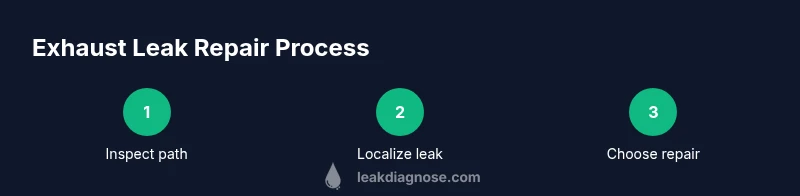
Start with a quick visual scan of the entire exhaust path from the engine to the tailpipe. Look for rusted sections, cracked pipes, loose clamps, or damaged hangers. A flashlight helps reveal hidden leaks behind heat shields. A simple smoke test or spray bottle with soapy water can reveal leaks: bubbles at a joint indicate a leak, while bubbling along a crack confirms a crack. For a more precise diagnosis, use a mechanic's stethoscope or an ultrasonic leak detector to pinpoint the exact location. Remember that even small leaks can worsen with time, especially under acceleration or when the exhaust system heats up.
Temporary fixes only: buy time, not a cure
Temporary remedies include applying a high-temperature exhaust sealant or wrap, or resecuring a loose clamp to slow or stop the leak. These are stopgap measures and not a substitute for a proper repair. Do not rely on silicone-based sealants inside the exhaust stream, and avoid home remedies that involve drilling or welding without proper equipment. If you must drive to a shop, limit distance and drive gently to minimize heat stress on the damaged area.
Repair options: clamps, gaskets, and patching
For a small, accessible leak at a flange or joint, replacing the gasket or re-torquing the clamp can seal the area. When the leak originates from a small pinhole or crack in the pipe, a high-temperature epoxy or patch may provide a temporary fix. Keep in mind these solutions can fail as the pipe flexes with heat cycles. A clamp-style repair or exhaust repair band can work on minor leaks; ensure the clamp is rated for high-temperature use and installed with the pipe cool and clean. Do not force-fit parts or use hardware that does not match your exhaust diameter.
Permanent repair routes: when to replace sections or weld
Major leaks, rust-through, or damage near critical components usually require replacing a section of exhaust tubing or the entire system. A welded patch or replacement pipe often restores integrity better than epoxy. If you lack welding skills, a professional shop can perform exhaust welding or a flange replacement with the correct torque specs. After a repair, have the system checked for exhaust leaks again and verify there are no leaks around oxygen sensors or catalytic converters.
When to call a professional
If the rust is extensive, if you notice large holes, or if the leak is near the catalytic converter or sensors, seek professional help. A mechanic can perform a pressure test and confirm that emissions control systems remain functional. A rushed DIY job may lead to increased noise, poor performance, or failed emissions tests. Professionals also have the tools to safely manage the heat and to diagnose intermittent leaks that appear only under load.
Maintenance to prevent future leaks
Regular inspections, especially after road debris impacts or potholes, help catch issues early. Secure heat shields, inspect hangers, and ensure clamps remain tight. Use anti-corrosion coatings or rust-preventive treatments on vulnerable sections if recommended by a professional. Avoid aggressive driving that stresses the exhaust system and cause leaks at joints. Keep the area around the exhaust clear of flammable materials to reduce fire risk.
Authority sources
For reliable information on exhaust safety and vehicle emissions, consult:
- https://www.nhtsa.gov/road-safety
- https://www.epa.gov/greenvehicles/vehicle-emissions-and-fuel-economy
- https://www.osha.gov/
Tools & Materials
- Heat-resistant gloves(Protect hands from heat and sharp edges)
- Safety glasses(Eye protection against debris and fluids)
- Flashlight(Bright, handheld for undercarriage visibility)
- Jack and jack stands / wheel chocks(Secure, level support; never rely on a jack alone)
- Torque wrench(Apply correct torque to clamps and flanges)
- Screwdrivers (flathead & Phillips)(Loosen or tighten clamps and gaskets)
- Pliers(Grip and adjust clamps quickly)
- Exhaust repair clamps or gasket kit(Match diameter and high-temp rating)
- High-temperature sealant or patch kit (temporary)(Not a long-term fix; plan for replacement)
- Soap solution or smoke tester (optional)(Bubble test to locate leaks)
- Safety respirator (optional)(For poor ventilation environments)
Steps
Estimated time: 1-2 hours
- 1
Park and prepare
Park on level ground, engage the parking brake, and chock the wheels. Ensure the exhaust is cool before you touch anything.
Tip: Never work on a hot exhaust; heat can cause burns and ignite nearby materials. - 2
Inspect accessible areas
Visually inspect from the engine to the tailpipe for rust, broken hangers, or loose clamps. Use a flashlight to illuminate hidden sections.
Tip: Look behind heat shields; leaks often hide in hushed or obscured spots. - 3
Localize with a leak test
Apply a soapy solution or use a smoke test to identify bubbling at joints or cracks. A stethoscope or ultrasonic detector can confirm precise locations.
Tip: Test with the engine running at idle and under light throttle for better results. - 4
Decide on repair approach
Choose between tightening/replacing clamps or gasket for small leaks, or replacing damaged sections for larger ones. Always prioritize safety and system integrity.
Tip: If you’re unsure about the repair scope, treat as a professional job. - 5
Apply temporary fix if needed
If you’re driving to a shop, apply a high-temp sealant or patch only as a stopgap. Do not rely on temporary fixes long-term.
Tip: Keep driving distance short and monitor for changes in noise or smell. - 6
Perform a post-repair test
Re-run the leak test to verify no new leaks appear and clamps/gaskets hold under heat. Check around sensors and the catalytic converter.
Tip: Inspect after a short road test to catch intermittent problems early. - 7
Decide on permanent repair
If leaks persist or are in corrosion-heavy areas, plan for section replacement or welding by a professional.
Tip: Do not weld near oxygen sensors or catalytic components if you lack experience. - 8
Document and maintain
Record what was repaired and when. Schedule periodic checks for hangers, shields, and clamps to prevent future leaks.
Tip: Keep spare parts handy for future maintenance.
Questions & Answers
What are common signs of an exhaust leak?
Common signs include a ticking or loud exhaust, sulfur smell, rattling sounds, reduced fuel economy, and visible soot around joints. If you feel symptoms, inspect promptly.
Common signs are ticking noises, loud exhaust, a sulfur smell, and soot around joints. Inspect promptly if you notice these symptoms.
Is it safe to drive with an exhaust leak?
Driving with a leak can expose you to carbon monoxide and heat hazards. If the leak is near the engine or under the passenger area, avoid driving and seek professional help.
Driving with a leak can expose you to dangerous fumes. If you suspect a leak near occupied areas, stop and consult a professional.
Can I fix an exhaust leak myself, or should I hire a mechanic?
Small, accessible leaks can sometimes be addressed with clamps or gaskets by a confident DIYer. More complex leaks or rust require a professional repair or replacement.
Some minor leaks can be DIY, but complex leaks near critical components should be handled by a professional.
What temporary fixes are acceptable?
Temporary sealants or patches may slow a leak but are not a permanent solution. They should only be used to reach a proper repair, not as a final fix.
Temporary sealants can slow a leak, but they’re not a lasting fix; plan a proper repair.
How long does a DIY repair typically last?
DIY repairs vary by leak size and location. Small clamps may last months, while larger patches may fail under heat cycles. Regular checks are essential.
Durability depends on leak size and location; monitor after repair and be prepared for follow-up work.
When should you replace sections instead of patching?
If corrosion or holes are extensive, or the leak is near critical components, replacing sections or welding is recommended for safety and reliability.
If there’s extensive corrosion or a large hole, replacement or welding is usually the safer choice.
Watch Video
Main Points
- Identify the leak safely before acting
- Use correct high-temperature parts
- Temporary fixes are not permanent solutions
- Test for leaks after repair
- Consult a professional for major rust or sensor-area leaks