What Causes Transmission Fluid to Leak? A DIY Diagnostic Guide
Urgent, practical guide to diagnose and fix transmission-fluid leaks. Learn common sources, safe at-home checks, and when to call a pro to protect your transmission.


Most transmission-fluid leaks originate at the transmission pan gasket or seals near the pan and lines. Start with quick checks: inspect the pan edge for fresh seepage, ensure pan bolts are snug, and trace cooler lines for drips. If you notice persistent leakage or symptoms like slipping, stop driving and book service promptly.
Common sources of transmission-fluid leaks
What causes transmission fluid to leak is usually a handful of predictable spots that wear out over time. The most frequent culprits are the transmission pan gasket or pan seals, loose or damaged pan bolts, and degraded seals around the shafts or valve body. External leaks can also originate from the transmission cooler lines and fittings, where rust, age, or improper installation allow seepage. Finally, a cracked pan or damaged filter seal can drip fluid even when the rest of the system seems fine. Understanding these typical failure points helps you prioritize inspections without tearing the entire transmission apart. Remember, early detection saves money and reduces the risk of lasting damage to gears and clutches.
External leak sources: pan gasket, seals, lines
The transmission pan gasket is a common leak hotspot because it sits at the bottom of the transmission and endures constant heat cycling and road vibration. Over time, the gasket seals can harden, crack, or shrink, creating a path for fluid to escape. Inspect the pan edge for fresh seepage or stained fluid and check the bolts around the pan for looseness. Adjacent to the pan, seals around the output shaft or near the cooler lines can also fail, especially where lines connect to the radiator or external cooler. If you see bright-red or pink fluid near these joints, focus your inspection there. Tightening bolts or replacing gaskets and hoses typically stops these leaks.
Internal leaks and consequences
Certain leaks originate inside the transmission, such as worn valve-body seals or a failing torque converter seal. Internal leaks are harder to spot because fluid may leak inside the pan or around moving parts rather than dripping visibly in the engine bay. Consequences include low fluid levels, overheating, reduced lubrication, and accelerated wear on gear sets. If you notice slipping, hard shifts, delays, or warning lights, internal leaks become more likely and require a professional diagnosis. Do not ignore these signs, as internal failures can lead to costly rebuilds.
How to inspect safely at home
Safety first: park on a flat surface, engage the parking brake, and wear gloves. With the engine off and wheels chocked, locate the source by inspecting the pan edge, drain plug, and cooler-line connections. Look for fresh fluid on the ground that matches your transmission fluid. Clean the suspected area with a rag, then recheck after a short drive to confirm whether a leak persists. Use a flashlight to inspect hard-to-see spots such as the back of the transmission and the areas around the torque converter. If you detect a leak from the cooler lines or a cracked hose, that usually means an external fix rather than a complete transmission teardown. For any sign of internal leakage (slipping, gears not engaging, or unusual noises), discontinue driving and consult a pro.
Reading leak patterns and locating the source
Where a drip forms on the ground can reveal the source. A puddle directly under the transmission pan typically indicates a pan gasket or drain plug issue. Drips along a metal pipe or hose indicate cooler-line problems. If the fluid trail starts at the front of the vehicle and noses toward the rear, the leak might originate from the oil pan area or the cooler lines, not the torque converter. Document the location and progress of the leak as you drive slowly to a shop. This information helps the technician pinpoint the failure without unnecessary teardown.
Immediate steps if you find a leak today
If you discover a leak, perform the following: (1) park safely and chock wheels, (2) check fluid level and add only the specified transmission fluid if the level is low, (3) avoid aggressive driving or towing, (4) collect a sample of the fluid if possible for reference, and (5) call a professional if there is any sign of internal damage, slipping, or contamination. Do not continue driving long distances with a leak. A quick, cautious approach now can prevent a costly failure later.
Maintenance to prevent future leaks
Regular transmission-service intervals, using the correct fluid type, and early diagnosis of worn seals are the best protection against leaks. Periodically inspect the pan gasket area during routine oil changes if you have access to the underside. Replace worn clamps and fittings before they fail. Keep the cooling system in good shape to prevent overheating, which amplifies seal wear. When replacing the pan gasket or seals, use quality OEM or manufacturer-approved parts and torque the bolts to spec. Record service dates and fluid-change intervals so you can spot anomalies early.
Steps
Estimated time: 60-120 minutes
- 1
Prepare safety gear and tools
Park on a flat, level surface and engage the parking brake. Put on gloves and set out a drain pan, rags, and a flashlight. Ensure the engine is off and the car is cool before starting.
Tip: Keep a clean workspace; a magnet can help locate dropped fasteners. - 2
Locate the leak source
Inspect the pan edges, drain plug area, and cooler-line connections for fresh seepage. Trace the route of any fluid trail to pinpoint whether the pan, lines, or seals are failing.
Tip: Clean the suspected area first to see new drips clearly. - 3
Address the pan gasket or bolts
If bolts are loose, tighten to the manufacturer’s torque spec. If the gasket shows cracking or the seal surface is damaged, replace the gasket and reseal the pan using a compatible sealant if recommended.
Tip: Do not overtighten; over-torquing can warp the pan. - 4
Inspect cooler lines and fittings
Check lines for cracks, bulges, or soft spots. Replace any damaged lines or fittings and ensure clamps are secure to prevent future leaks.
Tip: Use fresh clamps or sleeves where recommended by the manufacturer. - 5
Refill and test
Refill the transmission with the correct type and amount of fluid. Start the engine, run through gears, and monitor for fresh leaks. Recheck fluid level after test drive and top up if needed.
Tip: Never mix different transmission-fluid types. - 6
Decide on the next step
If leaks persist, or you observe slipping, noises, or warning lights, stop driving and schedule professional service. Document symptoms and the steps you’ve taken to help the tech.
Tip: Keep a log of dates, fluid levels, and observed leaks.
Diagnosis: Visible transmission-fluid under vehicle, red/pink fluid, or dampness around the transmission area
Possible Causes
- highLeaking transmission pan gasket or pan seals
- highDamaged or loose transmission cooler lines/fittings
- mediumLoose transmission pan bolts or an improperly installed drain plug
- lowWorn input/output shaft seals or valve body seals
- lowCracked transmission housing (rare)
Fixes
- easyTighten pan bolts to spec and reseal the pan if needed
- mediumReplace the pan gasket or pan seal; apply sealant per manufacturer guidance
- mediumReplace damaged cooler lines or fittings and inspect for additional leaks
- easyRefill transmission fluid to proper level and recheck for leaks after a test drive
- easyIf leaks persist or you notice shifting issues, seek professional diagnosis and repair
Questions & Answers
What are the most common signs of a transmission-fluid leak?
Common signs include puddles under the vehicle, a consistently low transmission fluid level, and a transmission warning light. You may also notice a burnt smell or slipping while shifting gears.
Look for puddles under your car, low fluid levels, and shifting trouble like slipping or hard shifts.
Can I fix a transmission-fluid leak myself?
Some leaks from gaskets or the pan can be addressed with basic tools and careful resealing. More complex leaks—like internal seals or significant hose damage—usually require a professional.
You can fix simple leaks yourself, but more complex ones should be handled by a pro.
Is a small leak always a serious problem?
Even small leaks can lead to severe transmission damage over time if fluid levels fall too low. Regularly monitor fluid level and address leaks early.
Tiny leaks matter too—keep an eye on the fluid level and fix them early.
What type of transmission fluid should I use?
Always use the manufacturer-recommended transmission fluid type for your vehicle. Check the owner’s manual or service plaque for the correct specification.
Use the exact fluid your car requires—check the manual.
Should I drive with a transmission-fluid leak?
No. Driving with a leak can quickly damage gears and clutches. If the leak is obvious, arrange towing or professional service rather than continuing to drive.
Don’t drive far with a leak; get it checked or towed if needed.
How often should I check for leaks?
Check for leaks and fluid level monthly, and after long trips or significant driving. Early detection helps prevent costly repairs.
Check monthly and after long drives to catch issues early.
Watch Video
Main Points
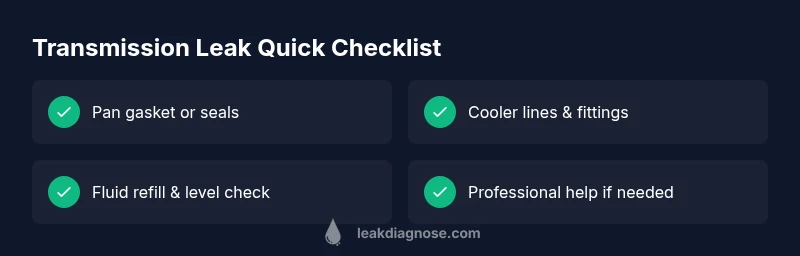
- Identify common leak sources: pan gasket, cooler lines, seals
- Check fluid level and top up when needed
- Do not drive far with a leak; seek professional help if uncertain
- Use proper fluid type and torque specs to prevent repeats