What Can Leak Transmission Fluid: Diagnosis & Fixes
Urgent guide to identifying what can leak transmission fluid, common causes, safety checks, and step-by-step fixes to protect your transmission and budget.


Most transmission fluid leaks come from a worn pan gasket, bad seals, or loose lines. Start by safely inspecting the undercarriage, tightening connections if they’re loose, and replacing any damaged gasket or seal. If you notice bright red, pink, or dark brown fluid under the car, stop driving and diagnose further before driving again.
Why Transmission Fluid Leaks Matter
If you're wondering what can leak transmission fluid, you're confronting one of the most common and potentially costly car problems. Transmission fluid is not only a lubricant; it also cools moving parts and helps hydraulic systems generate the pressure needed for gear shifts. A leak means the transmission may run dry of fluid, overheat, or suffer accelerated wear. For homeowners, an early, honest assessment can prevent a cascade of expensive repairs. Here at Leak Diagnosis, we’ve seen how even small drips can become big problems if ignored. In this guide, we outline why leaks occur, what to look for, and why acting promptly matters. The guidance below focuses on straightforward checks you can perform safely at home, plus practical steps to minimize damage while you arrange professional service. Remember: transmission problems can escalate quickly, so treat any suspected leak as urgent and address it before it becomes a safety risk or a roadside failure.
Common Causes of Transmission Fluid Leaks
There are several predictable sources of transmission fluid leaks, and recognizing them speeds up repair. The most frequent culprits are a worn or damaged pan gasket, a faulty seal around the transmission pan or the input/output shaft, and loose or cracked transmission lines. Less common but possible causes include a failed torque converter seal, a cracked transmission case, or degraded cooler hoses. Exterior leaks often present as small drips toward the vehicle’s middle or rear, especially after a drive. Regular maintenance—such as replacing gaskets when removing the pan, ensuring bolts are torqued to spec, and inspecting hoses for cracks—greatly reduces the risk. If you notice puddles after a short drive, don’t assume it’s water; transmission fluid has a distinctive color and scent that helps confirm the source.
How to Inspect for Leaks Safely
Safety first. Park on level ground, apply the parking brake, and let the engine cool before touching any components. Slide under the vehicle with a flashlight and inspect the transmission pan, lines, and cooler hoses. Check the fluid level with the dipstick or sight glass, noting both the level and color. Fresh transmission fluid is typically red or pink; brown or dark fluid may indicate aging or contamination. Look for wetness, crust around gasket edges, or staining along the lines. If you can access the pan, gently wipe the area and look for a constant drip pattern rather than a sporadic smear that could come from splashed fluid. A dye kit can help pinpoint the exact source—add dye, drive briefly, then re-inspect with a UV light to spot seepage. Never rely on a single observation; combine color, location, and residue pattern to identify the likely culprit.
Diagnosing the Source: A Practical Approach
Begin with a systematic approach to locate the leak without tearing the vehicle apart. The color and location quickly point to likely sources: a leak near the pan often signals a gasket or pan drain plug issue, while staining along a steel line or hose points to a damaged line or fitting. A leakage near the transmission output seal can indicate a failing seal behind the rear of the transmission. If the leak is slow and the fluid is relatively fresh, the problem is likely minor and addressable with a gasket replacement or tightening the bolts. For persistent or uncertain leaks, consider using a dye test and a UV flashlight to trace the seepage precisely. If you notice any signs of overheating, slipping gears, or grinding, stop driving and seek professional assessment immediately.
Maintenance and Prevention to Avoid Leaks
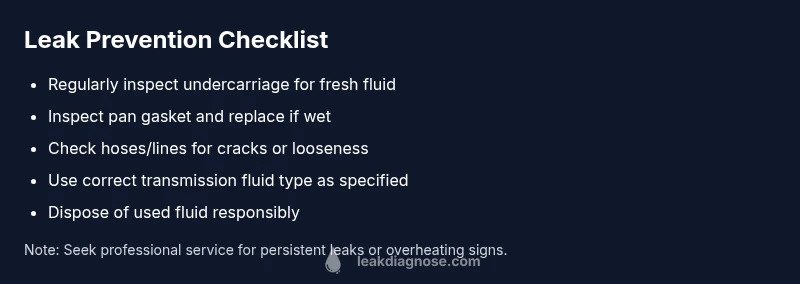
Preventing leaks starts with keeping the system in good condition and following manufacturer guidelines. Regular checks of the pan gasket area, cooler lines, and the transmission cooler are essential, especially in older vehicles. When you remove the pan for servicing, replace the gasket with a new one and reuse the appropriate sealant if recommended. Do not overfill the transmission, since excess fluid can foam and put extra pressure on seals. Use the correct fluid type and viscosity as specified by the maker, and replace fluid at the recommended intervals. Finally, inspect transfer lines and connections for signs of cracking or looseness and replace worn parts before they fail. Keeping a bottle of the proper fluid on hand for topping off can prevent running low between services.
What to Do Next If You Find a Leak
- Do not ignore the leak. 2) If the vehicle is safe to drive, drive only to a repair shop or home, avoiding extended trips. 3) Collect the exposed area with a rag and observe for fresh drips. 4) Clean the area and recheck after a short drive to determine whether the leak is persistent. 5) Schedule a professional inspection if the leak persists after attempting the initial checks. 6) Bring the vehicle in with the color and location details; this helps mechanics diagnose quickly. If the source is a gasket or hose, a do-it-yourself replacement may be possible if you have the right tools and experience, but internal transmission issues require a pro. In all cases, keep an eye on the transmission fluid level after driving a short distance to confirm no additional leaks.
Safety Essentials When Handling Transmission Fluid
Transmission fluid is a chemical product with flammable and irritating properties. Wear gloves and eye protection whenever you handle fluid or perform cleanup. Work on a stable surface and avoid open flames, sparks, or hot components. Properly contain used fluid and dispose of it according to local regulations. If you spill fluid on skin, wash promptly with soap and water; if it gets in your eyes, rinse with clean water. After working, wash tools and wipe down the area. When in doubt, or if you have a history of transmission problems, seek professional service rather than attempting risky repairs.
Steps
Estimated time: 45-90 minutes
- 1
Secure the vehicle and safety gear
Park on level ground, apply the parking brake, and wear gloves and eye protection. Let the engine cool before touching anything.
Tip: Use wheel chocks and a jack stand for stability. - 2
Inspect the exterior source
Check the transmission pan area, lines, and cooler hoses for wetness or crust. Note the color and position of any drips.
Tip: Wipe a suspected area to monitor fresh drips. - 3
Check transmission fluid level and color
Use the dipstick or sight glass to confirm level. Note color (red/pink is normal; brown indicates aging or contamination).
Tip: Avoid overfilling to prevent foaming. - 4
Isolate the source with dye testing
If needed, add dye and drive briefly; inspect under UV light to locate seepage precisely.
Tip: Only use dye specified for transmissions. - 5
Replace the culprit component
If gasket, seal, or hose is leaking, replace with correct parts per service manual.
Tip: Do not force parts; use proper torque specs. - 6
Refill and road test
Top off to the correct level, then run a short test drive to confirm leaks are resolved.
Tip: Check again for new leaks after cooldown. - 7
Decide on professional help
If leaks persist, or there are shifting issues or overheating, schedule service with a qualified mechanic.
Tip: Document color, location, and time of leak for the mechanic.
Diagnosis: Visible transmission fluid leak under vehicle
Possible Causes
- highWorn or damaged pan gasket
- mediumFaulty pan/shaft seals
- lowLoose or cracked transmission lines
Fixes
- easyReplace worn gasket or seals; reseal pan
- mediumTighten or replace damaged lines
- hardConsult a professional for internal seals or core leaks
Questions & Answers
What are the signs that transmission fluid is leaking?
Common signs include puddles under the vehicle, fresh red or pink fluid on the ground, low transmission fluid level, and occasional shifting problems. Inspect the underbody and pan area to locate the source and verify color and odor. If in doubt, have a professional inspect the system.
Look for puddles under the car and red or pink fluid; check levels and have a mechanic confirm the source.
Is a small transmission fluid leak something I can ignore?
No. Even small leaks can lead to severe transmission damage over time and may cause sudden failure. Address leaks early with a careful inspection and repair plan.
No—small leaks can worsen and harm the transmission if ignored.
Can I drive a car with a transmission fluid leak to get it fixed?
If the leak is minor and the fluid level remains adequate, you may drive short distances to a shop. Do not drive long distances or on highways if the level drops or you notice slipping or overheating.
Only drive short distances to a shop if you must; otherwise call a tow.
How much does it cost to fix a transmission fluid leak?
Costs vary widely by source and parts, typically ranging from hundreds to thousands of dollars depending on whether the fix is a gasket, hose, or internal seal replacement. A simple gasket change is cheaper than internal seal work.
Costs can vary a lot, from hundreds to thousands, depending on the source and parts.
What maintenance helps prevent transmission fluid leaks?
Regular inspections of the pan area, lines, and hoses; use the correct fluid type; avoid overfilling; and follow the manufacturer’s service intervals to prevent leaks.
Regular checks and the right fluid help prevent leaks.
Watch Video
Main Points
- Act quickly to verify and locate leaks.
- Identify the source before replacing parts.
- Use the correct fluid and monitor levels.
- Seek professional help for internal or persistent leaks.
- Implement routine maintenance to prevent future leaks.