Water Leak from Exhaust: Urgent Troubleshoot Guide
Urgent troubleshooting guide for a water leak from exhaust. Learn how to tell condensation from a coolant issue, safety steps, and when to call a professional to prevent exhaust and engine damage.


Water leaking from exhaust is usually condensation that forms inside the exhaust system and drips after cold starts or when the vehicle has been parked. If the liquid is clear and odorless, it is typically normal. If dripping continues after the engine warms, or you notice color, smoke, or a sweet coolant odor, treat it as a warning sign and investigate further.
What a water leak from exhaust typically means
According to Leak Diagnosis, a water leak from exhaust is most often condensation formed during normal combustion. When an engine is cold, water vapor condenses inside the exhaust system and may drip or steam out of the tailpipe after shutdown or on a cold start. This is usually harmless, especially on older vehicles or after short trips. The key is to observe whether the dripping stops once the exhaust system reaches operating temperature. A persistent drip after warm-up or a sudden change in the appearance or smell of the exhaust can signal a problem that warrants closer inspection. The water leak from exhaust is not the same as a coolant leak, which would introduce colored liquid and a sweet odor; that scenario requires immediate action.
Distinguishing condensation from a problem
- Normal condensation: clear water, no color, no strong odor, and it should fade as the exhaust warms.
- Possible problem: colored liquid (green, orange, or brown), sweet odor, smoke, or persistent dripping after warm-up.
- Car symptoms to watch: overheating, coolant loss, milky oil, or poor engine performance.
If you notice any of the warning signs, proceed with a focused check of cooling system integrity and exhaust flow. Leak Diagnosis emphasizes a methodical approach to avoid unnecessary repairs and to keep you safe on the road.
Common causes and how likely they are
The most common, benign cause is residual moisture from combustion. Less common but serious causes include a coolant leak into the exhaust due to a blown head gasket or cracked engine, a leak in the exhaust system allowing outside moisture to enter, or a rich fuel mixture that leaves more water in exhaust gas. Understanding the difference helps you decide when to monitor versus when to seek professional help. According to Leak Diagnosis analysis, most routine moisture at the tailpipe is condensation, but any persistent leakage deserves inspection.
Safety first: what you should and shouldn’t do
Always prioritize safety when dealing with exhaust issues. Do not reach under the vehicle while the engine is hot. Use wheel chocks if you need to move the car, and never poke around a hot tailpipe or muffler. If you smell fuel, see sparks near the exhaust, or notice a sudden loss of coolant, pause, turn off the engine, and call for professional assistance. Keep children and pets away from the vehicle until the issue is understood and resolved. The primary goal is to prevent burns, toxic fumes, and possible engine damage.
Quick home checks you can perform
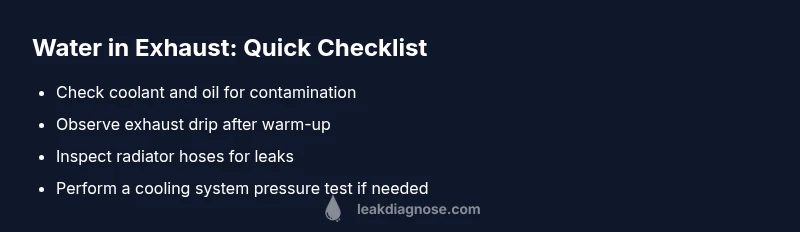
- Check coolant level and look for oil in the coolant reservoir for signs of a head gasket issue.
- Inspect the oil for white foamy texture, which can indicate coolant intrusion.
- Look for blue-green, rusty, or colored droplets at the tailpipe; note the odor from the exhaust.
- Ensure the radiator and hoses show no leaks and there is no continuous white smoke from the exhaust.
These checks help you separate condensation from a more serious problem and decide whether to call a mechanic.
How to perform a basic diagnostic flow at home
- Observe: note when the drip occurs (cold start, after a long drive, during idle).
- Smell and color test: is there a sweet coolant odor or colored liquid?
- Inspect levels: coolant, oil, and leaks around the radiator and hoses.
- Run the engine to operating temperature and recheck the exhaust for condensation.
- If leakage persists or other symptoms appear, escalate to professional testing.
This flow keeps you safe and helps identify whether you are dealing with benign condensation or a more serious issue.
Testing for coolant intrusion without specialized equipment
A simple at-home check is to look for signs of coolant usage and oil contamination. If you notice persistent white, milky oil or a drop in coolant that cannot be explained by normal usage, this could indicate a head gasket issue. In such cases, do not drive long distances; have the vehicle inspected promptly. Leak Diagnosis notes that early detection improves outcomes and reduces the risk of engine damage.
Step-by-step home fix focused on condensation (often the most common scenario)
This section covers practical actions to reduce moisture in the exhaust quickly while awaiting professional inspection. If the issue is purely condensation, driving the vehicle for longer periods to heat the exhaust and evaporate moisture is often sufficient. Use caution and avoid forced repairs that could worsen a potential leak. Remember: if in doubt, schedule a professional evaluation to prevent additional damage to the exhaust, catalytic converter, or engine.
When to call a professional and what to expect
If you observe persistent dripping after the exhaust has warmed, smoke, or a coolant odor, seek professional help promptly. A certified mechanic can perform a cooling system pressure test, a leak-down test, and an exhaust inspection to determine whether the issue is condensation, a coolant leak, or a larger exhaust problem. A professional inspection will typically involve a visual check, pressure testing, and possibly a leak-down or antifreeze test to identify the exact source and necessary repairs.
Prevention: maintenance tips to minimize exhaust moisture
- Keep cooling system serviced to prevent coolant leaks that could enter the exhaust system.
- Regularly replace the thermostat and radiator hoses as recommended by the vehicle manufacturer.
- Use the correct grade of motor oil and engine coolant to prevent deposits and moisture buildup.
- Periodically drive the car on longer trips to ensure the exhaust system reaches operating temperature and dries out any residual moisture.
With proactive maintenance, you can reduce the risk of moisture-related exhaust issues and extend the life of the exhaust system.
Steps
Estimated time: 45-60 minutes
- 1
Assess the signs
Observe when the moisture appears, its color, and whether it persists after warm-up. Take note of any accompanying smells or smoke. This initial assessment helps distinguish condensation from a more serious issue.
Tip: Record observations with a quick video to show a mechanic later. - 2
Check cooling system basics
Inspect coolant level and look for coolant staining around hoses or the radiator. Check the oil for signs of coolant contamination (milky appearance) as a potential warning sign.
Tip: Only perform these checks when the engine is cool to avoid burns. - 3
Test for leaks externally
Look for visible coolant leaks around the radiator and hoses, tailpipe, and muffler. If you hear hissing or see oily residues around the exhaust joints, it warrants a closer look.
Tip: Do not attempt to seal potential leaks yourself; improper repairs can be dangerous. - 4
Warm-up drive
Take a longer drive to heat the exhaust system fully and observe whether the drip stops after reaching operating temperature.
Tip: Monitor engine temperature gauge; overheating is a warning sign to stop and seek help. - 5
Consult a professional
If dripping continues after warm-up, or if you notice smoke, unusual odor, or coolant loss, schedule a diagnostic with a technician.
Tip: Ask for a cooling system pressure test and exhaust inspection for a definitive diagnosis. - 6
Follow-up maintenance
Keep cooling and exhaust systems serviced per manufacturer guidelines to prevent moisture buildup and leaks in the future.
Tip: Set reminders for coolant flushes, thermostat checks, and exhaust system inspections.
Diagnosis: Water dripping from exhaust after cold start or after vehicle has cooled
Possible Causes
- highCondensation from normal combustion
- lowCoolant leaking into exhaust due to head gasket or cracked engine block
- mediumExhaust system moisture accumulation from humid conditions
- lowRich fuel mixture leaving excess water in exhaust
Fixes
- easyDrive for 15-20 minutes to heat exhaust and evaporate moisture
- easyCheck coolant level and look for signs of coolant in oil or in the radiator
- mediumPerform a coolant leak test or pressure test if you suspect a leak
- easyInspect for exhaust leaks and refer to a mechanic if persistent dripping continues
Questions & Answers
Is a water leak from exhaust normal?
Yes, small amounts of water dripping from the exhaust is often normal condensation, especially on cold starts. If the drip stops after the exhaust warms up and there are no other symptoms, it is typically not a cause for concern.
Usually yes, it's normal condensation after a cold start. If it continues after the exhaust warms or comes with other symptoms, seek inspection.
What are the warning signs that this is not just condensation?
Warning signs include colored droplets, a sweet coolant odor, smoke, or persistent dripping after the engine is warm. Overheating or coolant loss are additional red flags requiring professional evaluation.
Watch for color, smell, or persistent dripping after warm-up; these indicate you should seek a professional check.
Can a water leak from exhaust damage my engine?
Condensation itself usually does not damage the engine, but persistent leaks may indicate a coolant intrusion or exhaust problem that could harm components over time. Prompt diagnosis minimizes risk.
Most times condensation won’t hurt the engine, but persistent leaks need a check to avoid damage.
How can I tell if coolant is entering the exhaust?
Look for signs like low coolant level, milky oil, white foam on oil cap, or sweet smell from the exhaust. A pressure test by a mechanic is often needed to confirm coolant intrusion.
Check coolant and oil for signs of contamination; a mechanic can confirm with tests.
When should I see a mechanic about exhaust moisture?
If dripping persists after warm-up, if you smell coolant, see smoke, or notice other cooling system symptoms, schedule a diagnostic promptly to prevent possible damage.
If it keeps dripping after it’s hot, or you smell coolant, call a mechanic soon.
Watch Video
Main Points
- Identify condensation vs. a real leak early
- Monitor coolant levels and oil condition closely
- Address persistent dripping with professional testing
- Prioritize safety and avoid driving if there are warning signs
- Maintain cooling and exhaust systems regularly