Oil Pan Oil Leak: Diagnosis, Repair, and Prevention
Learn to diagnose and safely repair an oil pan oil leak. Identify common causes, follow a step-by-step inspection, and prevent future leaks with maintenance tips.


Most likely cause: a failing oil pan gasket or a loose drain plug creating a slow seep or drip. Immediate fix: snug the drain plug to spec and replace the gasket if drips persist. Check oil level, clean the area, and monitor for new leaks. If the leak continues, plan a gasket replacement or pan inspection.
What an oil pan leak means for your engine
An oil pan leak is more than a nuisance under your car. It signals that the engine’s lower end is losing lubrication, which can lead to accelerated wear if left unchecked. According to Leak Diagnosis, early detection matters: a small drip can grow into a larger pool after a drive, and it can mask other issues like a failing gasket or a damaged oil pan. If you notice fresh oil on the ground after parking, or an oily scent near the engine, treat it as urgent. Keep an eye on your oil level and monitor the area for new drips. By understanding what a leak is telling you, you can plan a safe fix that protects your engine and wallet. This is particularly important for daily drivers and older vehicles, where routine maintenance can prevent costly engine damage. Safety first: work on a cool engine, use a drip pan, and never ignore a visible leak.
Most common causes of oil pan leaks
Oil pan leaks arise from a few predictable culprits. The most frequent is a worn or damaged oil pan gasket that allows oil to seep where the pan meets the engine block. A loose or damaged drain plug or washer is another common source, especially after oil changes. Cracks or corrosion in the oil pan itself, often from road debris or age, can also create leaks. In some cases, overheated engines or over-tightened bolts can distort seals and cause seepage. A degrading sump seal or pickup tube seal can contribute to leaks toward the back of the pan. Identifying the right cause is essential for choosing the correct repair path and avoiding unnecessary replacements. The Leak Diagnosis team notes that most fixes are straightforward when caught early.
Quick diagnostic checks you can perform safely
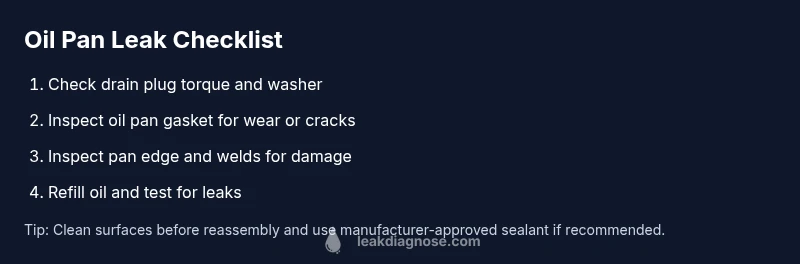
Before pulling the engine apart, perform a few quick checks while the car is cold and on a flat surface. Park on clean concrete and place a drip pan underneath. Wipe the area around the drain plug and pan seam, then run the dipstick to verify oil level. Look for fresh droplets forming at the drain plug, pan gasket, or weld seams. If you have a clear sightline, use a flashlight to inspect the pan’s bottom edge and the plug threads. Finally, check the drain plug torque with a calibrated wrench to ensure it matches the manufacturer’s specification. If you see fresh leaks after a drive, note the location—drips near the drain plug point to a plug or gasket issue, while drips along the pan edge suggest a gasket or pan crack. For ongoing issues, consider consulting the Leak Diagnosis Analysis, 2026.
Step-by-step inspection: drain plug, gasket, pan, and oil filter
- Prepare safety gear and ensure the engine is cool; position a catch pan and chocks. 2) Inspect the drain plug and washer for corrosion, seal integrity, and tightness; re-torque to spec if needed. 3) If you need to remove the plug, drain oil into the catch pan and inspect the threads; replace the washer if worn. 4) Inspect the oil pan gasket by loosening the side bolts and lifting slightly to check for a deformed seal; replace the gasket if cracked or compressed. 5) Check the oil pan bottom for cracks or dents; if a crack is found, replacement is recommended. 6) Reinstall all components with proper torque; refill oil to the correct level and run the engine briefly to observe for leaks. Tip: never reuse damaged gaskets or forced bolts; follow torque specs exactly.
Step-by-step inspection: drain plug, gasket, pan, and oil filter (continued)
- If the leak persists, check the oil filter housing and crush washer for leaks and replace if necessary. 8) After reassembly, clean the area, add fresh oil, and perform a controlled test drive to verify the repair. Tip: photograph the before-and-after so you can compare future leaks.
Fixing the leak: from drain plug to pan gasket
If the symptom points to the drain plug or pan gasket, begin with the simplest remedy: tighten the drain plug to the manufacturer’s torque specification and replace the drain washer if present. If oil continues to appear around the gasket, remove the pan (if accessible) and replace the gasket with a quality sealant or gasket set designed for your vehicle. For cracks or severe corrosion in the pan, replacing the pan is the safest option. After any repair, clean the area, refill the oil, and monitor for new leaks over a few days. The Leak Diagnosis team recommends keeping a log of maintenance steps to spot recurring issues early.
Safety, tools, and best practices
Always work on a cool engine in a well-ventilated area. Gather a torque wrench, appropriate wrenches, a catch pan, shop rags, and engine oil of the correct specification. Use jack stands if you need to lift the vehicle and never crawl under a car supported only by a jack. Dispose of used oil and filters according to local regulations. If you are unsure, seek professional help sooner rather than later; leaks can indicate issues beyond a simple gasket. A professional assessment can prevent misdiagnosis and additional damage.
Prevention and maintenance to avoid future leaks
Schedule regular oil changes with the correct torque and gasket seals, and inspect the drain plug, gasket, and oil pan edges during each service. Use the recommended oil viscosity for your engine to minimize seal stress. After driving, inspect the underside for fresh leaks and address them promptly. Keep your engine clean and free of road grime to help detect drips early. According to Leak Diagnosis analysis, consistent maintenance habits dramatically reduce the risk of leaks becoming serious problems.
What to do if the leak persists
If you still see oil under the car after performing the baseline checks, stop driving and arrange a professional inspection. A persistent leak can indicate a cracked pan, warped gasket, or threaded damage that requires replacement. In that case, a certified mechanic can perform a pressure test, verify oil pressure, and replace the faulty components safely. If you decide to hire a shop, bring photos of the leak and the area around the drain plug so the technician can assess quickly. The Leak Diagnosis team recommends erring on the side of caution when a leak remains after DIY attempts.
Steps
Estimated time: 1-2 hours
- 1
Prepare and safety
Park on level ground with the engine cool, set the parking brake, and place a catch pan. Put on eye protection and gloves to reduce burn and chemical exposure risk. This step keeps you safe and makes the job cleaner.
Tip: Never work on a hot engine; hot oil can cause severe burns. - 2
Position the vehicle and inspect the area
Chock the wheels and position a light so you can clearly see the drain plug and pan seam. Look for fresh droplets around the plug and along the pan edge. Take photos before you remove anything to guide reassembly.
Tip: A bright flashlight helpsspot tiny leaks that aren’t obvious in daylight. - 3
Check drain plug torque
Use a torque wrench to check the drain plug against the manufacturer’s specification. If it’s loose, tighten gradually and recheck. Avoid forcing threads or cross-threading.
Tip: If threads look damaged, stop and consider replacing the drain plug. - 4
Inspect and replace the drain washer/gasket
If you plan to remove the drain plug, drain oil into the catch pan and inspect the threads and washer. Replace the washer if worn and re-torque the plug to spec.
Tip: Always carry a spare washer; this prevents immediate re-leakage after a change. - 5
Inspect the oil pan gasket area
If you can access the gasket area without removing the pan, check for deformation or seepage. If the gasket is cracked or compressed, plan for gasket replacement and cleaning of mating surfaces.
Tip: Thoroughly clean both mating surfaces before reinstalling the gasket. - 6
Decide on gasket vs pan replacement
If the pan shows cracks or severe corrosion, replacement is safer than gasket-only repair. Reinstall components after confirming all seals are clean and dry.
Tip: Avoid reusing damaged parts; replace with manufacturer-approved parts. - 7
Refill oil and test
Reinstall the drain plug with proper torque, refill to the correct oil level, and run the engine briefly to observe for leaks. Let the car rest and recheck the area for any fresh drips.
Tip: Keep a log of the repair and monitor for several days. - 8
Document and clean up
Dispose of old oil properly and store tools away. Record the repair in your maintenance log and set a reminder to inspect the area during the next oil change.
Tip: Proper disposal prevents environmental harm and keeps your workspace tidy.
Diagnosis: Oil pooling under the engine or fresh oil spots after parking
Possible Causes
- highLoose or missing drain plug
- highWorn/damaged oil pan gasket
- mediumCracked oil pan or damaged sump seal
- lowOver-tightened drain plug causing threads damage
Fixes
- easyTighten drain plug to manufacturer torque spec and replace washer if needed
- mediumReplace the oil pan gasket or sealant and reseal the pan edge
- hardReplace the oil pan if cracked or severely corroded
- mediumRepair or replace damaged drain plug threads and re-torque
Questions & Answers
What are the first signs of an oil pan leak?
The first signs are a puddle or damp spot under the engine, a strong oil odor, and declining oil level. You may also see oil on the underside of your car after parking. Addressing these early signs can prevent bigger engine damage.
Look for puddles under the engine and a maybe oil smell after driving; don’t delay inspection.
Can I drive my car with an oil pan leak?
Short trips with a small leak may be possible, but it’s risky to drive long distances or repeatedly. Leaks can rapidly worsen and cause low oil levels or a fire risk. Seek a safe, prompt inspection.
Avoid long trips; a leak can get worse and cause engine damage.
Is a DIY repair safe for beginners?
Minor leaks from the drain plug or gasket can be tackled by beginners with proper tools and care. More complex leaks from a cracked pan or warped seals should be handled by a professional to avoid engine damage.
DIY is possible for simple leaks if you’re careful and have the right tools.
How long does a typical oil pan leak repair take?
Simple fixes like tightening a drain plug can take under an hour. Replacing a gasket or pan may take 1–2 hours, depending on access and vehicle design.
Most fixes fit into a few hours, depending on access.
Will an oil pan leak cause engine damage?
Yes. Oil is essential for lubrication and cooling. A lingering leak can lead to low oil levels and accelerated engine wear if not repaired promptly.
Yes—leaks can cause engine damage if ignored.
Should I replace the oil pan or only the gasket?
If the pan is cracked or severely corroded, replacement is safer. If the pan is intact but the gasket is worn, gasket replacement is often sufficient.
Replace the gasket if the pan is solid; replace the pan if it’s cracked.
Watch Video
Main Points
- Check the drain plug and gasket first
- Don’t ignore fresh leaks—act quickly
- Always follow torque specs for fasteners
- Monitor after repair and document maintenance