Oil Leak Power Steering: Troubleshooting Guide
Learn to diagnose, locate, and fix an oil leak in your power steering system with practical, safety-first steps from Leak Diagnosis. DIY-friendly guidance for homeowners and DIY enthusiasts.


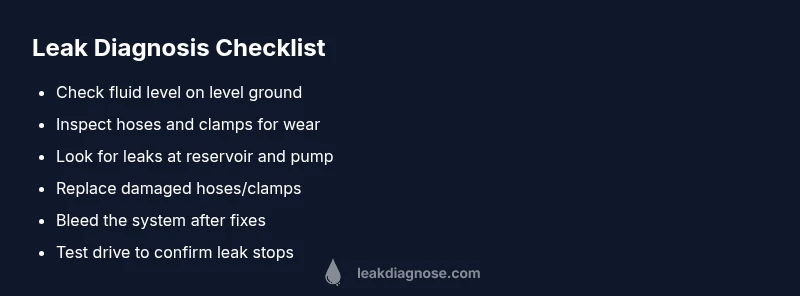
Power steering oil leaks are most often caused by a loose or cracked hose or clamp, with seals on the rack or pump being a close second. Start on a level surface by checking the fluid level and inspecting hoses for wet spots or loose fittings. If you spot a leak, address the simplest fix first—tighten clamps or replace a leaking hose, then bleed the system if needed.
Understanding the risk of an oil leak in the power steering system
An oil leak in your power steering system isn't just a mess; it can lead to reduced steering assist, pump overheating, and expensive damage if the fluid runs too low. Power steering fluid acts as both lubricant and hydraulic fluid, transmitting the force you apply on the steering wheel to the steering rack. When a leak appears, fluid loss can occur at hoses, seals, or the pump. In many cases, quick detection and a careful check of levels and obvious seepage will reveal the source. According to Leak Diagnosis, catching leaks early is essential to minimize wear on seals and prevent steering failure. Begin by noting where you last saw fluid, whether you hear whining noises when turning, and whether the steering feels heavier than normal. This initial observation guides your next checks and helps you decide whether professional service is needed.
Common causes of power steering oil leaks
Leaks usually come from one of a few familiar places. The most common DIY culprits are worn, cracked, or loose hoses and clamps that carry fluid under pressure. A failing power steering rack or pump seal can also leak, especially if the pulley or belt shows excessive wear. Don’t overlook a faulty reservoir cap or a cracked reservoir, which can allow air to enter and cause bubbling that disguises a leak. Less frequent but possible sources include damaged fittings at the hoses, corroded clamps, or a compromised return line. Based on Leak Diagnosis analysis (2026), hoses and clamps account for the majority of visible leaks, while rack/seal failures are more likely in older systems. Inspect each area methodically.
Safety first: what to do before you touch your car
Before you touch any car components, park on a level surface, engage the parking brake, and turn off the engine. Power steering fluid can be hot and may irritate skin, so wear gloves and eye protection. Never place hands near moving belts or pulleys while the engine is running. If you smell fuel or see fluid pooling under the car, consider calling a tow service rather than attempting a roadside repair. When fluids are present, use absorbent material to contain spills and prevent slip hazards. This approach protects you and minimizes mess while you diagnose.
How to trace the leak sources: a practical guide
Start with the reservoir: check the fluid level and inspect the cap for cracks or a loose seal. Move to each hose and clamp along the power steering circuit, looking for damp spots, crusted residue, or fresh fluid on fittings. If you can access the rack area from above, inspect the rack seals for seepage; from underneath, look for staining on the underside of the rack and along the return line. If the leak isn’t obvious, you can use UV dye and a blacklight to highlight the path of the fluid. This method helps you confirm the source without disassembling components. Consistent fluid loss over days usually points to a hose or reservoir; sudden deep drips suggest a ruptured line or loose connection.
What to do after you fix: bleeding and test drive
After replacing a hose or tightening clamps, you’ll need to bleed the air from the system so the pump can build hydraulic pressure again. Refill to the recommended level, start the engine, and slowly turn the steering wheel from lock to lock several times while the engine is off to prime the system. Then with the engine running, turn from side to side at idle to purge air. Check for leaks again and top off fluid if necessary. Take a short, cautious test drive on a quiet street to verify that steering feels normal and no new leaks appear. If you still notice fluid loss or unusual steering feel, consult a professional promptly.
Steps
Estimated time: 60-120 minutes
- 1
Prepare and safety check
Park on a level surface, engage the parking brake, and turn off the engine. Put on gloves and safety glasses. Gather your tools and a drain pan and absorbent materials for spills.
Tip: Work in a well-ventilated area and keep a rag handy for quick cleanups. - 2
Check fluid level and observe the scene
With the engine cooled, check the power steering fluid level and note the color and smell. Look under the car for fresh drips and trace their location back toward hoses or the reservoir.
Tip: Document the location of the most active drip site with photos. - 3
Clean and inspect possible leak points
Wipe away grime to reveal the source. Inspect hoses, clamps, the reservoir, and the pump connections for signs of wear or seepage.
Tip: Use a flashlight and mirror to inspect hard-to-see areas. - 4
Test hoses and clamps
Gently wiggle and fit-check hoses and clamps; tighten any loose clamps to recipe-approved snugness. Replace visibly cracked hoses or those with crusted residue.
Tip: Do not overtighten; hoses can kink or crack with excess force. - 5
Bleed the system after a fix
Fill to the proper level, with the engine off. Start the engine and turn the wheel left to right slowly to bleed air, then recheck fluid level and top off as needed.
Tip: Run the engine to operating temperature before final check. - 6
Test drive and verify
Drive a short distance, checking for leaks and listening for unusual sounds. Re-check fluid level and inspect for fresh leaks after the drive.
Tip: If leakage returns, do not continue driving; seek professional help.
Diagnosis: Power steering fluid puddle or low fluid level, noisy or heavy steering, or visible seepage around hoses, pump, reservoir, or rack.
Possible Causes
- highLoose or cracked power steering hoses or clamps
- mediumLeaking power steering rack or pump seals
- mediumFaulty reservoir cap or cracked reservoir
- lowDamaged fittings or corroded clamps
Fixes
- easyTighten clamps and replace leaking hoses where obvious leaks are present
- mediumReplace leaking hoses or clamps to restore seals
- hardReplace or rebuild power steering rack or pump seals if the source is internal
- easyReplace reservoir or cap if cracked or degraded
Questions & Answers
What are the most common signs of a power steering oil leak?
Look for puddles beneath the vehicle, a sudden drop in fluid level, heavier steering, and a whining or groaning noise when turning. These indicators usually point to a leak in hoses, seals, or the rack/pump.
Common signs include fluid puddles under the car, low fluid level, and a whining noise when turning.
Can I drive my car with a power steering leak?
Driving with a leak can damage the power steering pump and seals. If you notice a leak or hard-to-turn steering, limit driving and seek diagnosis and repair promptly.
It's risky to drive with a leak; limit driving and get a diagnosis soon.
How do I locate the source of a power steering leak?
Start at the reservoir and follow the fluid path to hoses and fittings. Use a clean cloth to wipe areas and dye or UV tracer to reveal the leak path if needed.
Trace the path from the reservoir toward hoses; use dye to confirm the source.
What affects the cost of fixing a power steering leak?
Costs vary depending on the source and labor. Hose or clamp replacements are usually cheaper than rack or pump seal repairs, which may require more extensive service.
Costs vary; hoses are cheaper than rack or pump work.
How long does a typical power steering leak repair take?
Simple hose or clamp fixes can take about an hour or two. Replacing a rack or major seals may require several hours or a full-day service.
Most hose repairs take 1–2 hours; rack work can take longer.
Is it safe to DIY replace a power steering rack?
DIY rack replacement is advanced and may require specialized tools. For most homeowners, professional service is safer and ensures proper bleeding and alignment.
Rack replacement is advanced; consider professional help for safety and proper bleeding.
Watch Video
Main Points
- Identify the source early to minimize damage
- Prioritize hose or clamp fixes for a DIY-friendly path
- Bleed the system after any fix to restore hydraulic pressure
- Seek professional help if the leak involves the rack or pump seals