Oil Pan Gasket Leak: Diagnose and Fix Guide
Urgent guide to diagnose and fix oil pan gasket leaks, with step-by-step tips, safety notes, and prevention strategies from Leak Diagnosis.


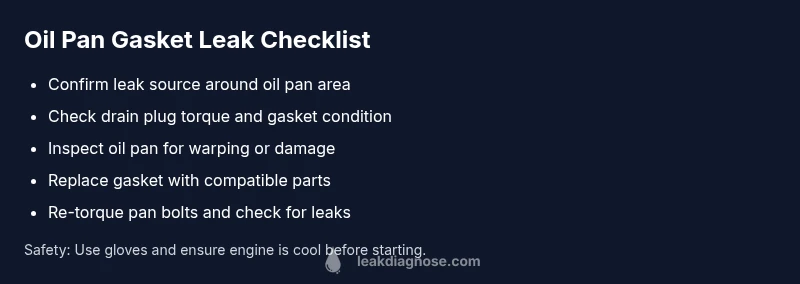
The most common cause of an oil leak around the oil pan is a worn or damaged oil pan gasket, often worsened by loose bolts. Start by parking on level ground, letting the engine cool, and inspecting for fresh oil around the pan. If you see seepage near the drain plug or gasket, tighten the drain plug to the manufacturer torque and plan to replace the gasket if leaks persist. If the leak continues, seek professional help.
What is an oil pan gasket leak and why it matters
An oil leak around the engine often traces back to the oil pan gasket—a critical seal between the oil pan and the engine block. When the term oil leak oil pan gasket appears, that's a warning sign that the seal is failing due to age, heat cycles, or improper installation. This gasket keeps engine oil contained in the sump and prevents low oil pressure that can damage bearings. Left unchecked, leaks can worsen, cause oil staining on the garage floor, and lead to expensive repairs. According to Leak Diagnosis, addressing an oil pan gasket leak early saves time and money and reduces environmental risk.
Common causes of oil pan gasket leaks
Leaks at the oil pan gasket usually come from aging and exposure to high heat. The most common culprits are a gasket that has dried, cracked, or torn over time; bolts that have loosened or were over-tightened during maintenance; a warped oil pan from impacts or over-tightening; or a damaged oil pan itself. Improper installation or using the wrong gasket material can also create a leak path. Each cause has different remedies, from resealing to full gasket replacement. The situation is urgent enough that quick diagnosis can prevent a spill and costly repairs.
Signs you’re dealing with an oil pan gasket leak
Look for fresh oil pooled along the bottom front of the engine beneath the oil pan, especially after engine shutdown. A telltale smell of burnt oil as it drips onto hot exhaust components is another warning sign. Check your oil level regularly; a rapid drop indicates an active leak. You may also notice oil on the outside of the oil pan, the drain plug gasket area, or staining near the pan's edges. Early detection matters and can prevent engine damage. If you notice a puddle that grows after each drive, treat it as an urgent warning.
How to inspect safely and what to check first
Before touching anything, let the engine cool and park on a flat surface. Put on gloves and use a flashlight to inspect around the oil pan gasket area. Clean the area with a degreaser and a rag to reveal fresh seepage. Check the drain plug: ensure it is snug and torqued to spec. If the area remains damp after cleaning, the gasket is a strong suspect. Remember to inspect for signs of pan warping or oil staining along the pan edges, which can indicate a more serious issue than a simple gasket failure.
Diagnostic flow you can follow for oil pan gasket leaks
Symptoms: visible oil pooling around the pan. Diagnosis: check for oil on the lower front edge around the gasket; verify if the drain plug is tight; inspect the oil pan for damage; test by cleaning and rechecking after a drive. Solutions: tighten drain plug if needed; reseal or replace gasket; replace damaged pan if required. If unsure, move to professional evaluation. This flow keeps you moving from simple checks to tougher fixes without guesswork.
Step-by-step fixes for the most common cause
- Prepare tools and workspace: jack stands, wrench set, torque wrench, and a clean oil catch.; 2) Drain engine oil safely and remove the oil pan; 3) Inspect both the gasket and mating surfaces for damage or warping; 4) Clean surfaces thoroughly and install a new gasket with the manufacturer-approved sealant if required; 5) Reinstall the oil pan and tighten bolts to spec in a crisscross pattern; 6) Refill oil and run the engine to check for leaks. Pro tip: replace the drain plug washer and use a torque wrench to avoid over-tightening.
Prevention and maintenance to avoid future leaks
Adopt a proactive maintenance routine focused on the oil pan area. Use the correct gasket material for your vehicle, torque all bolts to the manufacturer’s specification, and avoid fastener cross-threading. After any service, inspect the area for several days to confirm there are no leaks. Keep your engine clean so you can spot seepage early, and schedule gasket checks as part of major service intervals. The goal is durable seals that last for thousands of miles, not repeat fixes.
Steps
Estimated time: 2-4 hours
- 1
Prepare and safety
Cool the engine completely and secure the vehicle. Set the parking brake and place wheel chocks. Gather tools and a spill tray to minimize mess. Safety aside, confirm you have the correct gasket and sealant for your engine.
Tip: Never work on a hot engine; hot oil can cause severe burns. - 2
Drain and access
Position a catch pan under the oil pan, loosen the drain plug, and allow the oil to drain completely. Once drained, remove the oil pan bolts carefully to expose the gasket area.
Tip: Keep track of bolt sizes and lengths to reassemble correctly. - 3
Inspect gasket and surfaces
Examine the old gasket for cracks or deformation. Check the mating surfaces on the engine block and oil pan for nicks, warps, or old sealant residue.
Tip: Use a straightedge to verify warping and a scraper to remove old sealant—avoid gouging the surfaces. - 4
Install new gasket
Clean both surfaces thoroughly. Place the new gasket in the correct orientation and apply the manufacturer-approved sealant if recommended. Reinstall the oil pan with bolts in a crisscross pattern to ensure even seating.
Tip: Do not overapply sealant; excess can clog passages or squeeze out and cause leaks. - 5
Torque and reassembly
Tighten all bolts to spec with a torque wrench, following the recommended sequence. Reinstall the drain plug with a new washer if applicable.
Tip: Always tighten to spec; overtightening can crack the pan or strip threads. - 6
Refill and check
Refill the engine with the correct oil grade and quantity. Start the engine and look for leaks from the pan area while it runs at idle.
Tip: Check for leaks after a short drive; a second look can catch slow seepage you missed initially.
Diagnosis: Oil pooling or seepage around the oil pan area
Possible Causes
- highLoose or damaged oil pan drain plug
- highWorn or warped oil pan gasket
- lowDamaged oil pan or gasket due to impact
- lowCracked oil pan
Fixes
- easyTighten the drain plug to the manufacturer torque specification and recheck for leaks
- mediumReplace the oil pan gasket with a quality gasket and reseal mating surfaces
- hardInspect the oil pan for cracks or warping; replace the pan if damaged
Questions & Answers
What exactly is the oil pan gasket and why does it leak?
The oil pan gasket seals the joint between the engine block and the oil pan to keep oil contained. It leaks due to aging, heat cycles, and improper installation. Regular inspection helps prevent engine damage from low oil levels.
The oil pan gasket seals the oil pan to the engine. It leaks as it ages or if bolts loosen; inspect and replace as needed.
Can a loose drain plug cause an oil pan gasket leak?
Yes. A loose drain plug can allow oil to seep around the drain area and mimic a gasket leak. Always check torque and replace the washer if needed.
Yes—loose drain plugs can cause leaks. Tighten to spec and inspect the washer.
How long does it take to replace the oil pan gasket?
Replacement time varies by vehicle and access. It is typically a multi-hour job, especially if other components must be removed to reach the pan.
It can take several hours depending on the vehicle and accessibility.
Is it safe to drive with an oil pan gasket leak?
Driving with a leak can cause low oil levels and severe engine damage. If you notice a leak, stop driving and arrange repairs or towing.
Do not drive if you see an oil leak. Get it checked promptly.
What’s the best way to prevent future oil pan gasket leaks?
Prevent leaks by using the correct gasket material, proper torque, and routine inspection after major service or impacts.
Regular maintenance and correct torque are your best defense.
Should I use gasket sealant with a new oil pan gasket?
Follow the vehicle manufacturer’s recommendation. Some gaskets require sealant; others rely on a gasket alone for the seal.
Follow the manufacturer’s guidance on sealant use.
Watch Video
Main Points
- Identify the leak source early to prevent damage
- Worn oil pan gasket is the primary cause; replacement is straightforward
- Tighten or reseal with manufacturer-approved parts
- Follow safety steps and preventive maintenance to avoid future leaks