Does Exhaust Leak Need to Be Fixed? A DIY Guide for Car Owners
Urgent, practical troubleshooting for car exhaust leaks. Learn how to identify if a leak needs fixing, perform safe DIY checks, locate the leak, and know when to call a professional.


Exhaust leaks are typically caused by loose clamps, rusted pipes, or bad gaskets. Start by inspecting joints and clamps for looseness, then tighten or replace as needed. If you find a hole in a pipe or near the manifold, plan for replacement. If the leak is near the catalytic converter or engine, seek professional service promptly due to CO exposure risk.
How an Exhaust Leak Happens and Why It Matters
Exhaust leaks pose immediate safety risks, including exposure to dangerous gases and reduced engine efficiency. According to Leak Diagnosis, the most common leaks originate at joints, clamps, or corrosion-prone sections of the exhaust system. If you notice a loud hiss, higher fuel consumption, or a strong exhaust smell inside or around the vehicle, does exhaust leak need to be fixed? In most cases, yes—especially if the leak is near the engine or cat, where heat and pressure are greatest and emissions performance is compromised.
What you’ll learn here
- How leaks start and what to inspect first
- Quick tests you can perform safely at home
- When to DIY vs when to call a pro
- Ways to prevent leaks from returning
- Safety considerations and CO risk
Common Causes of Exhaust Leaks
Exhaust leaks come from several common sources, with corrosion and worn joints topping the list. Loose or missing clamps and hangers can open a path for exhaust to escape, producing a noticeable hiss or knocking. Rust holes in pipes or mufflers are another frequent culprit, especially on older vehicles or those driven in salty environments. A failing exhaust manifold gasket or header gasket can also leak, often around the top of the engine where heat is intense. Regular inspections help catch these issues before they become costly repairs.
Quick note from Leak Diagnosis
A leak isn’t always visible; you may hear it or feel a change in exhaust tone before you see a hole. Early detection helps minimize damage and emissions impact.
Safety and Health Risks You Should Not Ignore
Car exhaust contains pollutants that can cause dizziness, headaches, or more serious health effects if inhaled in enclosed spaces. Do not operate a vehicle with a suspected exhaust leak in a closed garage. If you smell strong exhaust inside the cabin or notice symptoms after driving, stop and ventilate the vehicle. Leak Diagnosis emphasizes prioritizing safety: if you’re unsure about the leak’s location or if it’s near the engine, avoid driving and seek professional help promptly.
Symptoms to watch for
- Loud exhaust noise or hissing near joints
- Unusual exhaust odor inside the cabin
- Soot or black residue around muffler joints
- Decreased fuel economy or loss of power
Quick Home Checks You Can Perform
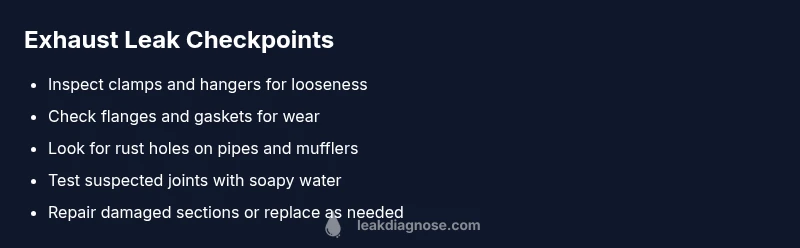
You can do a conservative at-home check to confirm a leak’s presence and approximate location without disassembling major components. Start with the easiest spots: clamps near the rear suspension, flange joints at the cat, and hangers that may have rusted through. Use a helper to run the engine at a low idle while you listen near each joint; a sound of escaping gas at a joint is a strong indicator. For a more precise test, spray a soapy solution along suspect joints and look for bubbling, which signals a leak.
How to Locate the Leak: Practical Techniques
Locating the leak requires a systematic approach. Begin at the point where the exhaust system exits the engine bay and work your way back, checking every clamp, flange, and pipe seam. A flashlight helps you see cracks or holes, while a soapy-water test (as described above) confirms the exact spot. If you don’t see the leak but hear a hiss, it could be a small crack or a leak inside the exhaust pipe where it bends. In that case, you may need professional diagnostic tools to pinpoint the exact location.
Tools that help
- Flashlight and mirror
- Soapy water spray bottle
- Protective gloves and eye protection
- Optional: smoke pencil or specialized exhaust leak detector
Quick Fixes for the Most Common Causes
For minor leaks at clamps or small joint gaps, you can attempt a temporary fix by tightening hardware or resealing with an exhaust-safe sealant. Replace any damaged clamps or gaskets if the joint is accessible. If you discover a rusted hole in a pipe or muffler, you’ll likely need to replace the affected section or the whole pipe. Leaks near the engine or catalytic converter generally require professional repair due to higher temperatures and emissions implications.
Step-By-Step Fixes for the Most Common Cause (Repair Path)
- Safety first: Park on a flat surface, cool engine, and wear gloves. 2) Inspect clamps and hangers: Tighten or replace any loose hardware. 3) Test joints with soapy water to confirm leaks and re-seat gaskets if usable. 4) If corrosion is present, replace the damaged section or entire pipe. 5) For leaks near the engine or manifold, replace gaskets or consult a mechanic. 6) After repair, re-test with a run to confirm no leaks remain. 7) Dispose of damaged parts properly and dispose of any repairs according to local regulations.
Prevention and Maintenance to Avoid Future Leaks
Regular inspections can prevent leaks from taking you by surprise. Schedule annual checks of the exhaust system, especially if you drive in salty, humid, or high-temperature environments. Keep heat shields intact, avoid road debris impact, and wash undercarriage areas prone to rust. A quick visual check after winter months helps catch corrosion early. Leak Diagnosis recommends proactive maintenance to minimize costly repairs.
What to Expect at the Mechanic and Next Steps
If you choose professional service, the mechanic will typically inspect clamps, hangers, joints, and sections for signs of corrosion; they may perform a smoke test or use diagnostic equipment to locate hidden leaks. Expect a repair estimate that includes parts and labor, and ask about warranty on the repaired section. After service, request a test drive to confirm the fix and monitor for any abnormal noises or emissions changes.
Conclusion and Final Safety Reminder
Dealing with an exhaust leak can be urgent, but a calm, stepwise approach helps you identify, prioritize, and address the issue safely. Always respect heat, temperature-related hazards, and carbon monoxide risk. If you’re unsure at any point, contact a qualified mechanic promptly.
Steps
Estimated time: 60-120 minutes
- 1
Prioritize safety and initial assessment
Park on a flat surface, let the exhaust cool, and wear protective gear. Listen for the hiss and plan a systematic inspection route.
Tip: Have a helper stay outside the car to listen near suspected joints. - 2
Locate obvious leaks at joints and clamps
Visually inspect clamps, hangers, and flanges around the exhaust path from the engine bay to the tailpipe. Note any areas that look corroded or loose.
Tip: Use a flashlight and mirror to inspect hidden angles. - 3
Confirm suspected leaks with a soapy test
Spray soapy water on joints and listen for bubbles forming at the seams. This helps pinpoint the exact leak location without disassembly.
Tip: Do not spray on hot components; wait for parts to cool first. - 4
Decide on DIY vs professional repair
If the leak is at a simple joint, clamps, or a small gasket, a DIY fix may suffice. If corrosion is extensive or leak is near the engine/cat, plan a pro repair.
Tip: Isolated, accessible parts are usually DIY-friendly. - 5
Perform the fix for the most common issues
Tighten or replace clamps; reseal joints; replace small gaskets or patches for minor holes; replace damaged pipe sections as needed.
Tip: Use exhaust-safe sealant only as a temporary measure and follow manufacturer guidance. - 6
Test after repair and monitor
Run the engine briefly and recheck with the soapy test. Listen for lingering noises and verify there’s no exhaust odor in the cabin.
Tip: Take a short test drive to ensure stability and verify fix. - 7
Plan for prevention and follow-up
Record maintenance, schedule annual inspections, and address rust-prone areas before they fail again.
Tip: Consider rust-preventive coatings if you drive in harsh climates.
Diagnosis: Exhaust hissing sound, strong exhaust smell near vehicle, or visible smoke around exhaust joints
Possible Causes
- highLoose or damaged exhaust clamp/hanger
- mediumRust perforation or hole in exhaust pipe/muffler
- lowExhaust manifold or gasket leak
Fixes
- easyTighten or replace clamps and hangers; reseat joints
- mediumRepair or replace rusted sections or pipes; use exhaust patch if appropriate
- hardReplace manifold gasket or header gasket; engine area leaks should be handled by a professional
Questions & Answers
What are the signs of an exhaust leak I should look for?
Common signs include a loud exhaust sound, hissing near joints, a strong exhaust odor inside the cabin, and visible soot or residue around joints. If you notice these, inspect clamps and pipes for damage.
Look for loud noises and a noticeable exhaust smell near the joints; if you see soot, there’s likely a leak.
Can I drive my car with an exhaust leak?
Driving with a suspected exhaust leak is not recommended. It can pose health risks from CO exposure and may cause further damage to the exhaust system.
Not recommended to drive long with a leak; get it checked soon.
Is it safe to use sealants to fix exhaust leaks?
Sealants are usually a temporary fix and not a permanent solution. They can clog sensors or fail under heat. Use them only as a last resort or interim measure.
Sealants aren’t a long-term fix and should be used cautiously.
How long does it take to fix an exhaust leak?
Repair time varies by location and damage. Small repairs can take 1–2 hours, while major pipe or manifold work may require several hours or a return visit.
Nothing exact, but expect a few hours for larger repairs.
Will an exhaust leak trigger the check engine light?
A leak can sometimes cause a check engine light if it affects sensors or emissions. If the light is on, have the system inspected after repairs.
It can cause the light if it disrupts sensors or emissions.
Watch Video
Main Points
- Identify the leak early to prevent emissions risk
- Tighten clamps or replace minor gaskets as a first step
- Replace rusted sections when needed
- Call a pro for leaks near the engine or catalytic converter