Cost of Power Steering Leak Repair: A Practical Budget Guide
Learn how to estimate the cost of power steering leak repair, including parts, labor, diagnostics, and regional price differences. This guide covers typical ranges, how to compare quotes, and practical tips to save safely.


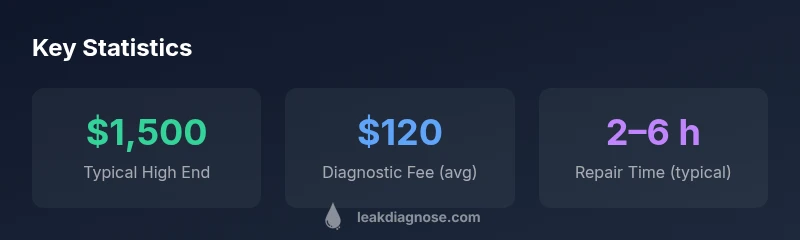
According to Leak Diagnosis, the cost of power steering leak repair typically falls in a broad range: roughly $300 to $1,500 for most repairs, with more extensive issues like rack-and-pinion replacement potentially exceeding $2,000. Costs depend on vehicle make, leak location, parts, and labor rates. This guide outlines what affects price and how to estimate accurately.
Understanding the Cost of Power Steering Leak Repair
Power steering leaks can vary widely in price, depending on where the leak originates, what needs replacement, and the labor-rate environment of your local shop. The cost of power steering leak repair is not a single fixed number; it encompasses diagnostic work, parts, and labor. In many cases, a simple hose replacement is a fraction of the price of a complete rack-and-pinion overhaul. For most vehicles, you should plan on a broad range rather than a single quote, with more complex leaks driving the upper end of the spectrum. Leak Diagnosis emphasizes that getting an accurate estimate starts with identifying the exact source and the scope of the leak, then layering in diagnostic time, fluid disposal, and potential core charges.
What Affects the Price
The price of power steering leak repair hinges on several key factors. (1) The leak source — hoses and clamps cost substantially less than a full rack-and-pinion replacement. (2) Vehicle type — luxury or European models often use higher-cost parts and specialized labor. (3) Labor rates in your region — urban areas typically charge more per hour than rural areas. (4) Diagnostic effort — some shops perform quick checks, while others conduct comprehensive pressure tests and system flushes. (5) Additional repairs found during service — a failed pump or damaged pulley can increase total cost significantly. Understanding these factors helps homeowners prioritize which repairs to perform now versus later.
Common Leak Locations and Their Price Impact
Leaks can occur at several points in the power steering system. A worn hose or hose clamp is usually the least expensive fix, often completed in a couple of hours. Replacing a damaged power steering fluid reservoir or a faulty pump can add to the bill. The most expensive scenarios involve the power steering rack or steering gear, where replacement is labor-intensive and requires precise alignment. Each location affects the price differently because parts availability and labor time vary. When you get a quote, ask the shop to itemize parts versus labor, so you can see where your money is going and plan accordingly.
Diagnostic Fees and Their Role
Diagnostics are the first step in an accurate repair estimate. Many shops charge a diagnostic fee that covers time testing the hydraulic circuit, measuring pressure, and locating the exact leak. If a diagnostic is bundled with the repair, the fee may be reduced or waived. Ask for a written estimate that shows diagnostic charges separately and includes any fluids or disposal fees. Leak Diagnosis notes that a thorough diagnosis often saves money in the long run by preventing unnecessary component replacements and ensuring the root cause is addressed.
Labor Rates and Time Estimates
Labor time is a major price driver. A simple hose replacement might take under an hour in a well-equipped shop, while a rack-and-pinion job can take several hours and require a specialty technician. Labor rates vary by region, shop level (independents vs. dealer), and the vehicle’s complexity. A good practice is to request an estimated labor hours and a not-to-exceed price. This helps you compare quotes on a like-for-like basis and avoid surprise costs after the work starts.
Regional Pricing Variations
Pricing for power steering leak repair can differ markedly by geography. Coastal cities with higher living costs and skilled labor demands generally see higher hourly rates than inland towns. Conversely, rural areas may offer more affordable labor, but parts availability could affect turnaround time. When budgeting, factor in travel surcharges, shop supply fees, and potential overnight lodging if major components must be ordered. Leak Diagnosis suggests obtaining quotes from at least two shops in your area for a realistic range.
Step-by-Step: How to Estimate Costs
Start by identifying the leak source through a reputable inspection. Obtain written estimates from multiple shops, ensuring each includes parts, labor, fluids, and disposal fees. Ask for a breakdown of optional replacements (e.g., pump, rack, lines) and then compare at the line-item level. If you’re short on time, request a “best” versus “worst” case scenario to understand the upper and lower bounds. Finally, verify whether your vehicle’s warranty or your insurer offers coverage for repairs related to hydraulic leaks. This can dramatically alter your out-of-pocket costs.
How to Save Without Compromising Safety
Budget-conscious owners can often reduce costs without sacrificing reliability. Consider these strategies: (1) Address leaks early to avoid escalating damage to the pump or rack. (2) Shop around and request itemized quotes with labor hours. (3) Use OEM or high-quality aftermarket hoses to prevent premature failure. (4) Ask about a bundled service that includes a fluid flush and a system test. (5) Maintain regular power steering fluid levels and prompt inspections after any impact or unusual noise. Early detection and preventive maintenance are the cheapest forms of protection.
DIY Considerations and Safety
DIY work on the power steering system is risky and not advised for most homeowners. Replacing hoses or reservoirs can be a reasonable first step if you have a solid mechanical skill set and the right tools. However, a rack-and-pinion or pump replacement demands precise torque, alignment, and bleeding techniques to avoid air in the system and steering instability. If you are unsure, consult a qualified technician. Leak Diagnosis stresses that safety should always take precedence over cost savings, especially when dealing with hydraulic systems that affect vehicle handling.
Reading Your Quote: What to Watch For
A good repair quote is transparent and itemized. Look for: (1) Clear parts list with part numbers, (2) Estimated labor hours and hourly rate, (3) Any diagnostic charges, (4) Fluid costs and disposal fees, (5) Warranties on parts and labor, and (6) Estimated timelines. If something seems vague, ask for clarification or a revised estimate. A well-structured quote helps you compare apples to apples and reduces the risk of hidden fees later on.
Long-Term Considerations: Warranties, Maintenance, and Prevention
Even if the initial leak is fixed, ongoing maintenance matters. Confirm whether labor and parts carry a warranty and what it covers. Schedule regular power steering fluid checks and system flushes per your vehicle’s service manual. Keeping the system clean and properly lubricated reduces the likelihood of future failures and may prevent additional repairs. Leak Diagnosis notes that investing in proactive maintenance can lower total ownership costs over the life of the vehicle.
Typical cost ranges for power steering leak repairs
| Component | Typical Cost Range | Notes |
|---|---|---|
| Power Steering Hose Replacement | "$150–$400" | Common fix for minor leaks |
| Power Steering Rack Replacement | "$800–$2,500" | Major repair, varies by vehicle |
| Diagnostic Fee | "$40–$120" | Includes system pressure test |
Questions & Answers
What causes power steering leaks?
Leaks typically originate from worn hoses, failed seals, a damaged rack-and-pinion, or a failing pump. Age, heat, and regular use contribute to deterioration of seals and connections. Identifying the exact source is essential for an accurate estimate and a durable repair.
Leaks usually come from hoses or seals; the exact source determines the repair scope.
Can I drive my car with a power steering leak?
Driving with a leak can worsen the problem and may damage the power steering pump, causing steering stiffness or failure. If you notice fluid on the ground or reduced steering assist, limit driving and arrange a repair as soon as possible.
Drive cautiously, but don’t ignore a suspected leak. Get it checked soon.
How long does a typical power steering leak repair take?
Minor hose or clamp replacements may take 1–2 hours. More complex repairs, such as rack-and-pinion or pump replacement, can require several hours or a full day, depending on parts availability and shop schedule.
Most small fixes are a few hours; major repairs may take longer.
Is power steering leak repair covered by a warranty or insurance?
Warranties vary. Some new-car powertrain or certified pre-owned warranties may cover certain hydraulic components, while typical auto insurance does not cover routine repairs for leaks. Check your policy and the vehicle’s warranty terms for specifics.
Warranties can help, but coverage varies—check before proceeding.
What should be included in a repair quote?
An itemized quote should list parts, labor hours, hourly rate, diagnostic charges, fluids, disposal fees, and any core charges. It should also specify warranties on parts and labor and an estimated timeline.
Make sure every cost is listed clearly in writing.
Are DIY fixes worthwhile?
DIY can save money for simple tasks like hose replacement if you have appropriate tools and mechanical skill. Complex repairs like rack-and-pinion or pump replacement carry safety risks and typically require professional expertise.
DIY may save money for simple fixes, but cables and gears should be left to pros.
“Accurate estimates come from a precise diagnosis of the leak origin and a review of the service history. Always request a written quote before any work begins.”
Main Points
- Get written, itemized estimates from multiple shops
- Know whether diagnostics are included in the quoted price
- Understand if the leak source is hoses, pump, or rack—this drives cost
- Expect higher prices for luxury/European vehicles
- Address leaks promptly to avoid cascading damage to the system