Does discharge leak? Urgent Appliance Troubleshooting Guide
Urgent guide to diagnose and fix does discharge leak in home appliances. Learn common causes, safety steps, and prevention to stop leaks fast.


Most discharge leaks originate from simple, fixable issues like loose discharge hose connections or small cracks in hoses. Quick fix: unplug the appliance and shut off water if applicable, inspect the discharge hose and clamps, reseal or replace damaged sections, and run a test cycle with no load. If the leak continues, escalate to a professional.
Does discharge leak? Urgent reality check
Does discharge leak? In many homes, the answer is yes, especially when an appliance dumps water or condensate from the discharge outlet. The quick answer is that most leaks involve straightforward fixes, not dramatic replacements. According to Leak Diagnosis, does discharge leak is often traced to hose connections, cracked hoses, or blocked pathways. This guide explains how to perform a rapid assessment, identify safety risks, and take practical steps to stop the leak fast. Treat any leak as a potential source of water damage, and act quickly to minimize damage and mold risk. The goal is to empower you to diagnose safely and decide whether you can fix it yourself or need a pro.
If you notice pooling near the discharge outlet, start with the simplest checks first and keep a bucket handy to catch water while you inspect. The more you know about the discharge system, the quicker you’ll recognize the real culprit and prevent recurring leaks. Leak Diagnosis emphasizes safety and methodical checks to avoid costly mistakes.
Common signs that discharge is leaking
Leak symptoms vary by appliance, but several signals consistently point to a discharge leak. Look for: damp areas around the drain outlet, visible water dripping from hoses, lingering moisture on the floor, a musty odor indicating prolonged dampness, and unusual sounds like gurgling during drainage. If you notice the machine leaking only during drain cycles, the discharge pathway is often involved. For homeowners, early detection is key to limiting water damage and expensive repairs.
Additionally, check for water stains on walls or cabinets near the appliance, which can signal slow leaks from the discharge system. Quick visual checks can differentiate a minor hose drip from a larger fault. Remember, even small leaks can cause significant damage over time, so don’t ignore persistent moisture around the discharge area.
Common causes and why they happen
The most frequent causes of discharge leaks are simple, avoidable issues:
- Loose or damaged discharge hose connections: Over time clamps can loosen with vibration or improper installation, allowing water to escape at the joint.
- Cracked or kinked discharge hoses: Brittle plastic hoses develop cracks or permanent bends that leak under pressure during draining.
- Clogged or blocked drain path: A blocked hose or standpipe can cause back-pressure that pushes water out of the discharge point.
- Worn pump seals or gaskets: Pumps have seals that wear with age; a failing seal can leak water during operation.
- Improper installation or misaligned components: A hose routed at an angle or rubbing against metal edges can abrade and leak.
Understanding these common causes helps you focus your checks where it hurts most. In many cases, the fix is straightforward and does not require a full appliance service.
Safe checking and preparation
Before you begin any inspection, unplug the appliance and shut off water supply if it’s a model with a water connection. Gather supplies: a bucket, towels, a flashlight, a few replacement clamps or hoses, and a wrench. Start with low-risk checks: inspect the discharge hose for secure clamps, visible cracks, and proper alignment. If you can access the pump area safely, look for loose clamps or damp seals. Use a dry cloth to wipe hoses and joints as you inspect so you can clearly see fresh leaks when you run a test. Safety first means no live electricity near standing water; if you’re uncertain, pause and call a professional.
Step-by-step diagnostic flow (summary)
This section outlines how to move from symptoms to diagnosis to solution in a logical sequence. Start with simple, non-invasive checks and progress to component replacement only if you feel confident. Each step ends with a note: if this doesn’t fix the leak, move to the next step. This approach saves time and reduces unnecessary disassembly. Remember to document what you observe and take photos for reference if you need to call a professional later.
Step-by-step repair guide for the most common discharge leak
- Power down and safety check: Unplug the appliance, switch off water supply, and place towels around the base. Ensure the area is dry before touching any components.
- Inspect discharge hose connections: Look at both ends of the discharge hose; tighten any clamps and replace damaged hose segments. If the hose is cracked, replace it with a hose of the same diameter and hardness rating.
- Check for hose kinks and blockages: Detach the hose carefully and flush with water to clear debris. Inspect the standpipe for clogs and clear any blockages with a flexible brush.
- Review pump and seals: If you observe moisture around the pump housing or seals, consider replacing worn seals or the pump itself if you have the necessary tools and confidence.
- Reassemble and test: Reconnect all hoses securely, run a short, empty cycle to observe for leaks, and monitor the area for a full minute to confirm the fix.
- If the leak persists, escalate: Some failures require professional service, especially if the pump, seals, or internal components show wear or damage that is not user-serviceable.
Prevention and maintenance to avoid future leaks
Proactive maintenance is your best defense. Routinely inspect hoses for cracks or brittleness, replace old hoses every 3–5 years, and ensure clamps are tight after installation and every few months. Use proper hose diameters and avoid sharp bends that can cause wear. Keep the appliance on a dry, level surface to prevent stress on the discharge connections. Finally, perform regular drain tests after maintenance to confirm everything remains secure.
When to call a professional
If you cannot identify a clear cause after the basic checks, or if water continues to leak after tightening hoses and replacing damaged parts, it is time to call a professional. A licensed appliance technician can diagnose less obvious problems like pump failures or concealed pipe faults. Do not risk electrical hazards—permanent water exposure can lead to costly damage and safety risks.
Steps
Estimated time: 60-90 minutes
- 1
Power down and prepare safety area
Unplug the appliance and shut off water supply if applicable. Place towels and a bucket nearby. Confirm the floor is dry before you begin any inspection.
Tip: Take photos of hose connections before you touch them. - 2
Inspect discharge hose connections
Check both ends of the discharge hose for tight clamps and secure fittings. Hand-tighten clamps and replace any clamps that feel loose or corroded.
Tip: Do not overtighten plastics; you can crack hoses. - 3
Check for cracks and blockages
Examine the hose for visible cracks or splits. Detach the hose and flush it with clean water to remove debris, then inspect the standpipe for obstructions.
Tip: If you see a crack, replace the hose rather than patching it. - 4
Look at the pump area and seals
If accessible, inspect the pump housing for moisture around seals. A worn seal may leak during operation and require replacement.
Tip: Only attempt seal replacement if you have the correct tools and manuals. - 5
Reassemble and test
Reconnect hoses securely, restore power, and run a short, empty cycle to observe for leaks for at least 60 seconds.
Tip: Keep a dry towel ready to catch any residual drips. - 6
Escalate if leaks persist
If water continues to leak after these steps, the issue may be internal to the appliance or beyond user repair. Schedule service with a qualified technician.
Tip: Document observations and timing of the leak to help the technician.
Diagnosis: Discharge water leaking around appliance during or after drain cycles
Possible Causes
- highPowerful drain pressure pushing water out through loose hose joints
- highDamaged or cracked discharge hose
- mediumClogged drain path causing backflow
- lowWorn pump seals or pump failure
- lowImproper installation or misaligned components
Fixes
- easyTighten hose clamps and replace damaged hose segments
- easyClear blockages in drain hose or standpipe
- mediumReplace worn pump seals or pump itself if needed
- easyRealign components and ensure proper hose routing
- mediumCall a professional if leaks persist after checks
Questions & Answers
What causes a washing machine discharge leak?
Most discharge leaks come from loose hoses, cracked hoses, or blockages in the drain path. Age and improper installation also contribute. Start with simple hose checks before moving to more involved repairs.
Most leaks come from hoses or clogs. Start with the hose checks before moving to more involved repairs.
How can I tell if the leak is from the discharge hose vs the pump?
Leaks from the discharge hose usually appear at connections or along the hose. Pump leaks tend to be damp around the pump housing and seals. A visual inspection plus a test run can help differentiate.
Check the hose connections first; if dampness is around the pump housing, the pump seals may be the culprit.
Is it safe to run a washing machine with a discharge leak?
Running a machine with a known discharge leak risks water damage and electrical hazards. Do not operate the appliance until the leak is controlled and the source identified.
No, don’t run it until you fix the leak and confirm it’s safe.
When should I call a professional?
If basic hose tightening and hose replacement don’t stop the leak, or if you find signs of pump damage or internal components, contact a licensed technician for a proper diagnosis and repair.
Call a professional if the leak persists after basic checks.
How can I prevent discharge leaks in the future?
Regularly inspect hoses, avoid sharp bends, replace aging hoses every few years, and ensure proper hose routing and clamps during maintenance. A quick post-install check can prevent many leaks.
Inspect hoses regularly and replace aging parts to prevent leaks.
Can a clogged drain cause leaks elsewhere?
Yes, a clog can increase pressure in the drain path and push water out through weaker joints. Clearing blockages typically resolves the issue if the system is otherwise sound.
Blockages can push water out through joints, so clear drains first.
Watch Video
Main Points
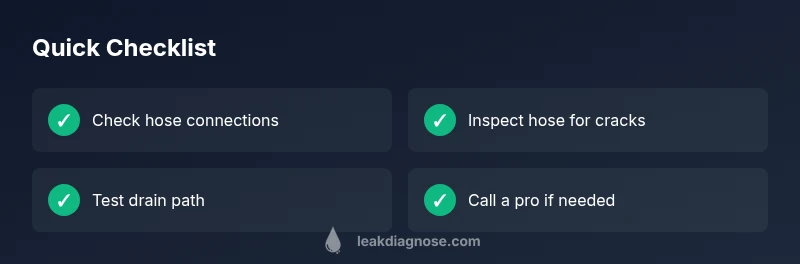
- Check hoses first and tighten clamps
- Replace damaged hoses or seals promptly
- Test with care and escalate if leaks persist
- Prevent future leaks with routine maintenance