Leak Barrier Roof Troubleshooting: Quick Fix Guide
Step-by-step troubleshooting for a leaking roof barrier. Learn safe DIY fixes, inspection tips for flashing and seams, and when to call a pro for lasting repair.


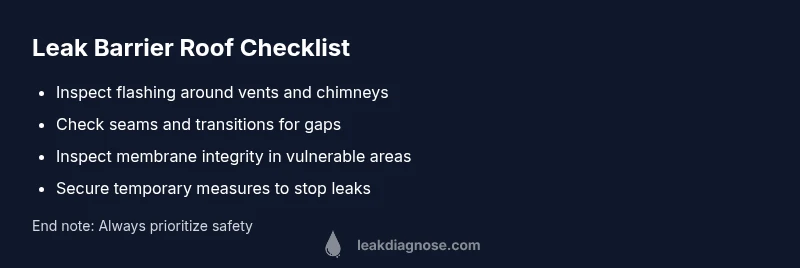
Most likely the leak barrier roof issue is a compromised barrier or flashing allowing water intrusion. Start with simple checks: inspect the drip edge, flashing around vents and chimneys, and seams where the barrier membrane meets other materials. For a quick fix, reseal visible gaps with a compatible sealant and organize a professional assessment if leaks persist.
Why Barrier Roof Integrity Matters
Barrier roofs are designed to keep moisture out by adding a dedicated moisture barrier under shingles. When this barrier is compromised, even small defects can channel water into attic spaces, causing mold, rot, and insulation damage. The leak barrier roof is intended to direct water toward eaves and drainage, but aging membranes, installation errors, or hidden gaps can undermine the system. According to Leak Diagnosis, proactive maintenance is cheaper and safer than emergency repairs after storms. Common signs include damp ceilings after rain, musty odors, and stained sheathing around penetrations.
Common Failure Points in Leak Barriers
The most frequent failure points are damaged flashing around roof penetrations (vents, chimneys, skylights), gaps in the barrier membrane seams, and poor transitions where two roof sections meet. Wind-driven debris can nick or tear the barrier, while improper sealing at vent pipes or roof penetrations invites water ingress. Another culprit is improper installation, where fasteners pierce the barrier or sealants fail over time. Understanding these points helps you focus your inspection on high-risk areas of the leak barrier roof.
Early Warning Signs You Shouldn't Ignore
Look for ceiling stains that appear after rain, damp or musty attics, and soft spots in drywall near exterior walls. Water may travel along roof framing before dripping into living spaces, so pay attention to attic insulation moisture and darkened wood. If you notice peeling paint, warped ceiling tiles, or moldy odors in upper levels, these are strong indicators that the leak barrier roof has sustained damage and requires closer inspection by a professional if DIY checks don’t identify a simple seal failure.
Immediate Temporary Fixes for a Quick Stop
If you discover active dripping, place a bucket under the leak and lay down a tarp to limit further water intrusion. For a temporary seal, apply an exterior-grade sealant or roofing cement to obvious gaps around flashing or penetrations, being careful not to cover live wiring. Do not attempt to seal large tears with duct tape or generic sealants; these are short-term measures. Remember, these fixes are stopgaps while you arrange a permanent repair and protect your living space from damage.
Diagnostic Flow: From Symptom to Solution
Symptoms guide the diagnosis. Start with obvious leaks, then check flashing around vents and chimneys, followed by seams in the barrier membrane. If water appears after heavy rain, verify whether shingles are damaged or missing, as that can expose the barrier to direct moisture. Use a flashlight in the attic to trace dampness back to its source, noting any compromised areas. As you gather clues, plan professional assessment if the damage extends beyond easily resealed seams or if the barrier shows widespread wear.
Step-by-Step: Replacing or Re-sealing a Damaged Barrier
- Safety first: secure the ladder, wear fall protection, and turn off power in affected areas. 2) Inspect the exterior for obvious tears, punctures, or lifted shingles near penetrations. 3) Clean the damaged area and remove loose debris from the barrier seam. 4) Apply exterior-grade sealant to minor gaps and reseal flashing with compatible material. 5) If the barrier membrane is torn or extensively damaged, consider replacing the affected section or the entire barrier layer. 6) Re-check for water path by simulating rain or after rainfall and monitor for leaks. 7) Document the work and arrange a follow-up inspection if leaks persist.
Safety, Tools, and Safety Precautions
Always prioritize safety when working on a roof. Use a sturdy ladder and fall protection, wear non-slip footwear, and avoid working in wet conditions. Wear eye protection when applying sealants, and ensure electrical power to attic circuits is managed if you must inspect around electrical fixtures. Keep a clear exit path in case you need to descend quickly. Do not attempt structural repairs if you’re not confident in roofing techniques.
Prevention Tips to Extend Barrier Life
Regularly inspect flashing around all penetrations and check for sealant degradation at seams. Clean gutters to prevent overflow that can back-feed moisture toward the barrier, and trim overhanging branches that can rub and damage the roof. Schedule seasonal inspections after major storms, especially in regions with freeze-thaw cycles. Replace worn or damaged barrier sections promptly to prevent cascading water damage in the attic.
When to Call a Licensed Roofer
If you’re unsure about the extent of damage or spot widespread barrier wear, contact a licensed roofer for a comprehensive assessment. A pro can replace damaged membranes, reseal flashing, and ensure proper flashing underlayment and vent/pipe terminations. Persistent leaks after DIY fixes are a clear signal that a professional evaluation is required to prevent further structural damage.
Quick Reference Troubleshooting Table
- Symptom: Visible water staining after rain
- Likely cause: Damaged barrier seam or flashing
- Action: Inspect and reseal, then monitor
- Symptom: Attic damp with no obvious exterior damage
- Likely cause: Hidden punctures or degraded barrier
- Action: Inspect from attic for leaks and plan professional repair
- Symptom: Water leaks at a vent or chimney
- Likely cause: Poor sealing around penetrations
- Action: Re-seal and improve flashing; replace damaged components if needed
Steps
Estimated time: Total 2-6 hours depending on damage
- 1
Prepare safety gear and set up area
Put on PPE, secure ladder, and ensure the area below is clear. If possible, wait for dry weather to minimize slip risk. Confirm power is off in areas near leaks.
Tip: Have a helper to stabilize the ladder and pass tools. - 2
Inspect exterior roof for visible damage
With a partner, walk the roof edge to check shingles, flashing, and penetrations for tears or lifted sections. Note any areas where the barrier membrane might be exposed.
Tip: Use binoculars from the ground if the roof is steep. - 3
Locate leaks and assess flashing/seams
From the attic, trace dampness to its source and inspect attic side of penetrations. Inspect flashing around vents and chimneys for cracks, gaps, or rust.
Tip: Mark suspected spots with removable tape for later repairs. - 4
Apply temporary fixes to stop water entry
Seal minor gaps with exterior-grade sealant and cover small punctures with roofing cement as a stopgap. Place tarps or buckets to capture drips while planning permanent repair.
Tip: Do not rely on temporary fixes for long-term protection. - 5
Plan permanent barrier repair
Decide whether to reseal seams, replace flashing, or install a new barrier membrane segment. Gather compatible materials and arrange a professional if needed.
Tip: Take photos and measurements for accurate estimates. - 6
Execute permanent repair or replacement
Follow manufacturer guidelines for applying sealants and flashing; for membrane replacement, cut and seam carefully, ensuring proper adhesion and heat sealing.
Tip: Work in cooler hours to improve sealant cure. - 7
Test the repair and monitor
Reopen water exposure or wait for rainfall to verify the fix. Check the attic after a test for any new signs of moisture.
Tip: Keep a log of test results for future reference.
Diagnosis: Water leaks appearing inside after rainfall
Possible Causes
- highDamaged flashing around roof penetrations
- highSeam gaps or tears in the barrier membrane
- mediumImproper installation of barrier membrane
- lowPunctures from hail or debris
Fixes
- easyInspect and reseal around penetrations with compatible sealant
- mediumRepair or replace damaged flashing
- hardReplace compromised barrier membrane in affected area
Questions & Answers
What exactly is a leak barrier roof and when is it needed?
A leak barrier roof is a moisture barrier installed beneath roofing materials to prevent water from seeping into the attic. It is most needed in areas with heavy rain, wind-driven moisture, or where shingles are damaged or poorly installed. Proper installation is key to long-term performance.
A leak barrier roof is a protective layer under the shingles that stops water from getting into the attic, especially in high-moisture areas.
Can I fix a leaking barrier roof myself?
Some minor sealant repairs around visible gaps can be done safely, but most barrier-related leaks require professional assessment for a lasting fix. If you’re unsure about the extent of damage, consult a licensed roofer.
You can do small sealant fixes, but call a pro for long-lasting barrier repairs.
What signs indicate the barrier has failed?
Look for new ceiling stains after rain, attic dampness, or mold near penetrations. Cracked flashing, torn seams, or displaced barrier sections are clear failure indicators requiring attention.
New stains after rain and damp attic spaces point to a barrier issue.
How long does a barrier repair usually last?
Longevity depends on material quality, installation, and maintenance. Regular inspections and prompt resealing when needed can extend life, while neglect may shorten it significantly.
Repair life varies; regular checks help extend it.
Do I need to replace the entire roof if the barrier is damaged?
Not always. If the damage is localized to a small area, targeted membrane or flashing repairs may suffice. Widespread barrier wear often requires more extensive work, potentially involving sections of the roof.
Usually not, unless the whole barrier is compromised.
What safety gear is essential for roof work?
Wear a harness, non-slip shoes, and gloves. Use a stable ladder and have a partner assist. Avoid working on wet surfaces or during high winds.
Wear a harness, non-slip shoes, and have help nearby.
Watch Video
Main Points
- Identify the source before sealing any leaks
- Start with flashing and seam checks first
- Use temporary fixes only while planning a permanent repair
- Call a pro for complex barrier repairs
- Schedule regular barrier maintenance to prevent future leaks