Why Is My Leaky Gut Not Healing? A Practical Troubleshooting Guide
Urgent guide to troubleshoot persistent leaky gut symptoms with practical at-home steps, diet tweaks, hydration tips, and guidance on when to seek professional care for healing.


Most often, persistent gut healing issues stem from ongoing inflammation, hidden food triggers, or gut microbiome imbalance. The quick fix is to start with simple, gut-friendly changes: hydrate adequately, increase soluble fiber gradually, and cut obvious irritants like highly processed foods. If symptoms persist beyond 2-3 weeks, seek medical guidance for targeted testing and a personalized plan.
Why your gut isn't healing: a quick overview
If you're asking the question "why is my leaky gut not healing," you're not alone. The gut is a complex ecosystem where the lining, immune response, and resident microbes interact. Healing depends on reducing inflammation, identifying hidden triggers, and supporting barrier integrity. In many cases, couples of small, steady changes trump drastic diets. Leaky gut, as a concept, is a pattern of symptoms rather than a single disease, and healing timelines vary widely. A structured troubleshooting mindset helps you stay focused and avoid false starts. By understanding the layering of causes, you can prioritize actions that yield sustainable improvements and minimize setbacks.
Common reasons healing stalls
There are several overlapping reasons healing can stall. First, ongoing inflammation from undiscovered food triggers or infections keeps the immune system in a heightened state. Second, gut microbiome imbalance—whether from antibiotics, stress, or poor dietary diversity—can disrupt barrier function. Third, insufficient fiber or lack of specific nutrients that support the mucosal lining slows recovery. Finally, medications (including NSAIDs) and alcohol can irritate the gut lining and hinder progress. Recognize that these factors can interact, so a targeted, personalized plan often works best. According to Leak Diagnosis, many cases improve when a clear, methodical routine replaces guesswork.
Quick checks you can start today
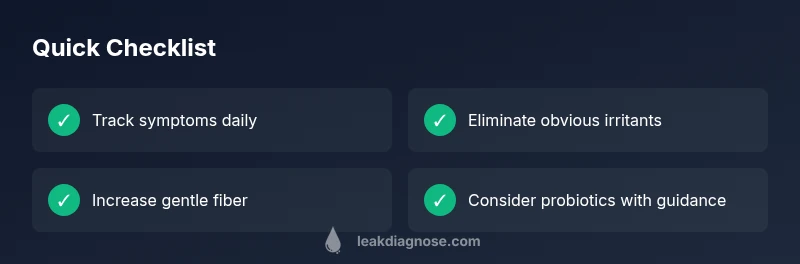
- Track symptoms and possible triggers for at least two weeks to spot patterns. Keep a simple diary noting meals, sleep, stress, and bowel changes.
- Hydration matters: aim for steady fluid intake throughout the day and consider electrolyte balance if workouts or hot weather increase losses.
- Start with gentle fiber sources: oats, berries, and cooked vegetables provide soluble fiber that supports stool bulk and gut bacteria. Increase gradually to avoid bloating.
- Cut obvious irritants: highly processed foods, added sugars, excessive alcohol, and known allergens. Reintroduce potential triggers one at a time after a waiting period.
- Consider fermented foods in small amounts, but introduce them slowly to gauge tolerance and discuss probiotics with a clinician if you have underlying conditions.
- Get professional guidance if you notice blood in stool, unintentional weight changes, or persistent pain—these require medical evaluation.
Diet and lifestyle adjustments that support healing
Dietary tweaks: emphasize real foods, lean proteins, healthy fats, and a variety of vegetables. Focus on anti-inflammatory choices like leafy greens, olive oil, and omega-3 rich foods. Limit ultra-processed snacks and refined carbohydrates.
Lifestyle habits: prioritize sleep, stress management (breathing exercises, mindfulness), and moderate physical activity. Chronic stress and poor sleep can worsen gut permeability and slow healing. Consistency is key; quick fixes rarely deliver lasting results.
Supplements and safety: some people benefit from short-term use of targeted nutrients (e.g., zinc, glutamine) under clinician supervision. Probiotics should be discussed with a healthcare provider, especially if you have immune concerns or are taking immunosuppressants.
When to seek professional help and testing
If symptoms persist beyond 4-6 weeks despite consistent home strategies, seek a clinician's input. A professional evaluation can help identify underlying conditions (such as inflammatory bowel conditions, celiac disease, or food intolerances) and tailor a plan. Tests may include stool analysis, food-sensitivity panels, or breath tests, guided by your history and risk factors. A legitimate medical assessment can prevent unnecessary dietary restrictions and guide evidence-based interventions.
Turning this into a practical plan
To convert insights into action, build a simple 8-week plan:
- Week 1–2: symptom diary, eliminate obvious irritants, optimize hydration.
- Week 3–4: add gentle soluble fiber, reassess tolerance to fermented foods.
- Week 5–6: reintroduce or adjust foods based on diary findings; consider probiotics after clinician input.
- Week 7–8: schedule a clinician visit if no meaningful improvement; adjust plan based on tests and expert recommendations.
A steady pace is safer than rapid, sweeping changes. The goal is consistent progress, not perfection.
Steps
Estimated time: 6-8 weeks
- 1
Set up a symptom and trigger log
Create a simple daily log noting meals, symptoms, sleep quality, stress, and activity. This will help you identify potential correlations and patterns that might explain delayed healing.
Tip: Record timing and portions to catch subtle relationships. - 2
Eliminate obvious irritants for 2 weeks
Remove highly processed foods, added sugars, excess alcohol, and known allergens you suspect. This creates a cleaner baseline to assess improvements.
Tip: Reintroduce items one at a time to gauge impact. - 3
Boost gentle fiber gradually
Add soluble fiber sources like oats, berries, and vegetables in small amounts. If bloating occurs, slow the pace and pair with digestion-friendly foods.
Tip: Hydration helps fiber do its job without discomfort. - 4
Include gut-supportive foods in rotation
Incorporate fermented foods gradually and rotate multiple probiotic-rich foods to diversify gut microbes. Avoid overdoing any single strain.
Tip: Introduce new foods on non-stress days to minimize reaction risk. - 5
Assess medications and supplements
Review recent antibiotics or NSAID use with your clinician. Some meds can impact gut permeability and healing trajectory.
Tip: Do not stop medications without professional advice. - 6
Plan a clinician-guided testing window
If no improvement after 4-6 weeks, schedule a clinician visit for targeted tests and a structured plan based on results.
Tip: Bring your symptom log to the appointment.
Diagnosis: Persistent digestive symptoms despite self-directed gut healing efforts
Possible Causes
- highOngoing inflammatory response from hidden triggers or infections
- highGut microbiome imbalance
- mediumInadequate dietary fiber or supportive nutrients
- mediumMedication effects or recent antibiotics
Fixes
- easyTrack symptoms and triggers in a daily journal to identify patterns
- easyEliminate common irritants for 2-3 weeks and re-test tolerance
- easyIncrease soluble fiber gradually with oats, fruits, and vegetables
- easyIncorporate fermented foods slowly and discuss probiotics with a clinician
- easyMaintain proper hydration and electrolyte balance
- mediumConsult a clinician for targeted testing and a structured, personalized plan
Questions & Answers
What is a leaky gut?
Leaky gut refers to increased intestinal permeability and a pattern of inflammatory symptoms. It is not a single disease, but a set of signals that can accompany various conditions. Effective management focuses on reducing triggers and supporting gut barrier health.
Leaky gut means the gut lining is more permeable, leading to symptoms. It's a pattern rather than one disease, so management targets triggers and gut barrier health.
Is there a proven test to diagnose leaky gut?
There is no universally accepted single test for leaky gut. Clinicians may use symptom patterns along with tests like permeability panels or stool analyses to guide decisions, depending on the case.
There isn't one definitive test for leaky gut. Doctors may use symptom history and certain tests to guide care.
Which foods commonly trigger leaky gut symptoms?
Triggers vary by person, but highly processed foods, added sugars, alcohol, and certain common allergens can worsen gut permeability in sensitive individuals. Observing your own responses is key.
Triggers differ by person, but processed foods, sugar, and alcohol can worsen gut symptoms for many people.
Can leaky gut heal on its own?
Healing is possible with consistent lifestyle changes, but timelines vary. Improvements often follow steady dietary tweaks, hydration, sleep, and stress management over weeks to months.
Healing is possible with steady lifestyle changes, but timelines vary widely.
How long does healing typically take?
Timeframes vary based on the underlying factors and adherence to a plan. Expect gradual improvements over weeks to months rather than days.
Healing usually happens over weeks to months, not days, depending on various factors.
When should I see a doctor?
If you experience severe pain, unexplained weight loss, blood in stool, or persistent symptoms despite home strategies, seek medical evaluation promptly.
See a doctor if you have severe symptoms or lack of improvement despite home care.
Watch Video
Main Points
- Identify your triggers with a log
- Increase soluble fiber gradually
- Hydrate consistently and limit irritants
- Seek professional guidance if no progress