Why Tampons Cause Urine Leakage: Troubleshooting Guide
Learn how to troubleshoot urine leakage that occurs with tampon use. Identify common bladder and pelvic-floor causes, perform safe checks, and know when to seek medical help. Leak Diagnosis provides practical steps for homeowners and DIYers.


Urine leakage during tampon use is usually not caused by the tampon itself. It often points to a bladder or pelvic-floor issue such as stress or urge incontinence, or a urinary tract irritation. Start with safe checks, pelvic-floor exercises, and infection screening; if leakage persists, consult a clinician.
Understanding the Link Between Tampons and Urine Leakage
If you’ve ever wondered why do tampons make me leak urine, you’re not alone. This question frequently surfaces when period symptoms collide with bladder sensations. The key point to remember is that tampons don’t cause urine leakage directly. Instead, shared pelvic anatomy and bladder pressure during a period can reveal underlying issues like pelvic-floor weakness, bladder irritability, or urinary tract infections. According to Leak Diagnosis, early recognition of these signals helps you act quickly to protect your health and stay comfortable during your cycle.
The connection between vaginal devices and urinary symptoms is a reminder that the pelvis is a compact, interconnected system. When the bladder contracts or the pelvic floor weakens, urine leakage can occur at moments you least expect—such as during coughing, sneezing, or standing up after placing a tampon. Understanding this helps you separate tampon management from bladder health and avoid unnecessary fear about your period.
Leak Diagnosis analysis shows that most persistent leakage during menstruation is linked to pelvic-floor function or urinary tract conditions rather than the tampon itself. With this perspective, you can focus on practical steps to tighten support, improve bladder control, and track symptoms for a medical visit if needed.
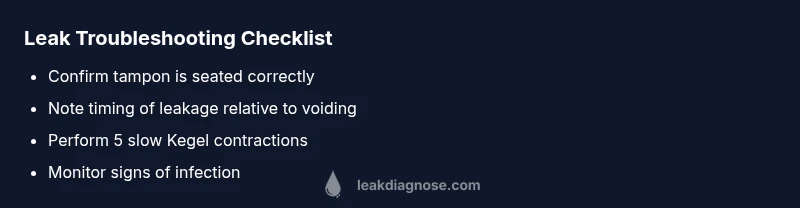
In practical terms, start with noninvasive checks you can perform today. These include confirming tampon placement, timing leakage with your last void, and trying basic pelvic-floor exercises. If you notice fever, burning with urination, or blood in the urine, these are signals to seek medical care promptly.
Common Causes of Urine Leakage During Menstrual Bleeding
There are several plausible explanations for leakage that coincides with tampon use. While the tampon is not the root cause, the symptoms may be triggered or worsened by underlying bladder or pelvic-floor issues. Here are the most common factors:
- Stress urinary incontinence: A weakening of pelvic-floor muscles can allow urine leakage during activities that increase abdominal pressure, such as coughing, sneezing, or heavy lifting. Menstrual hormones and urinary patterns can amplify perceived leakage during this time.
- Urge urinary incontinence: A sudden, intense urge to urinate can precede leakage if the bladder is hyperactive or irritated. Periods can be emotionally or physically stressful, which may worsen urge symptoms.
- Overactive bladder or bladder irritants: Caffeine, alcohol, artificial sweeteners, or acidic juices can irritate the bladder, making leakage more likely during the day or around your period.
- Urinary tract infection (UTI) or irritation: Infections or inflammatory conditions may cause burning, frequency, and leakage that can feel worse during menstruation.
- Pelvic organ prolapse or vaginal/vulvar irritation: Structural changes or irritation can alter how urine flows and is felt, sometimes mimicking leakage when a tampon is in use.
- Misperception of leakage: Sometimes what you notice as leakage around tampon placement is vaginal discharge or leakage from the vagina, not urine. Distinguishing between the two is important for correct treatment.
It’s important to recognize that age, pregnancy history, and prior pelvic surgeries can influence these risk factors. If leakage is new or changing, a clinician can help differentiate bladder-related issues from other pelvic conditions.
Safe Checks You Can Do Now
Before you take a trip to the clinic, several basic checks may help you understand the pattern of leakage and rule out simple explanations. These checks are safe, noninvasive, and can be done at home:
- Confirm tampon seating: Ensure the tampon is inserted correctly and sits comfortably high in the vaginal canal. A poorly seated tampon can cause discomfort but is unlikely to cause urine leakage directly; it may, however, complicate how you perceive leakage.
- Track timing with voiding: Keep a simple log of when leakage occurs relative to your last bathroom visit. Does leakage occur after you sneeze, during a specific activity, or at a certain point in your cycle?
- Try pelvic-floor exercises: Perform 3 sets of 10 slow, controlled pelvic-floor contractions (Kegels) daily for a couple of weeks to gauge whether leakage reduces with stronger support.
- Hydration and bladder-friendly habits: Maintain steady fluids and avoid irritants (caffeine, alcohol, acidic drinks) that can irritate the bladder. Small, regular voiding may help some individuals manage urgency.
- Screen for infection signs: Note any burning during urination, pelvic tenderness, fever, or blood in the urine. If present, seek medical evaluation promptly.
- Compare with vaginal discharge: If leakage occurs but there’s no burning or urgency, consider whether the sensation might be vaginal discharge or escaping fluid rather than urine.
If these checks don’t reduce leakage or if symptoms worsen, it’s time to seek professional guidance. A clinician can perform a physical exam and possibly bladder tests to determine the cause and the best treatment.
Medical Conditions That May Be Involved
Several medical conditions can underlie leakage during menstruation and are worth discussing with a clinician. Identifying them early can prevent frustration and improve quality of life during your period:
- Pelvic-floor weakness or muscle imbalance: The pelvic floor supports the bladder and urethra. Weakness can lead to leakage with changes in posture, coughing, or physical exertion. A structured program of exercises and pelvic-floor physical therapy can help if this is the cause.
- Cystocele or pelvic organ prolapse: With prolapse, pelvic organs shift and press on the urethra or vaginal walls, altering urine flow. Symptoms may include a feeling of fullness or pressure along with leakage.
- Urinary tract infections or irritation: UTIs can cause leakage-like symptoms, especially with urgency and burning. A clinician can confirm with a urine test and prescribe appropriate antibiotics if needed.
- Interstitial cystitis or bladder inflammation: This condition can cause pelvic pain and a need to urinate frequently, which can be experienced as leakage during a period.
- Postpartum or surgical changes: Past pregnancies or pelvic surgeries may affect pelvic support and bladder function, contributing to leakage during menstruation.
Not every case is one cause. Your clinician may combine history, a physical exam, and tests to craft a personalized plan, which may include pelvic-floor training, bladder training, or medication if indicated.
How to Track Symptoms and Plan Care
Systematic tracking helps you and your healthcare provider identify patterns and triggers. A simple log can make the difference in getting an accurate diagnosis and effective treatment. Consider recording:
- Leakage timing: Note the time of leakage, whether it occurs after coughing, sneezing, or strenuous activity, and how long after the tampon insertion it happens.
- Associated symptoms: Urgency, burning, fever, back pain, or a sense of pelvic pressure.
- Hydration and intake: Record fluid type and amount, caffeine, alcohol, or citrus intake.
- Tampon details: Brand, absorbency, size, and how long you’ve worn it before leakage occurs.
- Cycle phase: Note where you are in your menstrual cycle (e.g., premenstrual, during, or after period).
With this data, you can discuss the issue clearly with a clinician. It also helps you see whether pelvic-floor exercises or bladder training reduce leakage over time. If symptoms persist beyond 2–4 weeks of home management, a medical evaluation is advised.
Prevention Tips for Future Episodes
Prevention focuses on strengthening pelvic support, managing bladder health, and mindful tampon use. Apply these evidence-informed tips to minimize leakage during future cycles:
- Build pelvic-floor strength: A consistent regimen of Kegels, guided by a clinician or physical therapist, can reduce leakage risk and improve overall pelvic health.
- Bladder training: Gradually extend intervals between bathroom visits and practice urge suppression techniques to increase bladder control.
- Manage triggers: Avoid known bladder irritants (caffeine, alcohol) around your period and stay hydrated with water throughout the day.
- Tampon strategy: Choose the appropriate tampon absorbency for your flow, change regularly, and consider using a liner during light flow days to monitor leakage patterns.
- Posture and movement: Strengthen core and posture to reduce pressure on the pelvic floor during daily activities and exercise.
- Seek early advice for persistent symptoms: If leakage remains, schedule a clinician visit for a proper evaluation and individualized plan.
These steps form a practical, proactive approach to pelvic health that supports leakage prevention across cycles.
What Happens at a Doctor Visit
A healthcare professional may begin with a focused history and physical exam, paying particular attention to pelvic floor function, bladder habits, and any signs of infection or prolapse. Common tests may include a urinalysis to check for infection, pelvic floor strength assessment, and possibly a bladder diary or specialized tests to evaluate how your bladder holds and releases urine. Depending on findings, treatment might involve pelvic-floor physical therapy, behavioral strategies, medications, or referrals to a urologist or gynecologist for further evaluation.
Real-Life Scenarios and Examples
Consider two typical scenarios to illustrate how this issue can present and be resolved. In Scenario A, a person notices leakage when sneezing during the very first days of their period. A clinician’s plan might include pelvic-floor exercises and bladder training, with reassurance that the tampon is not the culprit. In Scenario B, leakage accompanies burning with urination and fever; this suggests a possible infection, warranting prompt testing and treatment. In both cases, keeping a symptom log and seeking medical advice ensures the root cause is addressed rather than chasing symptoms alone.
Steps
Estimated time: 30-45 minutes
- 1
Clarify the symptom
Document when leakage happens, its appearance, and whether it aligns with voiding or a sneeze/cough. This helps distinguish urine from vaginal discharge and guides the next steps.
Tip: Keep a simple 7-day log with date, event, and leakage notes. - 2
Check tampon seating
Ensure the tampon is inserted correctly and sits comfortably in the vaginal canal. A poorly seated tampon can cause discomfort but not usually urine leakage.
Tip: If unsure, remove and reinsert following package instructions. - 3
Assess pelvic-floor strength
Perform a few slow Kegel contractions to gauge alertness and strength of the pelvic floor. If leakage decreases with exercise, you may benefit from a formal program.
Tip: Aim for 3 sets of 10 reps daily. - 4
Modify fluids and irritants
Note whether caffeine, alcohol, or acidic drinks precede leakage. Reducing irritants can help some people manage bladder symptoms.
Tip: Hydrate with water and moderate bladder irritants during the cycle. - 5
Implement a simple bladder routine
Try scheduled voiding and gradual increases in time between bathroom visits to train the bladder.
Tip: Consistency is key; avoid delaying urges for too long. - 6
Seek medical guidance if unresolved
If leakage persists after 4 weeks of home management, arrange a clinic visit for a formal assessment and possible tests (urinalysis, bladder studies).
Tip: Early professional input often yields faster relief.
Diagnosis: Tampon insertion coincides with urine leakage or leakage occurs during use
Possible Causes
- highBladder or pelvic-floor dysfunction (high likelihood of incontinence)
- mediumUrinary tract infection or bladder irritation
- lowPelvic organ prolapse or vaginal irritation
Fixes
- easyStart pelvic-floor exercises and bladder training
- easyTrack symptoms with a calendar or app and reduce bladder irritants
- easyGet a urinalysis or doctor’s evaluation if symptoms persist or worsen
Questions & Answers
Can tampons cause urine leakage?
Tampons do not cause urine leakage directly. Leakage during tampon use is usually linked to bladder or pelvic-floor conditions. If leakage persists, seek medical evaluation.
Tampons don’t cause urine leakage; bladder or pelvic-floor issues are usually involved. See a clinician if it continues.
What should I do if I leak during my period?
Track when leakage happens and try pelvic-floor exercises. Reduce bladder irritants and stay hydrated. If leakage continues beyond a few weeks, consult a clinician.
Keep a symptom log, practice Kegels, and seek medical advice if leakage persists.
Could a UTI be the cause?
Yes, a urinary tract infection can cause leakage-like symptoms, urgency, and burning. Get a urine test if you have these signs, especially during your period.
UTIs can cause leakage symptoms; see a clinician for testing if you have burning or urgency.
Is pelvic organ prolapse a possibility?
Pelvic organ prolapse can alter urinary flow and feel like leakage. A clinician can diagnose with an exam and imaging if needed.
Prolapse may cause leakage-like symptoms; evaluation is important.
When is it time to see a doctor?
If leakage is new, persistent beyond 2–4 weeks of home care, or accompanied by fever, foul urine, or pelvic pain, seek medical evaluation.
See a doctor if it’s new or won’t improve after self-care.
Can pregnancy affect this issue?
Pregnancy can change pelvic floor dynamics. If leakage occurs during pregnancy or with a known pregnancy, consult a clinician promptly.
During pregnancy, see your healthcare provider for a tailored evaluation.
Watch Video
Main Points
- Investigate bladder or pelvic-floor causes, not blame the tampon
- Track symptoms and triggers to guide care
- Practice safe, noninvasive checks before formal testing
- Consult a clinician if leakage persists or worsens