Difference Between Leek and Celery: A Practical Comparison
Explore the difference between leek and celery, focusing on flavor, texture, nutrition, and storage to help you choose the right green for soups, salads, and more.


The difference between leek and celery is most evident in flavor, texture, and culinary use. Leeks offer a milder, onion-like sweetness, while celery delivers crisp, herbal brightness. This comparison helps home cooks choose the right vegetable for soups, stocks, salads, and a range of cooked dishes.
What are leek and celery?
Leeks (Allium ampeloprasum var. porrum) and celery (Apium graveolens) are common kitchen greens, but they come from different plant families and display distinct traits in the kitchen. Their market presence overlaps—long pale stalks with leafy tops—but their flavors, textures, and best uses diverge. According to Leak Diagnosis, understanding the difference between leek and celery starts with recognizing each vegetable's core characteristics. Leeks deliver a milder, onion-like sweetness that softens with heat, while celery offers a crisp, herbal bite and a refreshing aromatic note. In practice, both vegetables can form the foundation of soups, stocks, and raw applications, but they behave differently in cooking. By exploring their flavor profiles, textures, and typical recipes, home cooks can select the right green for any dish and avoid unnecessary substitutions. The takeaway is simple: the difference between leek and celery guides whether you simmer soft textures or preserve crunch.
The key differences at a glance
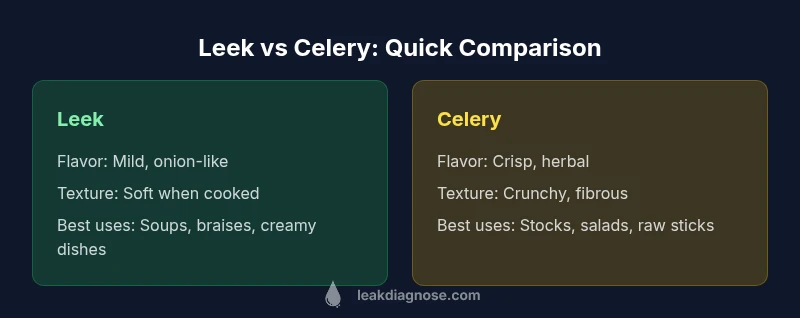
When you compare the difference between leek and celery, several practical factors stand out right away: flavor intensity, texture, and typical uses. Leeks tend to bring a soft, sweet onion-like note; celery contributes a crisp, peppery aroma. Texture-wise, leeks are tender when cooked, whereas celery remains pleasantly crunchy. In terms of cooking, leeks often serve as a flavor base in soups and braises, while celery provides a crisp backbone in salads and stocks. Nutritionally, both offer fiber and micronutrients, but their density and emphasis differ. Availability and price can vary seasonally, but both are widely sold year-round in most markets. This quick comparison helps home cooks decide which green to feature in a recipe before diving into prep. The difference between leek and celery is most apparent in how they interact with fats, acids, and heat during cooking, which is why the substitution decision should be deliberate.
Flavor and aroma profiles
Leek flavor is gentle and sweet, with subtle allium notes that mellow during simmering. When sautéed, leeks release a warm, comforting aroma that blends well with garlic, thyme, and potatoes. Celery flavor is more assertive, with a refreshing, green aroma that punctuates dishes without overpowering them. In terms of aroma, leek cooking fills a pot with softness while celery adds an herbal zing. For many dishes, the difference between leek and celery defines whether the dish feels mellow and comforting or bright and crisp from the start. Leeks shine when their sweetness can mingle with dairy or starches, whereas celery lends brightness to broths and vinaigrettes.
Texture, preparation, and culinary behavior
Leeks have a layered stalk structure that can hide grit between leaves; trimming and cleaning thoroughly is essential. They soften dramatically when cooked, developing a silky texture ideal for cream soups and purées. Celery is fibrous and maintains crunch, even after light cooking; trimming and peeling sometimes helps. The difference between leek and celery is most evident when you chew them raw: leek is tender and sweet; celery offers a crisp, snapping bite. Practical prep tips include fanning out the layers under running water to remove soil and using a knife to trim the green tops for easier handling.
Culinary applications: where each shines
Leeks shine in creamy soups, chowders, and braises where their mild sweetness can blend with potatoes, mushrooms, and dairy. They also work beautifully as a gentle base for risottos and light stews. Celery excels as a crunchy component in salads, as a zesty base for stocks and mirepoix, and as a refreshing bite in crudités. The difference between leek and celery becomes a guide for building flavor: leeks provide depth and softness, while celery adds structure and aromatic lift. In mixed dishes, chefs often pair the two to balance sweetness, brightness, and texture.
Storage, prep, and handling tips
Both vegetables benefit from proper storage and careful prep. Celery stays crisp when kept in the fridge, preferably in a perforated bag or wrapped to maintain moisture without trapping condensation. Leeks store best in the crisper drawer as well, with their greens removed or trimmed to prevent wilting. Thorough washing is essential for both, especially leeks, where grit can lodge between layers. The difference between leek and celery in handling is that leeks require more meticulous cleaning due to their layered structure, while celery benefits from immediate trimming to reveal clean stalks ready for slicing. With proper prep, both vegetables retain texture and flavor longer.
Substitution guidance for recipes
If you don’t have one of these greens, substitutions can be made with an eye toward flavor and texture. Substitute leek for celery when you want a softer, milder sweetness in soups or purées, keeping in mind that texture will be less crisp. Substitute celery for leek when you need a fresh, crunchy bite and a more pronounced aroma in salads or sautéed dishes. In braises or long-cooked stews, you can blend the two to achieve a balance of sweetness and brightness. The key is to consider your dish’s baseline flavor and decide which vegetable best complements it. The difference between leek and celery in substitution is all about texture and aroma compatibility.
Common kitchen scenarios and dish pairing ideas
In a potato-leek soup, the leek’s sweetness harmonizes with dairy and spice, while celery would add a light counterpoint if included judiciously. For a crisp snack plate, celery sticks with dip offer crunch and hydration, whereas a leek-based dip would bring subtler sweetness. In stocks, a mirepoix that includes celery yields a cleaner, brighter flavor; leeks contribute depth when used as part of a longer simmer. Pair leek with creamy mushrooms and thyme; pair celery with citrus zest, apples, and toasted nuts for bright salads. The difference between leek and celery is most actionable when you plan texture, balance, and finish.
Debunking myths and misperceptions
Myth: Leeks are just a milder cousin of green onions; Fact: Leeks belong to the same Allium family but have a distinct texture and flavor profile. Myth: Celery is simply water; Fact: Celery contains minerals and aromas that can impact seasoning and aroma in dishes. Understanding the difference between leek and celery helps avoid misused substitutions and ensures proper cooking technique. They are complementary ingredients, not interchangeable in most recipes, and recognizing their unique properties improves both taste and texture.
Quick buying guide for home cooks
When selecting leek, look for clean white stalks that transition to pale green, with fresh, bright green leaves. Avoid brown tips or signs of wilting. For celery, choose firm, crisp stalks with tight ribs and minimal stringiness, and inspect the leaves for freshness. Avoid limp or soft specimens. The difference between leek and celery starts at the market: choose the right vegetable based on color, firmness, and aroma, and you’ll save time in prep and ensure better cooking results.
Comparison
| Feature | leek | celery |
|---|---|---|
| Flavor profile | Mild, onion-like sweetness | Crisp, herbal, distinctly celery |
| Texture when cooked | Silky, soft and creamy with proper simmer | Maintains a crisp, fibrous bite when handled properly |
| Best uses | Soups, braises, and creamy dishes | Salads, stocks, and quick sautés |
| Common preparations | Sliced and sweated with butter or oil; rings for soups | Stems sliced for crunch; leaves used for flavor in stocks |
| Nutritional emphasis | Fiber and micronutrients in the leek family | High water content; potassium and vitamin K present |
| Storage/handling | Store in crisper, clean thoroughly to remove grit | Store in crisper, keep stalks firm and clean |
Benefits
- Leek provides a gentle, versatile sweetness
- Celery adds crunch and aromatic brightness
- Both are versatile in raw and cooked forms
- Leeks store reasonably well when trimmed and refrigerated
What's Bad
- Leeks require thorough cleaning to remove grit
- Celery can be stringy or lose crunch if not fresh
- Substitution can alter texture and flavor balance
- Both can suffer texture loss if overcooked
Leek and celery each serve distinct culinary roles; neither is universally superior
Leek excels for mellow depth in soups and braises, while celery provides crisp brightness in salads and stocks. Using both can enrich flavor balance and texture in many recipes.
Questions & Answers
What is the main difference between leek and celery?
The main difference is flavor and texture: leeks offer a mild, onion-like sweetness while celery provides crisp, herbal brightness. They influence how you cook and season dishes.
Leeks bring gentle sweetness; celery adds crunchy brightness.
Can I substitute leek for celery in a recipe?
Yes, but expect changes in texture and flavor. Use leek in soups for softness and avoid overpowering dairy-based dishes; use celery when crunch and aroma are essential.
Leek works for softness; celery for crunch and aroma.
How do I prepare leeks before cooking?
Trim the root end and dark green leaves, slice lengthwise, and rinse under running water to remove dirt between layers. Slice into desired shapes after drying thoroughly.
Trim, rinse, and dry before chopping.
Is celery more nutritious than leek?
Both contribute fiber and minerals; celery is high in water content and vitamin K, while leeks provide folate and other micronutrients. Neither is a strict nutritional winner; it depends on the dish.
Both are nutritious; celery and leeks have different nutrient profiles.
Can leeks be eaten raw?
Leeks can be eaten raw, but most people prefer them cooked to soften their texture and reduce the strong onion-like bite. Rinsing and slicing thinly improves mouthfeel in salads.
They can be eaten raw, but cooking softens the flavor.
How should I store leek and celery?
Store in the refrigerator in a perforated bag or wrapped to maintain humidity. Keep away from ethylene-producing items to preserve freshness; use within a reasonable time for best texture.
Keep them cool and dry, and use promptly for best texture.
Main Points
- Choose leek for soft, onion-like sweetness
- Use celery when you need crisp texture and herbal brightness
- Thoroughly clean leeks to remove grit between layers
- Store both properly to maintain freshness and crunch
- Understand substitution implications for texture and aroma