Difference Between Leek and Spring Onion: A Practical Comparison
A detailed, analytical comparison of leek vs spring onion covering appearance, flavor, cooking behavior, substitutions, storage, and nutrition to help home cooks choose the right allium every time.


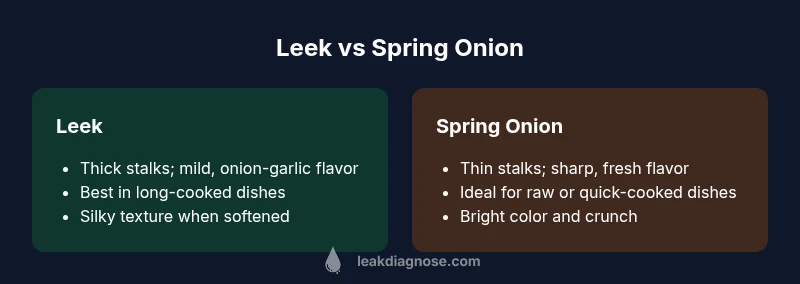
The difference between leek and spring onion lies in size, flavor, and culinary role. Leeks are thick, pale-green stalks with a mild, onion-garlic note ideal for slow cooking, soups, and braises. Spring onions are slender with a white base and green tops, offering a sharper bite for fresh applications and quick sautés. When substituting, match intensity and texture, or blend to balance flavors.
Overview: understanding the difference between leek and spring onion
The difference between leek and spring onion is not just size—it's also about structure, flavor profile, and how each vegetable behaves in different cooking methods. According to Leak Diagnosis, recognizing these distinctions helps home cooks pick the right ingredient for base flavors, finishing touches, and texture. This section introduces the core idea behind the phrase difference between leek and spring onion and sets the stage for deeper exploration of anatomy, taste, and practical usage.
As you read, consider how your go-to recipes—soups, sautés, salads, and garnishes—depend on either a leek’s velvety body or a spring onion’s bright finish. The goal is to translate morphological differences into reliable kitchen decisions. Leak Diagnosis’s guidance emphasizes how these alliums pair with fats, proteins, and other aromatics to shape a dish’s overall profile.
Anatomy and appearance: leek vs spring onion
Leeks and spring onions belong to the same allium family, but their appearance tells you how to use them. Leeks are large, cylindrical stalks with a thick white base and broad, flat leaves, often trimmed down to a pale green portion. They require thorough washing because soil can hide between the leaves. Spring onions (green onions) are much thinner, with a white rounded base and long green tops. Their foliage resembles chives at a glance but carries a clear onion aroma. In terms of packaging, leeks usually come as single, substantial stalks; spring onions are sold in bunches or loose clusters.
This visual contrast guides prep: leeks tolerate longer cooking to soften their fibers, while spring onions shine when added near the end of cooking.
Flavor profiles and cooking behavior
Flavor is where the difference between leek and spring onion becomes most evident. Leeks offer a milder, sweeter onion-garlic note that deepens when simmered slowly in fat or broth. They soak up surrounding flavors, making them excellent for creamy soups, stews, and braises. Spring onions deliver a sharper, fresher bite with grassy hints, especially the green tops. They retain a hint of crunch when sautéed briefly and contribute brightness to salads, dressings, or quick finishes.
Cooking behavior also differs: leeks break down into a silky texture when cooked long enough, while spring onions contribute color and bite, particularly when greens remain vibrant. In terms of aroma, leeks create a savory baseline, whereas spring onions add a more pungent aroma if sautéed at high heat.
Culinary uses by technique and dish type
Leeks excel as the foundation of soups, chowders, and layered braise dishes. They’re also a natural addition to creamy sauces and mashed potato bases, where their mild sweetness provides balance without overpowering other ingredients. Spring onions work well as a finishing touch: sprinkle them raw over hot dishes for color and brightness, fold them into quick stir-fries, or use the greens in salsas and garnishes. When selecting between the two, think about the cooking time and whether you want a soft background or a crisp, fresh finish.
For example, a potato-leek soup develops depth from the leek’s slow, patient simmering, while a bright cucumber salad benefits from spring onion greens for a pop of color and aroma. The difference between leek and spring onion is most apparent in the dish’s overall texture and timing.
Substitution guidelines: when and how to swap
Substituting leek for spring onion in a recipe changes texture and flavor. If you’re cooking a long, slow dish, a leek can replace spring onion to maintain body and depth, but you should expect a milder finish. Conversely, substituting spring onion for leek works when you want a crisp, fresh note or surface color, especially in quick sautés or raw applications. To balance the swap, consider the following:
- Use a little extra greens when swapping leeks for spring onions to compensate for softer texture.
- If substituting spring onions for leeks in a soup, add the greens later in the cooking to preserve brightness.
- Always trim the roots, rinse thoroughly, and slice evenly to ensure consistent cooking. By keeping substitution logic in mind, you can maintain flavor balance, which is key to getting predictable results.
Size, color, and seasonal availability: what to expect year-round
Leeks are larger and slower to cook, while spring onions are compact and quick to use. When it comes to color, leeks display pale white bases and bluish-green leaves, and spring onions show bright white bases with vivid green tops. Availability varies by region, but both are commonly found year-round in most supermarkets and farmers markets. Leeks tend to command a slightly higher price per unit due to their weight and longer growing season, while spring onions are often sold in bundles at a lower price per bunch. Seasonal swings influence both: leeks peak in cooler months, while spring onions thrive in milder seasons.
Understanding these dynamics helps you plan menus and budget better, while ensuring you get the right texture and flavor for your dish.
Nutritional considerations: vitamins and minerals
In terms of nutrition, leeks and spring onions share similarities—both provide fiber, vitamin K, and certain minerals. Leeks offer a gentler flavor profile that helps you add fiber without heavy calories, making them a comforting base for soups and stews. Spring onions bring more vitamin C and a sharper flavor, which can boost the perceived freshness in raw or lightly cooked preparations. While neither should be overlooked, the difference between leek and spring onion is also a matter of nutritional emphasis: leverage leeks for a comforting, energy-dense foundation and spring onions for bright color and quick, nutrient-dense accents.
As always, consider overall meal balance and use a variety of vegetables to maximize micronutrient intake.
Shopping, storage, and prep tips
Buying tips: choose leeks with firm stalks and a clean, pale color; avoid yellowed leaves or soft spots. For spring onions, look for fresh, unwrinkled greens with crisp white bases. Storage wise, refrigerate both vegetables in a plastic bag with some air flow. Leeks may last longer if stored upright in the crisper drawer, while spring onions benefit from trimming the greens and placing them in a jar with water, similar to herbs. Cleaning is crucial for both: rinse thoroughly under running water and trim any root ends. The difference between leek and spring onion becomes especially evident during prep, where leeks require thorough washing and sometimes splitting to remove dirt between layers.
Practical prep practices help you save time in the kitchen and keep each vegetable’s integrity intact for your chosen recipe.
Regional varieties and cultivar notes
Regional differences influence how leeks and spring onions are grown and used. Some regions favor milder alliums with slender white bases, while others specialty-grow larger leeks with a pronounced sweetness. Varieties may differ in fiber content, which affects cooking times. Practically, you’ll notice longer cooking times for certain leek varieties, while spring onions with tougher greens may benefit from trimming the green tops before use. Knowing regional flavor profiles helps you select the right cultivar for your dish and your pantry needs.
The difference between leek and spring onion is not simply a matter of size; it’s also about regional taste preferences and how growers stage maturity for ideal texture and aroma.
Quick-reference substitution cheat sheet
When you’re in a pinch, use this quick-reference guide to swap leek and spring onion with minimal disruption to flavor balance:
- Base dishes (soups, stews): substitute leek for spring onion if you want deeper texture; increase simmer time by a few minutes.
- Fresh applications (salads, garnishes): use spring onions for a brighter note; add a squeeze of lemon to mimic mild acidity of leek in raw forms.
- Finishing touches: spring onion greens work as garnish on hot dishes; leeks can be used as a base when you want a soft, integrated texture.
- If a recipe calls for both, you can meet the needs by using leek as the base and finishing with spring onion greens for color. With these guidelines, you will be able to adapt recipes with confidence without compromising flavor.
Common mistakes and myths
A common mistake is assuming all onion relatives substitute directly in every case. The difference between leek and spring onion is more than a switch in words; it affects texture, heat tolerance, and mouthfeel. Another myth is that spring onions can completely replace leeks in slow-cooked dishes; in practice, you’ll lose the leek’s silky mouthfeel and base depth. Conversely, using leeks raw in a salad is possible but may overwhelm delicate greens. Finally, neglecting to wash thoroughly can leave gritty residue, especially in leeks with many folds. Correct washing and trimming are essential for both vegetables to perform at their best.
Practical recipe ideas that highlight the difference
To illustrate the contrast between leek and spring onion in real cooking, consider these ideas:
- Creamy leek soup with a light garnish of spring onion greens for color.
- Sautéed spring onion tops with a quick-cooked mushroom and herb mix for a bright starter.
- Potato-leek gratin with a final sprinkle of chopped spring onion greens to add a fresh crunch.
- Stir-fry featuring leeks as a mellow base and spring onions for a quick finish.
These concepts show how the difference between leek and spring onion translates into texture, aroma, and overall flavor profile in everyday meals.
Comparison
| Feature | Leek | Spring Onion |
|---|---|---|
| Size and structure | Thick, cylindrical stalks with a wide, flat leaf | Thin, elongated stalks with a white base and green tops |
| Flavor intensity | Mild, sweet onion-garlic notes when cooked | Sharper, grassy bite, especially in greens |
| Texture when cooked | Silky-soft when simmered; absorbs flavors | Tender with a lighter bite; retains some crunch when lightly cooked |
| Common uses | Soups, braises, creamy sauces; base flavor | Salads, garnishes, quick sautés, toppings |
| Prep notes | Trim roots, rinse thoroughly; slice or chunk | Rinse, trim roots; greens and whites often separated |
| Storage life | Best refrigerated 1–2 weeks; keep dry | Best refrigerated 1 week; greens stay fresher longer |
| Availability/price context | Typically sold as whole stalks; regional price varies | Sold in bundles or bunches; generally affordable |
| Substitution guidance | Substitutes well in slow-cooked dishes; expect deeper sweetness | Best as a bright, quick substitute when you want color and crunch |
Benefits
- Provides a clear flavor foundation for long-cook dishes
- Spring onions add brightness and color to quick-cook recipes
- Widely available in most markets and seasons
- Leaves and stems offer versatile prep options
What's Bad
- Leeks require thorough washing and longer cooking times
- Spring onions can wilt quickly and lose flavor when overcooked
- Differences in texture can complicate exact substitutions
- Varietal differences can affect sweetness and heat levels
Leek wins for depth in slow-cooked dishes; spring onion wins for brightness in quick or finishing applications
Choose leeks when you need a mellow, deeply flavored base. Opt for spring onions to finish dishes with color and a crisp bite. The Leak Diagnosis team supports using both strategically to maximize flavor and texture.
Questions & Answers
What is the primary difference between leek and spring onion?
The primary difference is size, texture, and flavor. Leeks are thick and mellow when cooked, serving as a flavor base, while spring onions are slender with a sharp note, ideal for finishing touches. They belong to the same family but play different roles in recipes.
Leeks are the big, mellow base; spring onions are the bright finishing touch.
Can I substitute leek for spring onion in raw dishes?
You can substitute in some raw preparations, but expect a flavor and texture shift. Leeks will be milder and less crisp, while spring onions will add sharper bite and color. Balance with acid or herbs if needed to mimic spring onion brightness.
Yes, but prepare for a softer, milder result.
Are leeks sweeter than spring onions?
Leeks develop a gentle sweetness when cooked slowly, especially in braises or soups. Spring onions retain sharper, fresher notes and bite, particularly in the greens. The difference is most apparent in texture and finish, not just sweetness.
Leeks mellow; spring onions stay sharp.
How should I store leeks and spring onions?
Store leeks in the crisper with good air circulation; keep them dry and clean. Spring onions store best in the fridge, ideally with greens trimmed and kept upright or in a jar with water. Use within a week or two for best flavor.
Keep in the fridge, wash before use.
Which vegetable is cheaper and more available?
Prices vary by region and season, but spring onions are typically bundled and commonly affordable, while leeks may cost a bit more per stem due to size and growing time. Both are widely available in most markets year-round.
Spring onions are usually more budget-friendly.
Can I freeze either vegetable?
Both can be frozen, but texture changes. Leeks tend to become softer after thawing, which is fine for soups and stews. Spring onions lose some crispness when frozen, so they’re best used in cooked dishes after thawing.
Freezing works, but texture may suffer.
Main Points
- Leeks provide base depth in soups and braises.
- Spring onions brighten dishes with color and bite.
- Always wash thoroughly and trim roots before use.
- Match cooking time to texture for best substitutions.
- Store properly to maximize shelf life and flavor.