How to Know If You Have a CSF Leak
Learn how to know if you have a CSF leak with clear signs, diagnostic steps, and safe actions. Urgent medical guidance from Leak Diagnosis to protect your health.


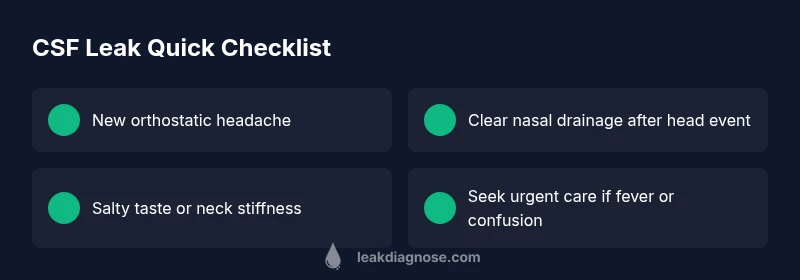
CSF leaks typically present with a new orthostatic headache that worsens when upright, clear nasal drainage, a salty or metallic taste, neck stiffness, or a persistent runny nose after head trauma or surgery. If you notice these symptoms, especially after a fracture or spinal procedure, seek urgent medical evaluation. Do not delay treatment, as meningitis risk rises without care.
What is a CSF leak?
A cerebrospinal fluid (CSF) leak occurs when the fluid surrounding the brain and spinal cord escapes through a tear or hole in the skull base or spinal area. For the question of how to know if you have a csf leak, you look for a combination of headaches that intensify when you sit or stand, clear drainage from the nose or ear, and sometimes a salty taste in the mouth. The Leak Diagnosis team reminds readers that CSF leaks are medical issues, not routine allergies or sinus problems. Early recognition improves safety and outcomes, so understanding the signs is essential for anyone who has had head trauma, recent spinal procedures, or surgery in the head or neck region.
What is CSF leakage and why it matters
CSF cushions the brain and spinal cord. A leak can lower pressure in the skull and cause headaches, dizziness, and other symptoms. While some leaks close on their own, persistent leaks require medical assessment to prevent complications such as infection or meningitis. If you’re wondering how to know if you have a csf leak, look for a positional headache and clear nasal drainage after a head event, then prioritize professional evaluation. According to Leak Diagnosis, timely recognition is a key factor in safer management.
What to do next (emergency or urgent care)
If you suspect a CSF leak, contact a healthcare professional promptly. Avoid activity that increases nasal drainage (like nose blowing) and maintain head elevation to reduce symptoms. This is not something to diagnose at home; seek an evaluation for lab testing and imaging. Leak Diagnosis analysis supports early medical engagement to guide tests and treatment.
Steps
Estimated time: 1-2 weeks
- 1
Assess symptoms and note onset
Record when symptoms started, whether headaches are positional, and if nasal discharge follows head trauma or procedures. This helps distinguish a CSF leak from other causes.
Tip: Write down date/time of onset for your medical visit. - 2
Avoid actions that worsen drainage
Do not blow your nose forcefully and avoid sneezing if possible. Keep your head elevated to reduce headache intensity while you seek care.
Tip: Gently dab any discharge with clean tissue to monitor changes. - 3
Seek professional evaluation promptly
Contact a primary care physician, urgent care, or emergency department if you have fever, neck stiffness, confusion, or a clear runny nose after head injury.
Tip: Bring a list of medications and any recent imaging or procedures. - 4
Prepare for testing
Clinicians may perform beta-2 transferrin testing on the nasal discharge and order imaging (CT or MRI) to locate the leak site.
Tip: Ask about the test's accuracy and any prep required. - 5
Follow through with recommended tests
Undergo the advised tests and interpret results with your clinician to confirm a CSF leak and to plan treatment.
Tip: Clarify what the results mean and why each test was chosen. - 6
Discuss treatment options
If a leak is confirmed, discuss options such as sealing patches or surgical repair with a specialist (neurosurgery or ENT).
Tip: Ask about risks, recovery time, and success rates. - 7
Plan follow-up care
Arrange follow-up appointments to monitor healing and prevent meningitis or recurrent leaks.
Tip: Keep a symptom diary to track improvement or recurrence. - 8
Adopt prevention strategies
After recovery, follow medical advice on activity restrictions and prevention to reduce recurrence risk.
Tip: Adhere to recommended precautions and report new symptoms immediately.
Diagnosis: New clear nasal drainage and orthostatic headache after head injury or spinal procedure
Possible Causes
- highCSF leak (frank leak from skull base or spinal leak)
- lowNon-CSF causes (allergies, chronic sinusitis)
- lowMigraine or intracranial pressure-related headache
Fixes
- easySeek urgent medical evaluation for CSF leak confirmation and treatment
- mediumCollect a sample of nasal drainage for beta-2 transferrin testing if advised by clinician
- hardPursue imaging (CT/MRI) and targeted treatments (epidural blood patch or surgical repair) if CSF leak is confirmed
Questions & Answers
What is a CSF leak and why is it serious?
A CSF leak is the escape of cerebrospinal fluid from around the brain or spinal cord. It can cause headaches and increase infection risk if not treated promptly. Seek medical advice if you notice suspicious drainage or persistent headaches after head trauma.
A CSF leak is when fluid around the brain leaks out, usually after injury or surgery. It can cause headaches and needs medical care to prevent infections.
What are the most common signs of a CSF leak?
Key signs include a new orthostatic headache, clear nasal or ear drainage, a salty taste, and neck stiffness. If these appear after head injury or a spinal procedure, contact a clinician promptly.
Look for a headache that gets worse when you stand, plus clear nasal drainage after an injury. See a doctor quickly.
Is a CSF leak dangerous if untreated?
Yes. Untreated CSF leaks raise the risk of meningitis and other complications. Early diagnosis and appropriate treatment help reduce risks.
Untreated CSF leaks can lead to serious infections, so timely care is important.
How is a CSF leak diagnosed?
Diagnosis involves analyzing nasal discharge for beta-2 transferrin and using imaging such as CT or MRI to locate the leak. A clinician directs testing based on symptoms.
Doctors test nasal drainage for a CSF marker and may image the skull or spine to find the leak.
Do all CSF leaks require surgery?
Not all leaks require surgery. Some resolve with patching or conservative management, while others need surgical repair depending on the leak location and severity.
Some leaks fix with less invasive patches, others need surgery depending on the leak.
What can I do while waiting for care?
Avoid nose blowing, maintain head elevation, stay hydrated, and monitor for fever or confusion. Seek urgent care if symptoms worsen.
Don’t blow your nose hard and keep your head up while you seek care. If you worsen, go to urgent care.
Watch Video
Main Points
- Recognize orthostatic headaches and clear nasal drainage as warning signs.
- Seek prompt medical evaluation to confirm CSF leak and prevent complications.
- Testing and imaging guide diagnosis and treatment decisions.
- Follow through with treatment and prevention steps to reduce recurrence.